

Portugal faces heightened health alerts as the second major heat wave in under a month grips Europe, with temperatures forecast to exceed 42°C in neighboring France and reach 40°C in 12 Portuguese district capitals. The Portugal Institute for Sea and Atmosphere (IPMA) has placed multiple districts under orange and red heat warnings, while civil protection authorities urge residents to limit outdoor activity during peak hours.
Why This Matters
• Health risk escalation: More than 200,000 heat-related deaths have occurred across Europe in the past four years, according to the World Health Organization (WHO) Regional Office for Europe, most of them preventable.
• Transport disruptions: The Eurostar has cancelled two daily services between Paris and London due to rail infrastructure strain, while French rail operator SNCF warns of track deformation risks at high temperatures.
• Record-breaking heat: France recorded its hottest night on record Monday into Tuesday, with a national minimum temperature average of 21.6°C—a benchmark unseen since official measurements began in 1947.
• Immediate action required: Portuguese authorities have activated contingency protocols this week as temperatures peak across the country.
What This Means for Residents
The Portuguese Directorate-General for Health (DGS) has activated its heat contingency plan, advising residents to drink at least 1.5 liters of water daily, avoid direct sun exposure between 11 a.m. and 5 p.m., and check on elderly neighbors and relatives. The protocol mirrors emergency measures France implemented after its catastrophic 2003 heat wave, which killed an estimated 15,000 people—many of them seniors in homes without air conditioning.
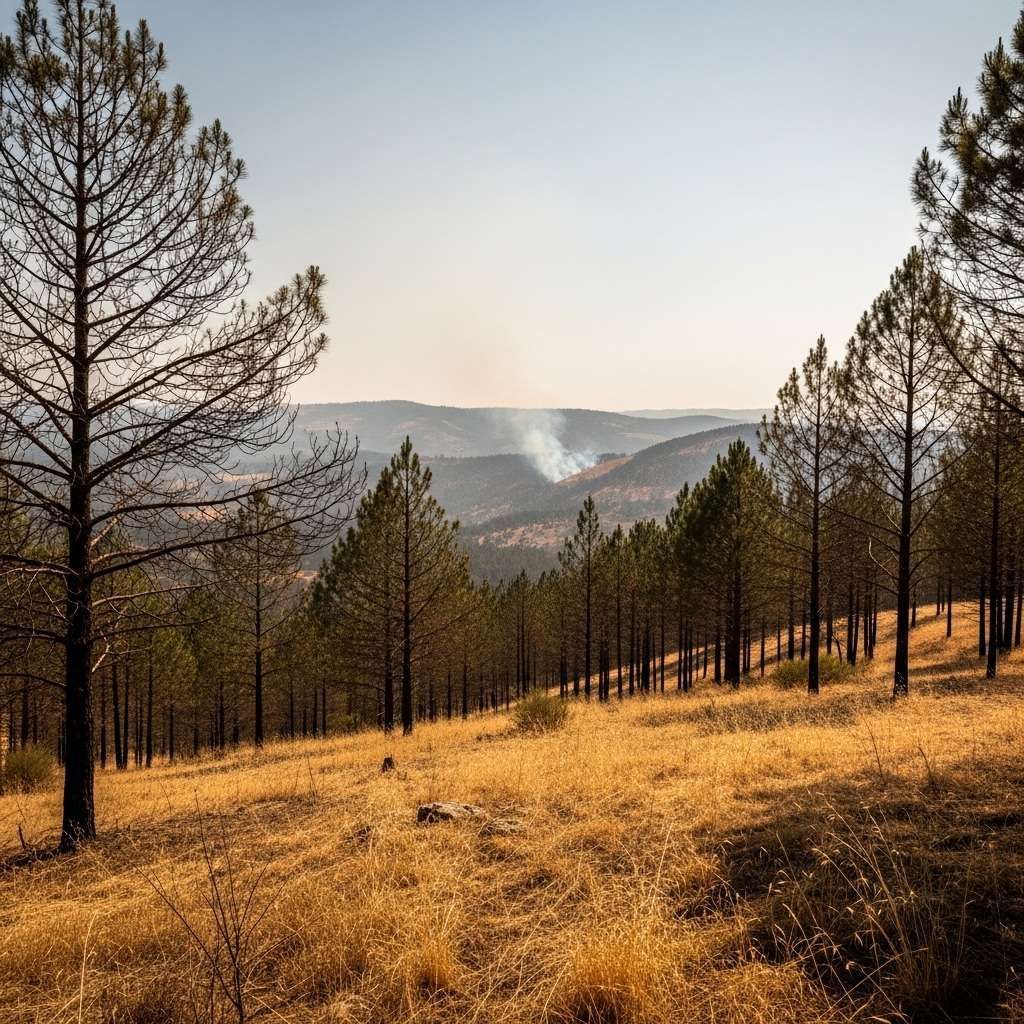
For those living in Portugal, this week represents the probable temperature peak, with the IPMA forecasting highs between 35°C and 40°C in cities including Lisbon, Faro, Évora, Beja, and Santarém. The Portuguese Civil Protection Authority has placed firefighting teams on maximum alert, especially in southern districts where vegetation is tinder-dry following weeks of above-average temperatures.
Anyone planning cross-border travel should anticipate delays. The Eurostar cancellations—two trains per day between Paris and London—stem from concerns that extreme heat could warp overhead power lines and cause rail buckling, a phenomenon already causing widespread delays on SNCF intercity routes in France. British and French rail authorities have deployed emergency crews to monitor track temperatures and conduct spot repairs.
Europe Under Siege
This is the second extreme heat episode to strike the continent since late May, and climate scientists at the European Union's Copernicus Climate Change Service confirm that such events are intensifying at roughly twice the global average rate. Europe has warmed by approximately 2.5°C above pre-industrial levels, compared to the global increase of 1.4°C, making it the fastest-warming continent on Earth.
France is enduring the worst conditions. More than half the country is under red alert, affecting an estimated 35 million people. Météo-France reported that Monday's national maximum temperature average hit 37.8°C, eclipsing the previous record set during the infamous August 2003 heat wave by a tenth of a degree. The overnight low of 21.6°C—measured across 30 reference stations—was the warmest in 79 years of official record-keeping. In the town of Pouzauges, in the Vendée department, the mercury never dropped below 28.7°C overnight.
French Prime Minister Michel Barnier confirmed that at least 40 people have died from drowning incidents in the past week, many linked to people seeking relief in rivers, lakes, and unsupervised swimming spots. French media report residents sleeping in gardens to escape indoor heat, while nearly 2,700 schools have closed or altered schedules to protect children.
Italy has issued red alerts for 15 cities, including Rome, Milan, Turin, Venice, Bologna, and Florence, with the Italian Ministry of Health recommending light meals, indoor refuge during midday heat, and frequent cooling with cold water. Authorities warn that temperatures will consistently exceed 35°C through the weekend.
Spain's Meteorological Agency (AEMET) placed the Basque Country under red alert as temperatures approach 40°C—more than double the historical average for late June. Southern cities like Seville and Córdoba are also sweltering. The Spanish Ministry of Labor has intensified workplace inspections in construction, agriculture, and outdoor sectors, enforcing laws that allow workers to reduce hours or adjust schedules during extreme heat.
Belgium is on track for its hottest week on record, with average temperatures exceeding 27°C and peaks of 37°C coupled with humidity above 50%. The Netherlands is in its second consecutive week of heat wave conditions, with southern regions expecting 38°C by Friday.
The United Kingdom's Met Office issued a rare red heat warning, advising against non-essential travel and urging people to stay in air-conditioned environments. Germany, Switzerland, Austria, Czech Republic, Hungary, and the Balkans have all activated high-level alerts and emergency protocols.
The Science Behind the Surge
Climate researchers attribute the intensity and early arrival of this heat wave to a combination of North African air masses, a powerful high-pressure system acting as a "heat dome," and residual effects from the El Niño phenomenon. This atmospheric configuration traps hot air over Western and Central Europe, preventing cloud formation and causing temperatures to climb day after day.
The Intergovernmental Panel on Climate Change (IPCC) has consistently documented that human-induced greenhouse gas emissions are making extreme heat events more frequent and severe across Europe. Patterns of atmospheric circulation that historically produced warm weather now generate temperatures 2°C to 4°C hotter than the same weather patterns would have caused in the mid-20th century.
Climate projections indicate that Western Europe is experiencing extreme heat at an accelerating pace. In the Mediterranean basin, future heat increases could be significant, with long-term climate models suggesting intensifying temperature extremes. Future summers are expected to bring more frequent and prolonged heat waves across Europe, with particular impacts on Mediterranean countries.
The Copernicus Service reports that heat-related mortality in Europe has increased by approximately 30% over the past two decades. The WHO emphasizes that the majority of these deaths are preventable with proper public health interventions and early warning systems.
Economic and Infrastructure Fallout
The financial toll is mounting. Economic analysis indicates that European nations face substantial financial impacts from heat exposure, including reduced worker productivity, damaged infrastructure, and soaring energy costs in the coming years. France, Italy, Germany, and Spain face potentially significant cumulative economic losses from heat-related disruptions.
Worker productivity drops sharply once temperatures exceed 30°C, hitting manufacturing, construction, and agriculture especially hard. Air conditioning demand is straining power grids, while food prices—particularly for vegetables, fruit, dairy, and meat—are expected to rise as crops and livestock suffer under prolonged heat stress.
Rail infrastructure is buckling under the strain. Besides the Eurostar cancellations, France's national rail network has experienced delays and service reductions as crews monitor tracks for warping and overhead power lines for sagging. British rail operators have issued similar warnings. The phenomenon occurs when steel rails expand in extreme heat, risking derailment if trains maintain normal speeds.
Healthcare systems are under pressure. Emergency rooms report increased admissions for heat exhaustion, dehydration, heatstroke, and exacerbations of chronic conditions like cardiovascular and respiratory disease. Ambulance services are stretched thin responding to heat-related incidents.
Wildfire risk is elevated across southern Europe. The Portugal Civil Protection Authority, along with counterparts in Spain, Italy, and Greece, has mobilized firefighting resources and banned open-air burning in high-risk zones.
Government Response and Adaptation
Portugal has updated its National Strategy for Adaptation to Climate Change (ENAAC2030), incorporating 72 measures ranging from urban tree planting to public cooling centers and real-time heat maps. The DGS heat plan includes targeted monitoring of vulnerable populations, expanded emergency health staffing, and public awareness campaigns.
France overhauled its heat response after 2003, creating a color-coded alert system and mandating local authorities to check on at-risk individuals. This week, the government prohibited outdoor alcohol consumption in red-zone areas during the Fête de la Musique festival and ordered Paris parks to remain open 24 hours as cooling refuges.
Germany has adopted heat action plans incorporating public communication and maps of cool spots. Across Europe, countries are implementing Health and Heat Action Plans (HHAPs), providing a framework for governments to organize anticipatory, coordinated responses to extreme heat.
Spain deployed labor inspectors to enforce thermal protection laws, requiring employers to provide shade, hydration, and schedule flexibility. Public events, including outdoor screenings of football matches in Madrid, have been cancelled.
The WHO released updated guidance on Health and Heat Action Plans (HHAPs), providing a scientific framework for governments to organize anticipatory, coordinated responses to extreme heat.
What to Do Now
• Hydrate aggressively: Drink water regularly, even if not thirsty. Avoid alcohol and caffeine.
• Stay indoors: Remain in the coolest part of your home or seek public air-conditioned spaces (libraries, shopping centers) during peak heat.
• Close shutters and windows: Prevent hot air from entering; ventilate only at night.
• Check on others: Visit or call elderly neighbors, people with chronic illness, and anyone living alone.
• Limit appliance use: Minimize heat-generating devices like ovens and dryers.
• Recognize warning signs: Dizziness, confusion, rapid heartbeat, nausea, and cessation of sweating are medical emergencies requiring immediate attention.
Portugal's firefighting and health services remain on high alert through the weekend. Residents should monitor IPMA updates and follow local civil protection instructions. With climate models indicating that such events will become more frequent and severe, this week serves as a stark reminder of the need for both individual vigilance and systemic adaptation.


