

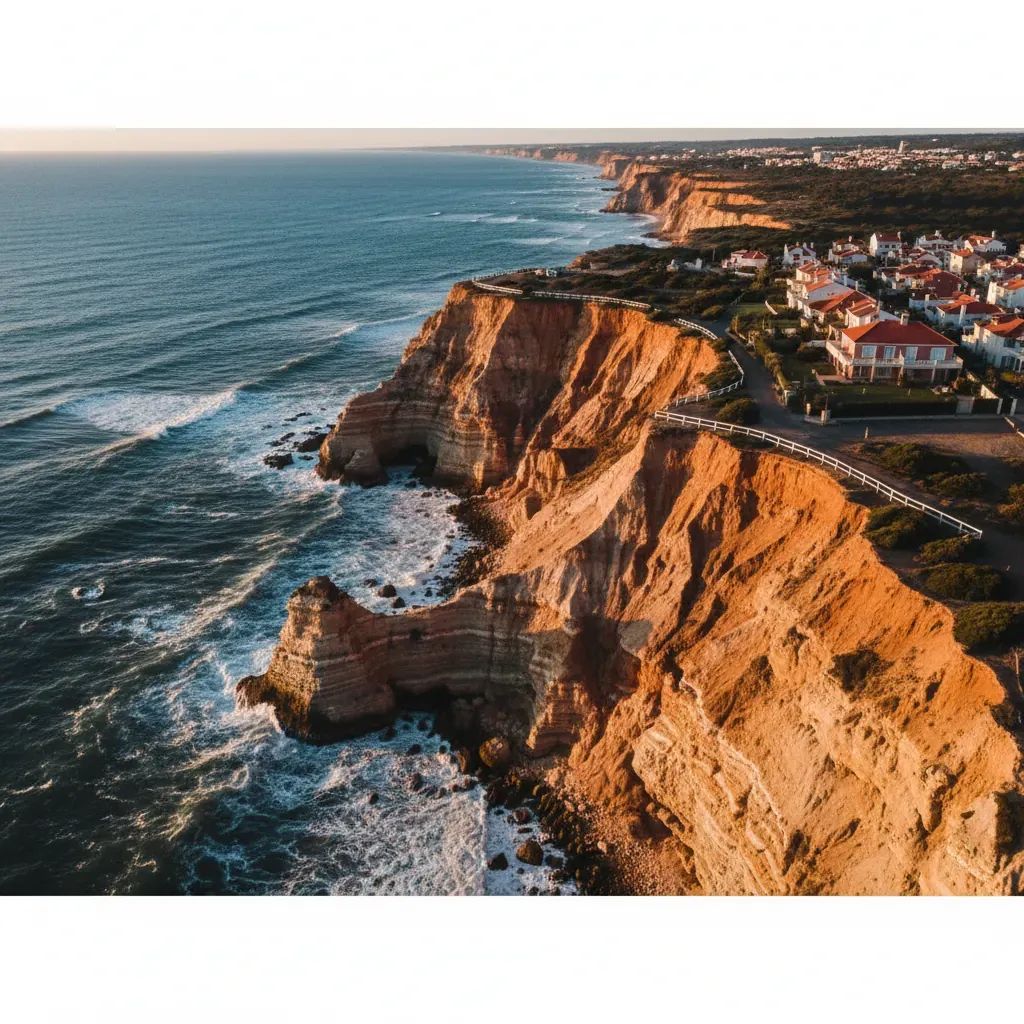
Portugal's traditional fishermen at Costa da Caparica are being squeezed out of their ancestral working grounds, caught between vanishing beaches and a regulatory framework that prioritizes tourism concessions over heritage livelihoods. The clash raises urgent questions about how coastal management policies balance economic development with cultural preservation.
Why This Matters
• Cultural heritage at risk: Arte xávega, a traditional seine-net fishing technique recognized as intangible cultural heritage, may disappear from Caparica beaches within a generation.
• Regulatory pressure: Fishermen claim they have less than 1% of beach space legally available for work, compared to 75% allocated in northern fishing communities like Mira.
• Erosion crisis: This summer's €10M sand replenishment project—dumping 1M cubic meters of sand across 3.9 km of coastline—temporarily displaced fishing operations while attempting to restore beaches lost to recent storms.
The Vanishing Workspace
António Martins, known locally as Calita, has commanded the iconic boats O Rei dos Mares and A Rainha dos Mares since his teenage years. His assessment of the current beach management regime is blunt: "If everyone who has a permit showed up at once, there wouldn't be room for them all, let alone for us to work."
The complaint centers on spatial arithmetic. Costa da Caparica's beaches now host an ecosystem of competing commercial interests—surf schools, restaurant terraces, event permits, designated swimming zones, and mandatory safety corridors. Fishermen conducted their own informal audit of allocated space and concluded the numbers simply don't add up when low tide shrinks the usable shoreline.
The Portugal Ministry of Environment and Energy completed sand replenishment works in late May, just ahead of the June 1 bathing season. The €10M intervention, suspended last November due to rough seas, pumped sand from a Tagus River channel 30 meters deep. Some beaches gained up to 40 meters of width. Yet during construction, fishing crews had to navigate around dredging zones and machinery, adding another layer of operational friction.
A Heritage Practice Under Threat
Arte xávega—the seine-net technique where crews launch a boat through the surf, deploy a semicircular net, then haul it back to shore using tractors or manpower—has been formally inscribed in Portugal's National Inventory of Intangible Cultural Heritage since February 2017. The designation recognizes both its economic function and its role in local identity.
Lídio Galinho, an arrais (master fisherman) who got his license at 14, now leads one of the companhas (fishing cooperatives) operating between Caparica and Fonte da Telha. He recalls beaches three times wider than today's. "This year's storm chain made the sand disappear overnight," he noted, referring to recent Atlantic weather systems that battered the coast.
Shore-based fishing operations require licensed vessels to work within their port authority's jurisdiction. But regulations don't mandate reserved zones for traditional fishing. During the summer bathing season, concession holders can bar fishing from 9:00 to 19:00 in their licensed areas, although some restaurant operators informally allow tractor access for net hauling.
The North-South Divide
Fishermen point to Mira, a coastal municipality 200 km north, as a contrasting model. There, local regulations reportedly reserve 75% of beach space for fishing activities, with festivals like the Festa do Pescador celebrating the industry's centrality. Mira's beach management framework explicitly harmonizes tourism, recreation, and traditional livelihoods.
At Caparica, the perception is reversed. "We were here first, but we're treated as an afterthought," Calita argued. He estimates that regulatory changes over the past decade, combined with fines for working in restricted zones, have driven many colleagues to abandon the trade entirely.
What This Means for Residents
The spatial conflict at Caparica reflects a broader tension in Portugal's coastal governance. The country faces significant challenges combating erosion along hundreds of kilometers of Atlantic shoreline. Beach replenishment is a stopgap measure—sand pumped onto eroding coasts typically washes away within 5 to 10 years, requiring repeated interventions.
For Caparica's fishing families, the issue is existential. Without dedicated working zones, the profession cannot function. Boats need space to land safely; nets require room to spread and sort catches; tractors need beach access at unpredictable tidal windows. The current regulatory patchwork treats fishermen as one stakeholder among many, rather than as custodians of a centuries-old practice.
The Human Intervention Debate
Not all fishermen accept erosion as purely a climate phenomenon. Calita traces the problem to EXPO 98 construction projects in Lisbon and coastal works at Oeiras beaches. He argues that removing a natural sandbar called Coroa de Fora, located between the main breakwater and the Bugio lighthouse near the Tagus mouth, disrupted sediment flows. "That sandbar stopped the water's force. Once it was gone, the sand started flushing into the river," he explained.
This view—that human interference triggered coastal imbalance—finds support in collective memory. Lídio recalls his grandfather working with rudimentary erosion defenses built decades ago after storms destroyed beachfront areas. Documented erosion episodes stretch back over a century, suggesting a long-term dynamic.
Regardless of cause, the result is the same: less sand, more competition, tighter rules. The government's replenishment efforts buy time but don't resolve the allocation question.
The Path Forward
Local authorities have acknowledged the need to preserve fishing culture as part of coastal planning. Draft proposals aim to recognize traditional fishing practices and support the community. But symbolic gestures won't solve the spatial crunch.
One practical reform would mirror Mira's approach: designate priority zones for traditional fishing and subordinate other concessions to those boundaries. Another option is seasonal zoning—reserving certain stretches for fishing during off-peak hours or shoulder seasons when tourism pressure eases.
As it stands, Portugal risks losing a living tradition to bureaucratic inertia. The fishermen of Caparica don't oppose tourism or recreation; they oppose invisibility. Their demand is simple: reserve space for those who were here first, and whose work is recognized by the state as heritage worth protecting.
The broader lesson applies nationwide. Coastal adaptation isn't just about dumping sand or building seawalls—it's about deciding which communities and livelihoods Portugal wants to sustain along its changing shoreline.


