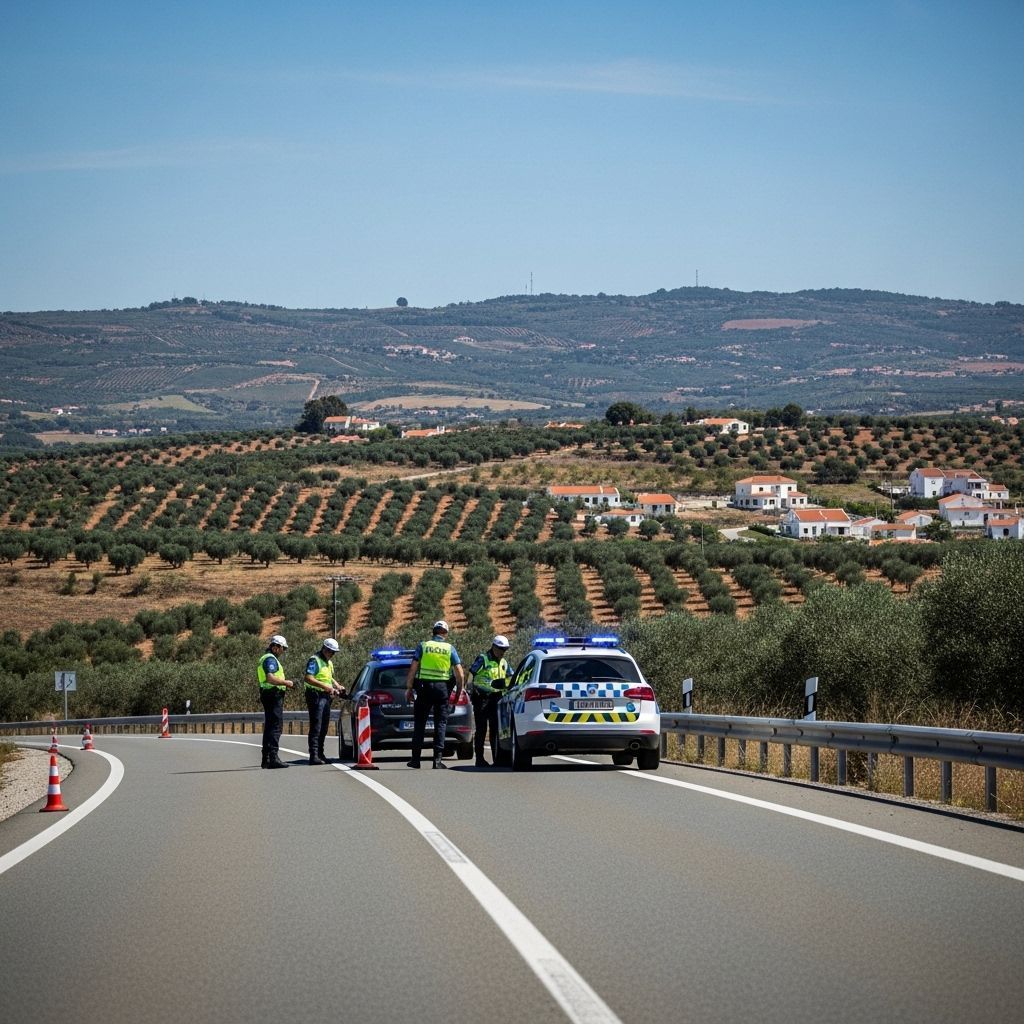
Portugal's volunteer firefighters—who handle roughly 80% of the country's emergency calls—warn they may no longer maintain adequate response services as a €40M payment crisis reaches breaking point. Mounting debts and budget cuts have pushed the National Medical Emergency Institute (INEM) four months behind on payments, forcing associations to escalate demands to the President of the Republic and Prime Minister.
Why This Matters for Your Emergency Response
• Operational capacity at risk: Volunteer fire brigades warn they may be forced to scale back emergency response services or close stations due to insolvency.
• €40M payment backlog: INEM owes approximately €10M per month to firefighter associations for pre-hospital emergency services.
• 2026 budget cuts €12M: Non-urgent patient transport funding faces deep reductions despite expanded service obligations.
• April 18 deadline: If demands are not met, the Liga dos Bombeiros Portugueses (LBP) promises "firmer decisions," potentially including service disruptions.
The Payment Crisis Explained
The Portugal Firefighters League submitted an urgent manifesto on March 21, approved during a National Council meeting in Guarda, outlining a systemic crisis. The organization describes the situation as firefighters subsidizing INEM operations.
At the heart of the problem: a payment backlog exceeding €40M accumulated over four months. This comes despite a cooperation agreement signed in February 2025 that promised a 20% increase in state contributions to firefighter corporations for emergency medical transport.
The LBP demands immediate renegotiation of the agreement with the Health Ministry and INEM, alongside a comprehensive revision of the payment schedule. Without swift government intervention, volunteer associations face "serious risks of compromising their financial capacities and operational response to citizens."
Budget Reality Falls Short of Promises
In March 2024, a tripartite agreement between the National Health Service Executive Directorate, the LBP, and INEM promised better financing and sustainability. By December 2024, commitments included 20% increases in monthly fixed payments and per-call compensation.
The 2026 budget tells a different story. The government allocated just €37M for volunteer firefighter corporations—below the €49.38M the LBP calculated as necessary for basic operations. The funding formula still relies on 2015 cost assumptions and fails to account for inflation and actual operational expenses.
The budget also imposed a €12M reduction in non-urgent patient transport funding—a cut made "without any supporting study," according to the LBP. This could force many corporations to abandon the service entirely.
Rising Operational Costs Squeeze Budgets Further
Volunteer brigades face mounting pressures beyond delayed payments. Fuel prices have risen significantly, with government support deemed "manifestly insufficient." Oxygen costs and other medical supplies necessary for patient transport have climbed, yet compensation rates remain frozen at outdated levels.
In January 2026, INEM's previous management decided not to renew agreements for reinforced firefighter resources during the winter flu season—a period requiring expanded emergency capacity. This decision coincided with Portugal's new INEM organic law taking effect, potentially eliminating the institute's proprietary ambulance fleet in favor of complete reliance on firefighter-operated vehicles.
The Ministry of Internal Affairs funds approximately 779 Permanent Intervention Teams (professional firefighters embedded in volunteer corporations), but this professionalization push has done little to address the broader financing crisis.
Which Regions Are Most Affected?
Volunteer firefighters provide essential services across Portugal, particularly outside major urban centers like Lisbon and Porto. Rural and semi-rural municipalities depend almost entirely on volunteer brigades for emergency response. Urban areas with professional firefighter services are less vulnerable to service disruptions.
Tensions have already surfaced. In March 2026, the entire board of the Humanitarian Association of Sever do Vouga Firefighters resigned following internal conflicts, leaving 62 firefighters temporarily inactive and that municipality's emergency response compromised.
What Should Residents Know?
If you need emergency services in Portugal, the national emergency number remains 112. However, response times and service availability may worsen if volunteer brigades reduce operations due to financial strain.
Outside major cities, response capacity directly depends on volunteer firefighter associations. The government has confirmed it will pay €1.2M in extraordinary firefighting expenses from 2025 by month's end, with another €1M from 2024 due in April. These payments address past costs rather than systemic underfunding of routine operations.
Residents should understand that service reductions are not guaranteed—they depend on whether the government addresses firefighter demands by April 18. But the current financial trajectory suggests significant operational challenges may emerge if structural funding reforms are not implemented.
The April Deadline
The LBP has scheduled its next National Council meeting for April 18 in Ponte de Sor, where leadership promises to adopt "firmer decisions" if government demands are not met. While the League has not specified these measures, past rhetoric has included potential refusal to perform hospital discharges and other forms of service disruption.
The organization is pressing the Minister of Internal Affairs to direct the National Authority for Emergency and Civil Protection (ANEPC) to develop a comprehensive national volunteer support program addressing recruitment, retention, training, and legal status of volunteers.
An audit of INEM scheduled for 2027 is expected to include recommendations for stabilizing financing, but firefighter associations argue they cannot wait that long. The LBP continues advocating for revision of Law 94/2015, which governs firefighter financing, and implementation of program contracts guaranteeing fair reimbursement for services rendered to the state.
The Sustainability Challenge
Portugal's volunteer firefighting system faces a fundamental question: can it continue operating under a financing model designed for 2015 cost structures and service volumes?
Inflation, expanded medical transport responsibilities, increased emergency call volumes, and regulatory requirements have driven expenses upward while funding has remained relatively static. The volunteer model saves the Portuguese state enormous sums compared to a fully professional system.
Without structural reform—whether through increased direct funding, alternative revenue mechanisms, or a shift toward greater professionalization with corresponding budgets—the current system faces genuine operational challenges. The next five weeks will reveal whether government action matches the urgency firefighters describe.