
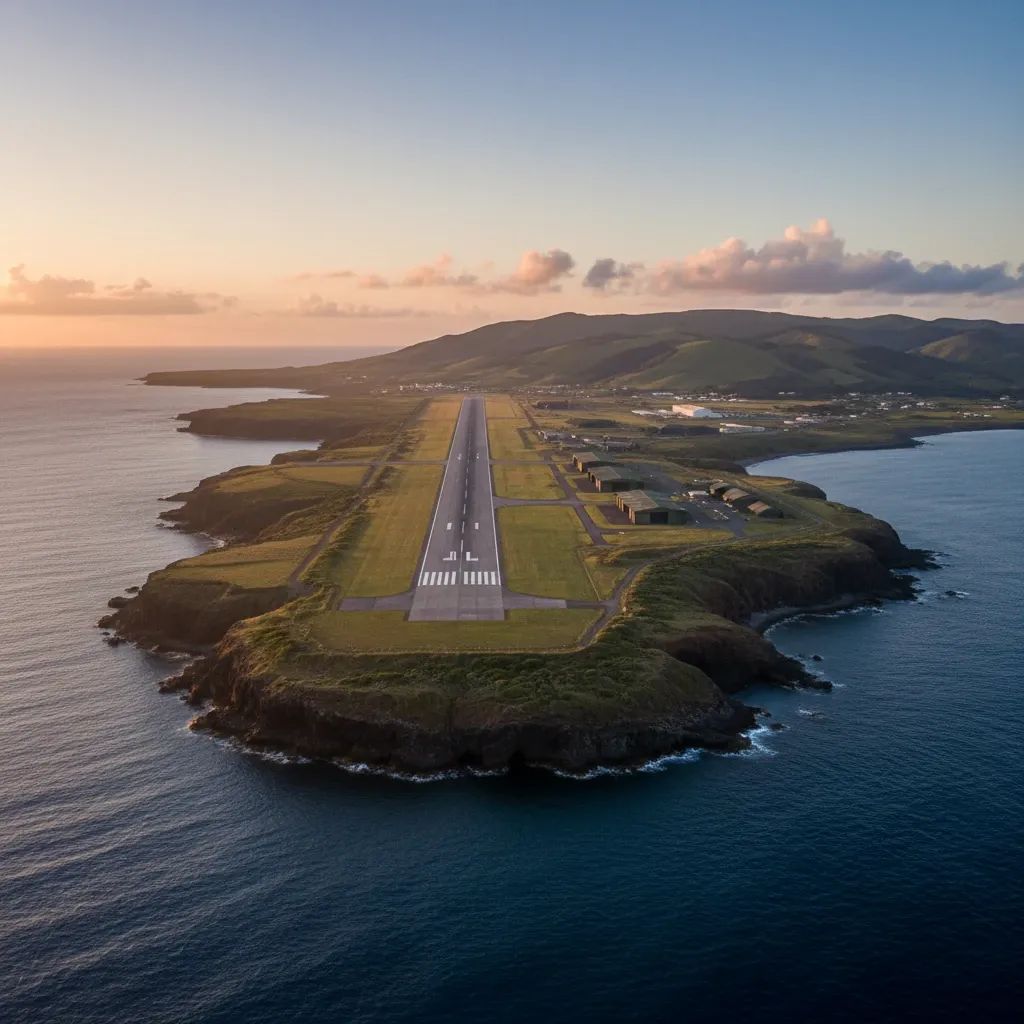
Portuguese President Seguro has kicked off official Dia de Portugal ceremonies on Terceira Island, marking not only the national holiday but also a politically charged anniversary: 50 years since the constitutional enshrinement of regional autonomy for the Azores and Madeira. The two-day program, which began today and continues through June 10, unfolds against a backdrop of controversy surrounding the U.S. military's use of Lajes Air Base in the ongoing Iran conflict—a subject the president has so far avoided addressing publicly.
Why This Matters
• Regional milestone: The Azores are celebrating half a century of self-government, a framework established in the 1976 Portuguese Constitution and considered constitutionally untouchable.
• Lajes Base tension: Portugal has authorized U.S. operations from the strategic airbase under strict conditions—no strikes on civilian infrastructure in Iran—drawing criticism from opposition parties and contrasting sharply with bans imposed by Spain, France, and Italy.
• Expanded program: President Seguro will also travel to Madeira on June 12 to commemorate 40 years of European integration and decorate the University of the Azores on its 50th anniversary.
Angra do Heroísmo Takes Center Stage
The president arrived at Terceira at 11:00 a.m. local time (noon in Lisbon), with the traditional flag-raising ceremony scheduled for 3:00 p.m. in the Pátio da Alfândega in Angra do Heroísmo, the island's historic capital. This marks António José Seguro's first national Dia de Portugal since he assumed office on March 9, succeeding Marcelo Rebelo de Sousa.
Seguro tapped Professor Miguel Monjardino, a native of Angra do Heroísmo and a specialist in international relations and geopolitics, to preside over the commemorations. Monjardino is a guest lecturer at the Catholic University of Portugal's Institute of Political Studies, a columnist for the daily Expresso, and a long-time political-military analyst for SIC Notícias. He holds a law degree from the University of Lisbon and a master's in international security from the University of Reading in England. His recent publications include Por Onde Irá a História? (2023).
This year's format continues the dual-commemoration model inaugurated by Rebelo de Sousa in 2016, celebrating both domestically and among diaspora communities abroad. Over the past weekend, Seguro and Prime Minister Luís Montenegro marked the holiday in Luxembourg, home to a significant Portuguese expatriate population.
The Lajes Airbase Controversy
Hosting official ceremonies on Terceira places the spotlight squarely on the Base das Lajes, a NATO and U.S. logistics hub whose recent surge in activity has divided Portuguese political opinion. Since the U.S.-Israel conflict with Iran erupted in early 2026, Lajes has seen intensified military traffic: by early April, the Portuguese Foreign Ministry had authorized 76 landings and 25 overflights connected to the operation.
The Portuguese government granted use of the base under explicit caveats—no sorties targeting civilian infrastructure and compliance with international law. Foreign Minister Paulo Rangel has defended the arrangement as consistent with Portugal's bilateral treaty obligations and has stated that Washington has acted as a "loyal collaborator." He clarified that, under treaty provisions, the U.S. may conduct overflights, stopovers, and parking without advance formal notification, though authorization was issued specifically for defensive operations against military targets.
Nevertheless, the decision has drawn fire from opposition benches and civil-society groups. Socialist Party MEP André Franqueira Rodrigues accused the Foreign Ministry of undermining Portugal's negotiating posture and called the handling of Lajes access "embarrassing." The Socialist Party caucus in the Assembly of the Republic has requested parliamentary clarification of the legal framework governing increased U.S. movements.
The contrast with European neighbors is stark. Spain, France, Italy, Austria, and Switzerland have restricted or outright refused airspace and base access to U.S. military aircraft engaged in Iran operations. Portugal's conditional approval reflects a delicate balancing act: maintaining a long-standing alliance with Washington while emphasizing diplomatic solutions and adherence to international norms.
What This Means for Residents
For Azoreans and the broader Portuguese public, the Lajes controversy underscores the archipelago's strategic geography—both asset and liability. The base is a critical transatlantic refueling and logistics node, but its use in active conflicts exposes Portugal to geopolitical risks and domestic division.
Meanwhile, the 50-year autonomy milestone carries direct constitutional weight. Regional self-government for the Azores and Madeira is enshrined as a "cláusula pétrea"—a constitutional clause immune to revision—reflecting the islands' geographic, economic, social, and cultural distinctiveness. The Statute of Political-Administrative Autonomy grants sweeping powers to regional governments, including legislative, executive, and budgetary prerogatives, without compromising national sovereignty.
In practical terms, this means that residents of the Azores operate under a dual-governance framework: regional authorities control everything from education and healthcare to transport and economic development, while the Portuguese government retains defense, foreign policy, and currency matters.
Commemoration events offer a public stage for debating the next phase of autonomy. Luís Garcia, president of the Azores Legislative Assembly, has called for a constitutional review to deepen self-rule, potentially abolishing the post of Representative of the Republic—currently held by Susana Goulart Costa, the first woman appointed to the role. Garcia also advocates for clearer maritime jurisdiction and stronger institutional ties to the Azorean diaspora.
Some political factions support expanding regional referenda powers and fiscal autonomy, though others caution that the current political climate may not favor major constitutional surgery.
Full Schedule and Symbolic Gestures
Today's agenda includes a youth meeting at the Academia da Juventude in Praia da Vitória, where Seguro will engage with students and young professionals. He will later receive diplomatic credentials from foreign envoys at the Palácio dos Capitães-Generais in Angra, followed by an evening concert in Praça Velha and a fireworks display over the Bay of Angra.
On Wednesday, June 10—the actual holiday—the official military ceremony takes place at Cerrado do Bailão, featuring speeches by both the president and Monjardino. Afterward, Seguro will join a community lunch at the Pavilhão Multiusos do Porto Judeu and oversee the lowering of the national flag, closing the Terceira program.
The president's itinerary then shifts to Madeira on June 12 for a legislative session marking 40 years since Portugal joined the European Economic Community and celebrating the region's parallel autonomy journey. The University of the Azores, which also turns 50 this year, will receive a presidential commendation during the extended commemoration cycle.
Europe's Autonomy and Strategic Posture
Beyond the immediate festivities, Seguro's broader policy statements hint at a recalibration of Portugal's defense and foreign policy. He has repeatedly argued that the European Union must reduce dependence on the United States and build "strategic autonomy" through coordinated investment, scale economies, and "buy European" procurement.
That vision calls for a partnership of equals with Washington—one in which Europe asserts its interests and values, even when that generates friction. The Lajes debate exemplifies this tension: honoring treaty commitments while reserving the right to impose conditions that align with Portuguese and EU legal standards.
For residents, the stakes are both symbolic and practical. Terceira's economy benefits from U.S. and NATO presence—jobs, infrastructure, and strategic visibility—but escalation in the Middle East or future conflicts could expose the archipelago to retaliation risks or diplomatic blowback.
The Road Ahead
As fireworks light up Angra's harbor tonight and military bands assemble for Wednesday's parade, the Dia de Portugal serves dual purposes: celebrating national identity and regional distinctiveness. The 50-year autonomy marker invites reflection on how Portugal has woven island governance into its democratic fabric without fracturing sovereignty.
Yet the Lajes question looms, unanswered and unaddressed by the president in any public forum. Whether Seguro will break his silence during his Terceira speeches—or defer the matter to parliamentary and diplomatic channels—remains an open question. What is clear is that Portugal's Atlantic islands are once again at the intersection of national pride, constitutional evolution, and global geopolitics.


