

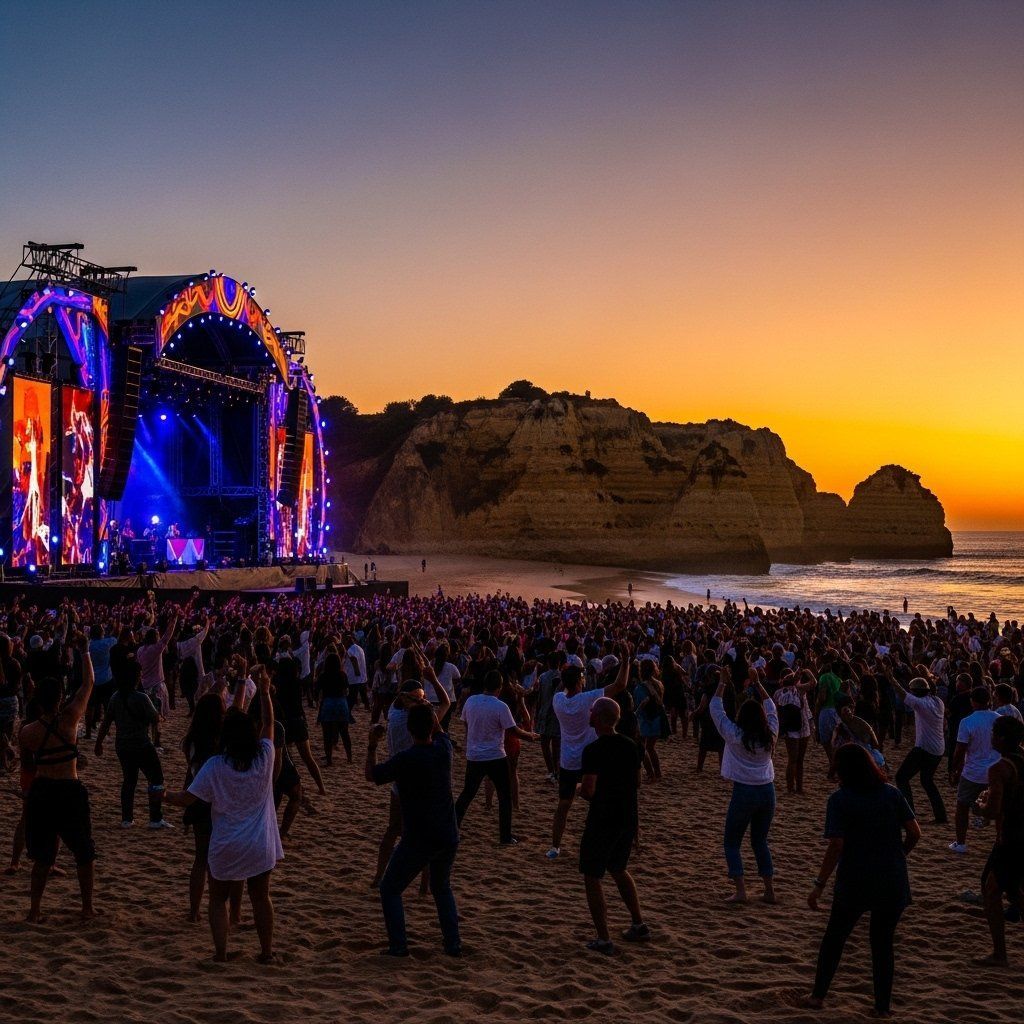
Why Portimão Is Betting Everything on Afrobeats for Summer 2027
The Algarve's municipal leadership has locked in another summer revenue opportunity: Afro Nation returns to Praia da Rocha from June 9 to 11, 2027, with an opening party on June 8 and closing party on June 12, featuring festival acts taking three separate stages across the event window. Organizers announced the dates before this year's event even concluded, a deliberate signal to international promoters and attendees that the concept has proven resilient. Early-access ticket sales began on July 7 at 10 AM (British Summer Time) through the festival's ticketing portal, with pricing starting well below the €300–€600 standard rate that typically emerges within weeks.
Why This Matters
• Economic anchor confirmed: The 2023 Afro Nation channeled €114M directly into regional circulation, a sum exceeding most state-level tourism initiatives for the same period.
• Accommodation fills fast: Room availability in Portimão evaporates within 2–3 weeks of package releases; booking early locks rates before inevitable 25–40% premiums apply.
• Infrastructure stress points remain: Beach congestion, transportation delays, and sanitation constraints during peak hours are recurring friction points locals and first-time attendees should anticipate.
• Long-term commitment secured: The Malachite Group operates under an exclusive licensing agreement through 2030, guaranteeing operational continuity and municipal infrastructure support.
Understanding Portimão's Summer Dependency
The economics underlying Afro Nation's expansion in the Algarve reveal why municipal authorities have embraced it so aggressively. The festival doesn't compete against traditional cultural events—it operates in a different financial tier entirely.
The Concentração Motard de Faro, which draws motorcycle enthusiasts annually, generates meaningful regional revenue. Other events like the Festival Med in Loulé operate on different scales with varying pricing models and attendance patterns. However, Afro Nation's revenue architecture differs fundamentally from these regional alternatives.
Tickets span €150 upward to €13,000 for exclusive packages, with typical attendees clustering between €300–€600 for multi-day access. This pricing tier attracts a specific demographic the Algarve Tourism Authority actively pursues: younger, internationally mobile professionals with higher purchasing power from the United Kingdom, France, Germany, the United States, and multiple African nations. These visitors remain longer, spend more on secondary activities, and book accommodation earlier than traditional beach tourists.
The Portugal National Tourism Authority formally designates Afro Nation alongside Formula 1 as a strategic regional draw—classification that unlocks marketing budgets and infrastructure funding unavailable to smaller events. From Portimão Municipality's fiscal perspective, 40,000 paying visitors for the festival span produces hotel occupancy rates approaching saturation, elevated food-and-beverage revenue, transportation demand spikes, and extended bookings as attendees explore regional beaches, golf courses, and historic town centers before or after festival dates.
What Changed Between 2026 and the Road Forward
The July 3–5, 2026 edition introduced structural improvements that signaled growing operational sophistication. The Techtronic stage, housed within the NoSoloÁgua beach club, opened a dedicated platform for African electronic music—addressing longtime complaints that simultaneous scheduling forced attendees to forfeit marquee performances. Combined with the existing Lit Stage and Piano People venues, the three-stage configuration allowed programming flexibility across Afrobeats, Amapiano, dancehall, and hip-hop without creating artificial scarcity of viewership.
Performance lineups reflected this capacity expansion. Wizkid, Asake, Burna Boy, Tyla, Gunna, Kehlani, Mariah the Scientist, Olamide, Ludmilla, Uncle Waffles, and Focalistic rotated across stages, each commanding performance slots. Artist rotation mechanics reduced congestion at any single venue and prevented the "choose between your two favorite acts" frustration that haunted earlier years.
Food infrastructure expanded meaningfully. The YAM Food Court introduced a curated selection of African and Caribbean cuisines, with Jollof rice emerging as a signature item. Abarka launched a Senegalese-inspired food concept alongside an African fusion wrap line, while Rhythm & Roots—a London-based West African restaurant—opened a festival outpost, signaling operational confidence in attendee spending patterns and extended stays.
Logistical refinements addressed direct friction points. Official shuttle services transported accommodation-package purchasers, reducing private vehicle dependency and parking congestion. The festival implemented a fully cashless system using RFID-enabled wristbands, a measure designed to accelerate transactions and reduce cash-handling theft.
Where the System Still Breaks Down
Despite operational refinement, recurring complaints persist. Sound clarity on the primary stage fluctuates during peak programming hours when adjacent venue audio creates sonic overlap. General admission seating remains limited, condemning most attendees to extended standing during afternoon and evening sets—a particular burden for attendees with mobility constraints or those attending with young children.
The spatial separation between primary stages and VIP zones creates accessibility friction, particularly grating for premium ticket holders expecting enhanced sightlines. Portable restroom ratios in general admission areas remain insufficient; queues during peak evening hours (8–11 PM) frequently extend beyond 15 minutes. Handwashing and sanitation stations are similarly sparse, a hygiene concern that emerges repeatedly in post-event attendee feedback.
Food and beverage pricing tracks European festival standards—€8–10 for beer or soft drinks, €12–15 for prepared meals—but remains a persistent irritant. Some attendees reported abbreviated artist sets, compressing entertainment value for non-headliner acts. Accountability regarding operational improvements and attendee feedback remains an ongoing concern for festival management.
Practical Considerations for Residents and Potential Attendees
Portimão locals should anticipate June 8–12 traffic congestion and beach crowding during the festival window. Municipal transportation authorities typically augment service with extended operating hours or temporary shuttle routes during festival week. Parking near Praia da Rocha becomes essentially unavailable without advance permits—a constraint motivating many area residents to leave the region during the festival window.
Prospective attendees should understand the operational mechanics. The cashless system requires wristband loading before venue entry. Budget anticipated spending on beverages, food, and merchandise appropriately. For specific information regarding refund policies and procedures, consult the official festival ticketing portal.
VIP packages deliver meaningfully different experiences: dedicated viewing areas with clearer stage access, expedited bar service, and priority food vendor lines. Standard admission operates on first-come, first-served footing for amenities, creating comfort compression during peak hours.
Accommodation packages typically release within weeks of ticket sales. Properties throughout Portimão and adjacent municipalities like Lagos and Alvor report strong demand during festival week, with room rates climbing significantly above baseline summer pricing. Early booking is strategically important; availability shrinks sharply 3+ weeks post-announcement.
Early June weather in the Algarve typically delivers warm, dry conditions with daytime highs reaching 28–30°C and evenings cooling to 18–20°C. Rain is uncommon but possible; lightweight waterproof layers and sunscreen are pragmatic precautions. Beach venues differ operationally from traditional indoor concert grounds—appropriate footwear and hydration planning matter more than in typical festival settings.
Employment and Secondary Economic Effects
The tourism multiplier extends into Portimão's service sectors significantly. Hotels along Praia da Rocha report weekend-equivalent customer demand on weekdays; restaurants, bars, taxi operators, and charter bus services all experience comparable pressure spikes. The Malachite Group has committed to sourcing catering supplies, logistics, and staffing from regional vendors where feasible—a procurement philosophy designed to distribute benefits beyond headline attendance metrics.
Employment effects sustain hundreds of seasonal positions: event production crews, sanitation teams, security personnel, hospitality staff, and transportation coordinators. Many festival attendees extend stays to explore regional attractions—golf courses, marinas, historic town centers in Lagos and Silves, secondary beach destinations—generating secondary spending that stretches benefits into the week following festival closure. This behavioral pattern bolsters shoulder-season bookings, elevating occupancy during traditionally slower periods.
Social media amplification provides additional promotional value. Festival imagery—sun-drenched stages, multinational crowds, vibrant performances—circulates globally across digital platforms, effectively delivering unpaid marketing for the Algarve as a cosmopolitan cultural destination. This digital reach particularly resonates with younger, higher-income demographics in target markets, reinforcing Portugal's positioning as a culturally open vacation alternative compared to competing Mediterranean destinations.
What Remains Uncertain
No artist lineup has been confirmed for 2027, though programming patterns suggest continuation of global Afrobeats acts, emerging Amapiano talent, and crossover hip-hop and dancehall performers. Organizers have signaled intent to expand VIP experiences and diversify food vendor partnerships, though specifics remain pending official announcement.
The Algarve's trajectory with this festival mirrors how international events reshape regional positioning: economic dependency increases, infrastructure pressure intensifies, and municipal leadership becomes invested in continuous improvement regardless of operational friction. Whether 2027 addresses lingering concerns—sound quality, sanitation, seating availability—or simply replicates previous years' proven formula will become apparent as detailed programming emerges. For now, the calculation is straightforward: Portimão has identified its summer revenue engine, and municipal authorities remain committed to fueling it through 2030.


