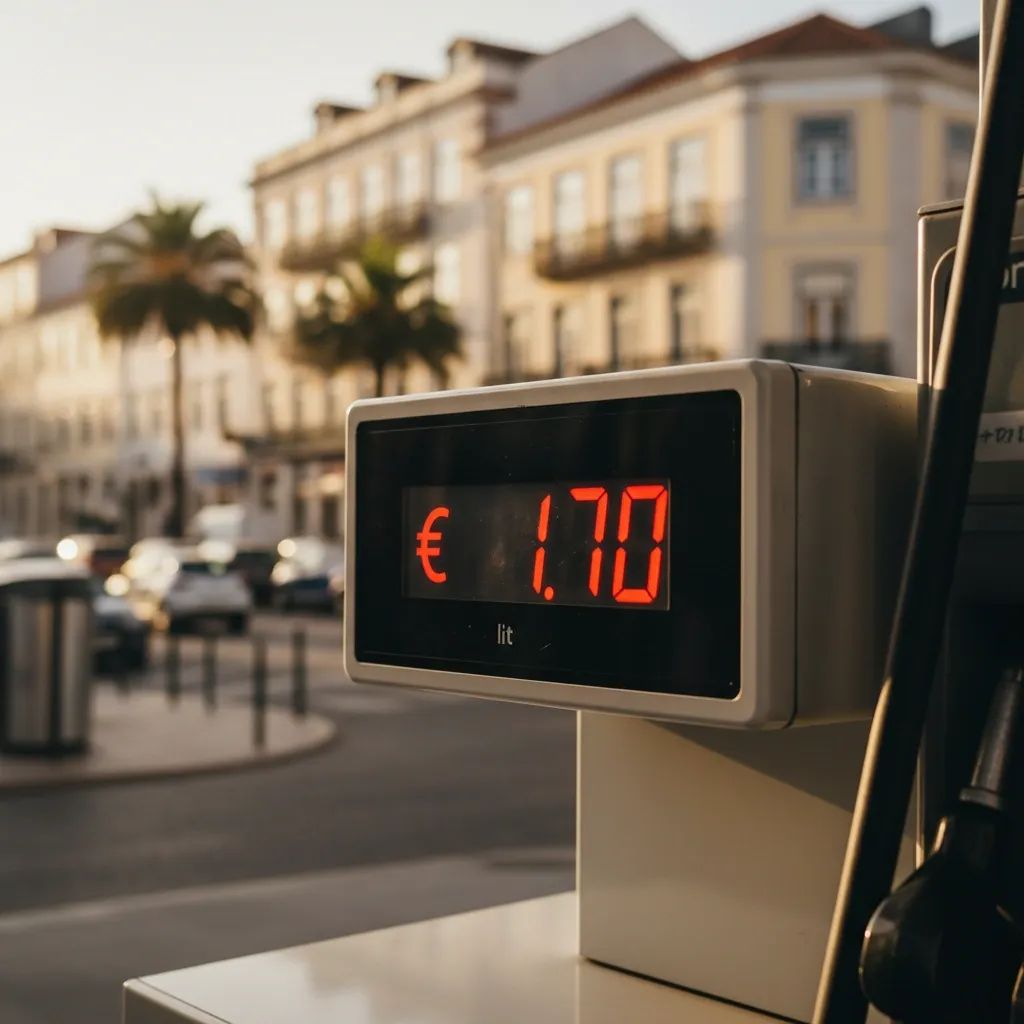
The Portugal consumer market is being reshaped by a force most shoppers never see: investment funds and commodity trading giants increasingly control the price trajectories of breakfast staples like coffee and chocolate, according to industry leaders who warn that the era of affordable food in Europe ended several years ago.
Why This Matters
• Café remains expensive despite futures falling 27% — record Brazilian harvests won't translate to lower supermarket prices due to global inventory depletion.
• Chocolate prices stay elevated even as cocoa futures have plunged 64% from their 2024 peak — manufacturers bought at historic highs and work through existing stock.
• Speculative capital now drives volatility in agricultural markets as much as weather or harvests, creating price swings disconnected from farm-level supply and demand.
The Financial Layer Behind Your Shopping Cart
Adam Mokrysz, president of Poland-based coffee and cocoa processor Mokate, argues that surging prices for agricultural commodities reflect far more than inflation or supply chain disruptions. Speaking to industry analysts, Mokrysz pointed to the growing weight of investment funds and institutional speculators who trade agricultural raw materials through futures exchanges, often with no intention of taking physical delivery.
These financial players buy and sell contracts on coffee, cocoa, vegetable oils, and grains to profit from price oscillations. When speculative flows intensify—whether chasing upward momentum or unwinding positions—markets react more violently than traditional supply-and-demand fundamentals would suggest. The result is "temporary price bubbles" that can persist for months, detached from the realities of harvest volumes or warehouse inventories.
For households in Portugal, where coffee culture is deeply embedded and chocolate is a pantry staple, this financialization translates into grocery bills that no longer correlate cleanly with what farmers produce.
Coffee: A Paradox of Plenty and Persistent Cost
Consider the coffee market. As of May 20, arabica coffee traded at 268.29 USD per pound on futures markets, down 27% year-on-year and 5% over the past month. Brazil—the world's dominant coffee exporter—projects a record harvest of 66 million bags in 2026, a 17% jump from the previous cycle.
Yet Portuguese consumers should not expect their espresso or morning galão to become meaningfully cheaper anytime soon. The explanation lies in depleted global stockpiles. While Brazil enjoyed favorable weather, other major producers—Vietnam and Colombia—suffered crop shortfalls in the 2025/2026 season, draining inventories worldwide. By February 2026, retail coffee prices in Europe, the United States, and Asia had already climbed, reflecting elevated costs for roasting, packaging, freight, labor, and rent layered atop the green-bean expense.
Analysts at Citigroup project arabica could fall to $3 per pound within 12 months, yet warn that prices are unlikely to return to the affordable levels of the early 2020s. The mismatch between abundant Brazilian supply and tight global stocks keeps roasters bidding high, and speculative funds amplify every price swing as they adjust positions to macroeconomic signals—currency moves, interest-rate expectations, or geopolitical events—rather than the size of a given harvest.
Cocoa: Volatility in a Shrinking Market
The cocoa market offers an even more dramatic illustration. On May 19, cocoa futures climbed to 3,909 USD per metric ton, up 15% in a month but still 64% below the level recorded a year earlier. The commodity touched an all-time high of 12,906 USD per ton in December 2024, driven by disease in West African plantations, severe shortfalls in Côte d'Ivoire and Ghana, and a global deficit exceeding 500,000 tons.
By mid-May 2026, futures had tumbled to roughly $3,800 per ton—near a three-week low—as production forecasts for Côte d'Ivoire improved and global demand weakened. Traders at StoneX now project a global cocoa surplus of 287,000 tons for the 2025/2026 season and 267,000 tons the following year.
Yet Portuguese shoppers browsing supermarket shelves have seen little relief. Chocolate bars and spreads remain expensive because confectionery manufacturers locked in cocoa supplies when prices were at historic peaks, and they process inventory on multi-month cycles. The lag between falling commodity quotes and consumer pricing can stretch six months or longer.
Adding to the turbulence: cocoa's inclusion in the Bloomberg Commodity Index starting January 2026 triggered systematic buying by index-tracking funds, injecting fresh speculative demand even as physical supply was improving. Financial flows, not harvest data, dominated price action.
How Speculation Reaches the Dinner Table
The mechanics of agricultural speculation are straightforward but consequential. Futures markets were originally designed to allow farmers and processors to hedge risk—locking in prices months ahead of harvest or delivery. Today, however, the majority of contracts are held by financial actors: commodity-focused exchange-traded funds (ETFs), hedge funds, and institutional portfolios seeking diversification or inflation protection.
When these players pile into a commodity—say, anticipating drought or geopolitical disruption—they create upward pressure unrelated to current inventory. Conversely, mass unwinding of positions can crash prices even if warehouses are half-empty. The result is heightened volatility that trickles through the supply chain.
For Portugal households, the impact appears most clearly in staples tied to global commodity markets: cooking oils, bakery goods (wheat and vegetable oil), meat (corn and soy for animal feed comprise roughly 70% of production costs), and of course coffee and chocolate. A spike in corn futures—whether driven by a genuine harvest shortfall or speculative positioning—raises the cost of ração, which in turn lifts poultry, pork, and beef prices at the checkout.
Research indicates that future food prices will be shaped more by service costs—transport, processing, packaging, marketing—than by farm-gate commodity values. This structural shift widens the gap between what producers receive and what consumers pay, and it insulates retail prices from commodity downturns, even as it amplifies the effect of commodity rallies.
Europe's Regulatory Response and Its Limits
Recognizing the risks of unchecked speculation, the European Union has deployed several regulatory tools under the revised Markets in Financial Instruments Directive (MiFID II) and the Markets in Financial Instruments Regulation (MiFIR).
Key provisions include position limits on agricultural derivatives to prevent any single trader or fund from accumulating a dominant stake that could distort prices. Exchanges and firms must report daily holdings to the European Securities and Markets Authority (ESMA), which publishes aggregated data to improve transparency. The directive also tightened exemptions for non-financial firms, confining them to hedging activities "ancillary" to core business operations.
Despite these measures, critics—including members of the European Parliament—argue that recent amendments diluted enforcement. A delegated act widened exemptions and raised the threshold for an agricultural derivative to be classified as "relevant," effectively allowing more speculative activity to fly under the radar.
Beyond financial regulation, the EU employs market-intervention tools under the Common Market Organization (CMO) regulation, including public buying and storage of wheat, rice, beef, butter, and milk powder when prices fall too low. The bloc has also introduced the EU Deforestation Regulation (EUDR), which bans imports of soy, beef, coffee, cocoa, palm oil, and timber sourced from land deforested after 2020—a sustainability measure that indirectly affects commodity flows and pricing.
What This Means for Portuguese Shoppers
In practical terms, Portugal residents should brace for a grocery landscape in which prices respond sluggishly to good news and rapidly to bad. Even when futures markets signal relief—as with arabica coffee's 27% annual decline or cocoa's 64% retreat from peak—retail shelves lag by months, constrained by existing stock, hedging contracts, and the layered costs of distribution.
The European Central Bank forecasts food inflation in the eurozone at 2.2% in March 2026, with a gradual deceleration toward 2.1% by the third quarter as supply chains normalize and manufacturer price expectations cool. Yet wage pressures in the retail sector and elevated energy costs mean that even stable commodity prices may not translate into stable shopping baskets.
For budget-conscious households, the takeaway is straightforward: the days of cheap coffee, affordable chocolate, and predictable grocery bills are unlikely to return. The financialization of agricultural markets—combined with climate volatility, geopolitical shocks, and structural shifts in retail—has embedded a new baseline of uncertainty and cost into everyday consumption.
Tracking commodity futures, understanding the lag between wholesale and retail pricing, and diversifying food choices toward less financialized staples may offer modest insulation. But ultimately, the forces shaping your café com leite now operate far beyond the farm gate—in trading floors in London, New York, and Chicago, where funds bet billions on beans they will never see.