

A Harbor Man's Unwritten Record: The Duque Who Belonged to the Douro
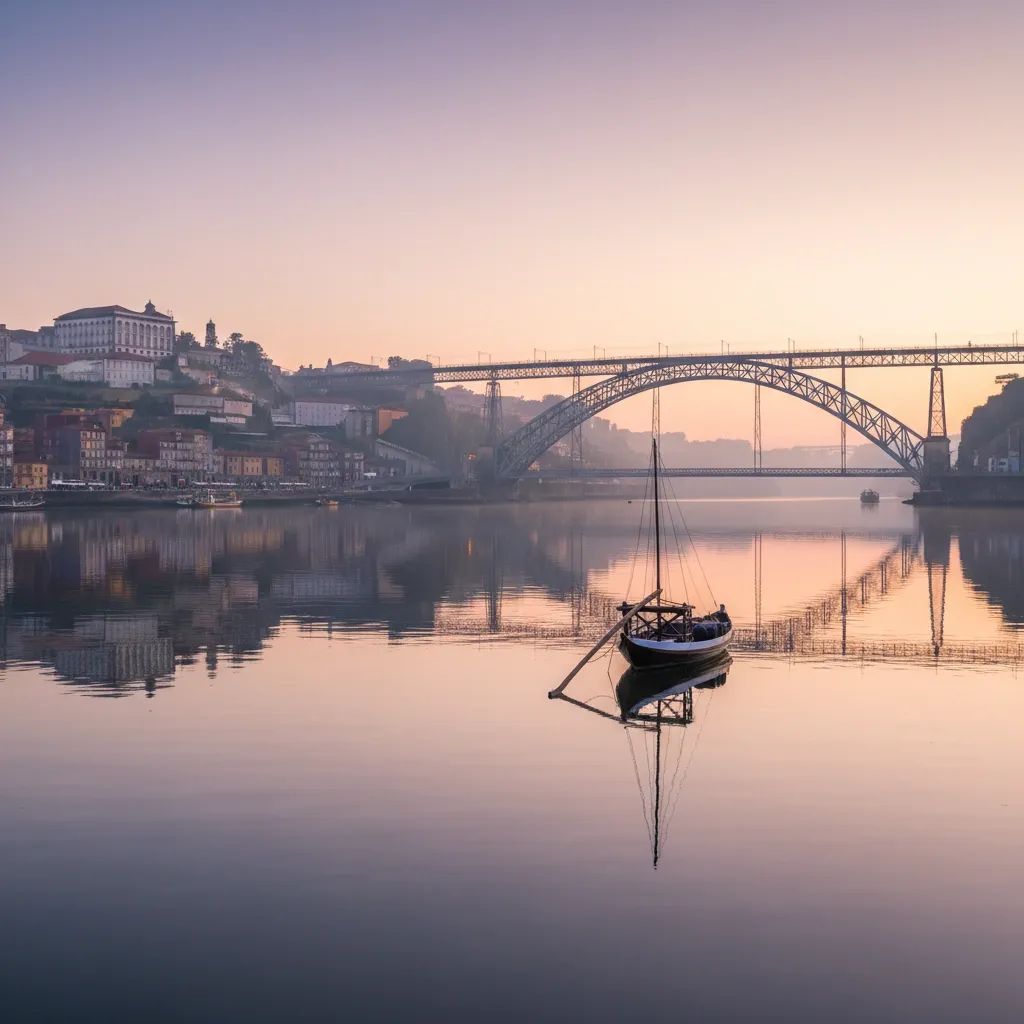
The bronze bust watches over Porto's Ribeira from its pedestal at the Dom Luís I Bridge base—a permanent witness to what might have been lost if one unremarkable man hadn't positioned himself on a river for nearly a century. Born Diocleciano Monteiro on March 24, 1902, he answered to a nickname his mother believed easier on the tongue, and locals grafted "da Ribeira" onto his name after observing his religious presence at the water's edge. What emerged from this geography was not intentional heroism but something more useful: a human institution. By his death in November 1996, Duque had become the river's unofficial memory, its first-response system, and its only reliable witness to what happened when people encountered the Douro's dark indifference.
Why This Matters for Porto Residents Today
• Urban memory preservation: The Associação Dramas marks his 124th birth anniversary on March 28, 2026 at 9:00 AM (Rua da Alfândega, Capitania dos Portos building), a gathering that illuminates how pre-modern Porto functioned without formal safety nets.
• Practical heritage context: Understanding Duque explains why Ribeira transformed from a lethal industrial zone into UNESCO-protected space—infrastructure filled vacuum he once occupied alone.
• Modern safety infrastructure emerged from his era: The dam systems, regulated navigation, and professional rescue services Porto now depends on replaced precisely the kind of improvised, individual response Duque embodied.
The River That Demanded Constant Vigil
Mid-twentieth-century Porto sat atop a paradox: the Douro delivered wealth through wine export and commerce, yet its currents, unpredictable floods, and proximity to a 45-meter suspension bridge created conditions for regular tragedy. The Dom Luís I Bridge, completed in 1886 with its distinctive twin decks, became famous for another reason entirely—the desperate souls who used its upper platform as a final decision point. Bodies entered the water at precise locations; Duque learned to predict where the current would deposit them.
The 1909 Christmas flood rose so aggressively that water nearly touched the bridge's lower deck. The 1962 deluge, worst of its era, crested at 4.5 meters along the Ribeira quays—an event even dam engineers hadn't fully anticipated. Smaller rises happened regularly, each bringing its own casualties. "When great floods came, nothing happened because people didn't risk themselves," recalled his nephew Cândido Venceslau, president of Associação Dramas. "The Duque would appear at dawn, help the produce sellers move their stock, and stand guard. He was prevention itself."
Between the suicides, accidental drownings, dock accidents, and industrial mishaps, the Douro consumed lives steadily. Period newspapers ran headlines like "One Hundred Twenty Corpses Pulled from the Douro" and "Savior of Lives, Fisher of the Dead." The exact tally remains unknowable. "No one can be certain of the real numbers," Venceslau admitted. What documentation confirms: dozens of confirmed rescues, hundreds of body recoveries, and a reputation so rooted in collective memory that locals whispered a proverb—"Whoever falls in the river, only Duque can bring them back."
How He Actually Worked: The Craft Behind the Legend
Duque's method relied on a tool called the grateia—essentially a weighted net that could be dragged across the riverbed. The real skill, however, lived in his mind: an encyclopedic understanding of the Douro's current patterns, tidal variations, and how different water levels affected drift and settling. This knowledge wasn't theoretical. He acquired it through obsessive, wordless observation across six decades, positioning himself daily from morning through dusk, watching how water moved around obstacles, how bodies sank at different seasons, how debris patterns revealed current behavior.
A family member would arrive reporting a person had fallen near a specific location. Duque would pause, calculate wind, water temperature, time since submersion, and the bridge's height. He would direct his crew—boatmen essential to the operation—to specific coordinates with uncanny accuracy. Often he was correct. When he wasn't, he adjusted and tried adjacent positions until the grateia snagged fabric and bone.
This work extended beyond the Douro's main channel. Quarry operators ringing Porto engaged him when their excavation ponds filled with bodies. Flooded pits shared the Douro's unpredictability; Duque's water-reading translated to these secondary drowning sites. The work itself was physically grinding—hauling nets, holding position in currents, working into his 80s without mercy from age or cold.
His recovery operations demanded crew. Duque needed boatmen to position the vessel while he worked the net from water level. This collaborative labor, documented across his most active decades, meant success required partnership, timing, and shared risk. Not every Ribeira resident possessed the knowledge he did, but several learned by working alongside him, absorbing his reading of the river through repetition and attention.
Teaching Children, Building a Public Image
Duque's one revenue-generating water activity was swimming instruction—work that drew fees from merchant families but also extended freely to impoverished neighborhoods. His first classroom was Lingueta, a shallow bend where water reached his waist, suitable for children learning elemental strokes. As pupils advanced, he relocated to Escadas da Padeira, deeper water requiring him to rig ropes around young bodies, controlling their practice from a moored boat above.
Wealthy Porto families eventually hired him for sessions at Espinho's pool, arguing the river was "too dirty." Duque accepted the work and the money, but he didn't refuse poor children. "He never said no to them," Venceslau emphasized. The contrast shaped his reputation: the same man teaching aristocratic offspring in controlled environments was also the figure who appeared in pre-dawn darkness to retrieve suicides from the bridge.
Later, the Porto Harbor Authority (then called Administração dos Portos do Douro e Leixões) granted him formal teaching space upstream from the Maria Pia railway bridge, recognizing his instruction work as legitimate public service. He expanded operations to the river's opposite bank. This pedagogical dimension consolidated his image as something beyond a body-recovery specialist—Ribeira residents called him "guardador de almas" (soul keeper), a designation capturing both rescue work and the spiritual weight of preventing future losses.
The Strategic Self-Crafting of a Legend
Success bred vanity, and Duque embraced it strategically. "He liked recognition. And he had every right to it," Venceslau said with genuine affection. The boatman cultivated a carefully maintained public image: solitary, friendless, unattached, maximizing sympathy and material support flows toward him. He actively concealed his family connections, refusing to discuss cousins, siblings, or in-laws. "Not a word about anyone," his nephew recalled.
This erasure served purpose. Ribeira residents understood that Duque descended from one of the district's oldest lineages, families who had navigated inland from Régua in traditional wooden rabelo boats around the 1700s. His deliberate silence about kinship was calculated theater—a professional technique sharpening his public mystique and preventing competing claims on his attention or resources. The loneliness he performed made him more mythic.
The attention genuinely pleased him. His visitor book accumulated signatures from Queen Elizabeth II (during a royal state visit), Portuguese Presidents Ramalho Eanes and Mário Soares, and Mozambique's Samora Machel—a collection representing the astonishing intersection of a dock laborer's modest practice with international dignitaries touring Porto's historic waterfront. These signatures documented something real: Duque had become integral to Porto's identity in ways that transcended class.
When Democracy Extended Recognition Too Late
The 1974 Carnation Revolution redistributed state resources toward previously marginalized populations. Porto's first democratically elected mayor, Aureliano Veloso (father of musician Rui Veloso), formalized Duque's status in 1975 by approving a municipal subsidy and authorizing his meals at city hall's canteen. The state, tardily, began compensating work it had implicitly relied upon for seventy years without acknowledgment.
The city granted him a kiosk concession in Ribeira, providing financial stability his final two decades never possessed in youth. By then, the Douro's dangers had diminished. The Crestuma-Lever dam, completed in 1985, and subsequent water management infrastructure dramatically reduced flooding catastrophes and unpredictable current patterns. Modern Porto developed professional rescue services and formal water safety protocols that made Duque's solo vigilance technically obsolete.
Earlier decades had been harsher. When rescue efforts required personal subsidy—organizing collections to pay coffins for families too poor to bury their dead—Duque absorbed costs himself. "There was no salary, only day-by-day wages," Venceslau explained. "Rescue work actually reduced his income. In some cases he expanded his efforts beyond the river, funding burials for strangers." His unpaid labor had concrete costs.
The Boat Named for a Stranger's Last Wish
Duque's second boat carried an unusual name: Capitão Cobb (or JW Cowie in some records, a Scottish merchant marine commander who operated from Porto). Before his death, the officer made a singular request—scatter his ashes across the Douro River mouth. Duque complied, then christened his working vessel with the commander's name. This maritime gesture of gratitude illustrated how genuinely rooted Duque was in the international seafaring community passing through Porto—people transient enough to ask him to honor them after death.
What Remains When the River Becomes Safe
Duque died November 9, 1996, at age 94, having witnessed the Douro's transformation from unmanaged lethal force into regulated system. The Crestuma-Lever dam and subsequent infrastructure drastically reduced flooding disasters. Professional rescue protocols, formal water safety regulation, and bureaucratic systems made his informal vigilance obsolete.
Yet the city didn't erase him. A plaza at the Dom Luís I Bridge base received his name. A bronze bust by sculptor José Rodrigues was installed—a permanent fixture acknowledging that individual mutual aid had once substituted for institutional care. Associação Dramas organizes annual commemorative walks, ensuring younger generations grasped how profoundly individuals shaped Porto before administrative systems assumed those responsibilities.
The March 28 Gathering: Why It Still Matters
The upcoming March 28 assembly at the Capitania building marks the 124th year from Duque's birth (his actual birthday falls four days earlier). Participants gather at 9:00 AM on Rua da Alfândega for a walking commemoration led by those committed to keeping his story vital for contemporary residents and arriving newcomers.
The event transcends nostalgia. For those living in or recently arrived to Porto, understanding Duque illuminates how the Ribeira district transformed from a dangerous, unregulated industrial riverfront into UNESCO-protected heritage space where tourists now photograph colorful facades. His life documents the era when community solidarity and individual courage filled gaps that modern infrastructure and professional services now occupy. The bronze bust serves as tangible proof that progress wasn't inevitable—it required people willing to act without payment, recognition, or safety guarantees. That lesson remains as relevant to contemporary urban challenges as it was to the drowning river of the twentieth century.


