The Portugal Ministry of Labour has signaled a major shift in the stalled labour reform negotiations, with 80 of the proposed articles now locked in and only 10 to 15 contentious clauses separating the government from a potential deal with employer groups and the União Geral de Trabalhadores (UGT). The revised proposal now on the table is substantially different from the original draft, Labour Minister Maria do Rosário Palma Ramalho confirmed on Monday, after the 50th negotiating session — a marathon that has stretched since July 2025.
Why This Matters
• Overtime cap may rise: The annual limit on supplementary work could jump from 200 to 300 hours, with improved pay rates to match.
• Fixed-term contracts extended: Minimum duration set at one year (up from six months), with a proposed maximum of 2.5 years under discussion.
• CGTP locked out: Portugal's largest union confederation was barred from the technical meetings, sparking constitutional challenges and a general strike in December 2025.
What This Means for Workers and Employers
For employees in Portugal, the changes — if enacted — would reshape job security and working hours. The government's "Trabalho XXI" package, which originally contained over 100 amendments to the labour code, has been whittled down through intense bargaining. The minimum fixed-term contract duration is set to double to 12 months, offering more stability than the current six-month floor. However, the maximum term remains contested: employers are pushing for 2.5 years, while unions demand stronger protections against indefinite precarity.
On overtime, the deal under negotiation would allow companies to request up to 300 supplementary hours annually (a 50% increase over the current 200-hour cap), but only if workers receive enhanced compensation. UGT negotiators insisted on this financial safeguard as a condition for their support.
For businesses, the reform promises greater scheduling flexibility. The reintroduction of the individual working time bank — scrapped in 2019 — would let employers and individual workers agree to extend the workday by up to two hours, capped at 150 hours per year. Companies also stand to gain from simplified lay-off procedures during state-declared emergencies, though critics warn this tilts power too far toward management.
The Constitutional Standoff
The Confederação Geral dos Trabalhadores Portugueses (CGTP), Portugal's most influential labour confederation, remains excluded from the closed-door technical sessions between the ministry, UGT, and four employer federations. CGTP Secretary-General Tiago Oliveira accused the government of a "democratic assault" and a breach of Article 54(5)(d) of the Portuguese Constitution, which grants worker representatives the right to participate in drafting labour legislation.
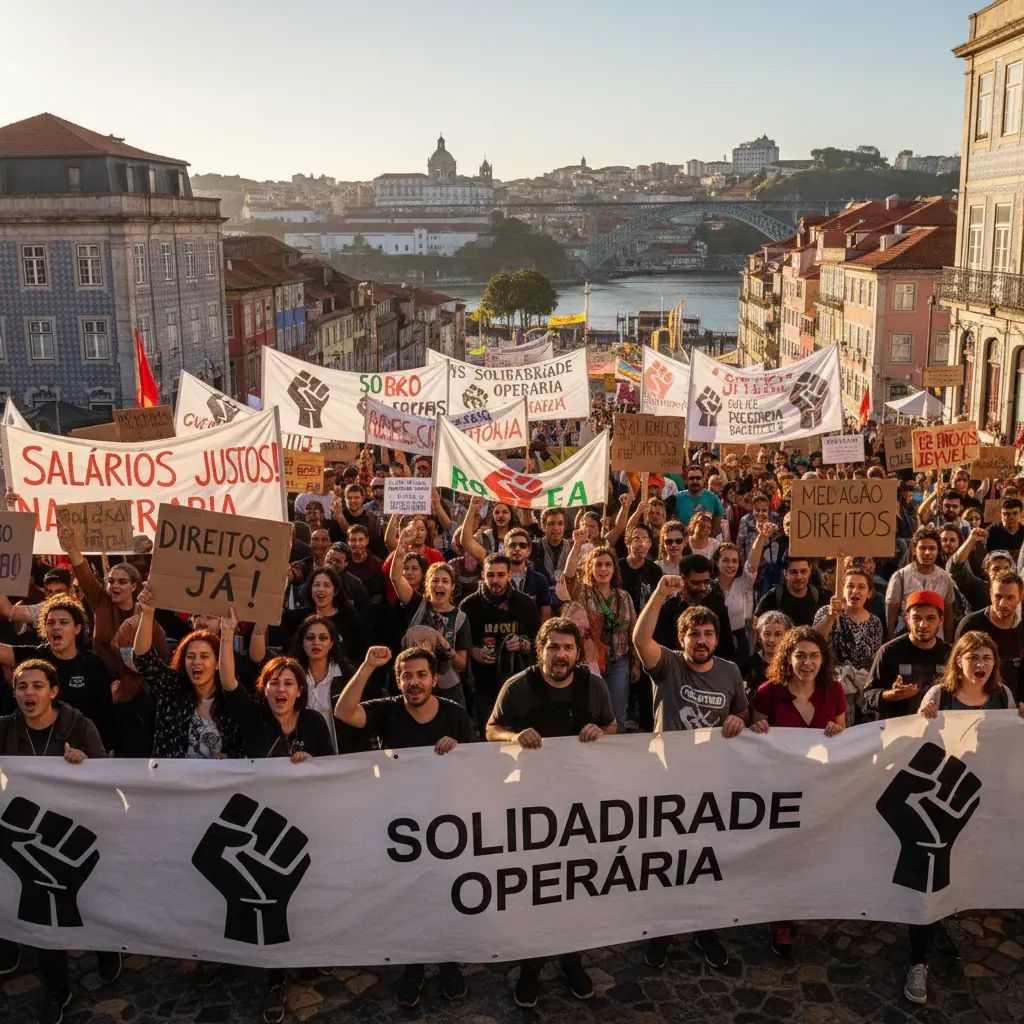
Dozens of CGTP supporters protested outside the Ministério do Trabalho in Lisbon on Monday, chanting "The labour package is the boss's order" and "Respect, respect." Oliveira met only with the minister's chief of staff and a state secretary advisor — not Palma Ramalho herself — and was told the minister "invites whomever she wants." The ministry later offered a separate meeting, but the damage to legitimacy was done. Oliveira also expressed hope to be received soon by the President of the Republic, António José Seguro.
Bloco de Esquerda coordinator José Manuel Pureza joined the demonstration, calling the exclusion "an absolutely unbearable affront" and evidence of "government authoritarianism." The CGTP has scheduled an extraordinary National Council meeting for Wednesday to map out escalated protest actions.
Legal scholars note that while Portugal's Constitution enshrines the right of unions to participate in legislative drafting, the government retains the power to send a bill to parliament without unanimous social partner consent. The CGTP could challenge the law's constitutionality after passage, but precedent is thin: the Tribunal Constitucional has typically scrutinized the content of labour reforms (as in rulings on dismissal procedures and holiday entitlements) rather than the process of consultation.
Employer and Union Reactions
Confederação Empresarial de Portugal (CIP) President Armindo Monteiro described Monday's session as "a good day" and noted "greater willingness" from all sides. He confirmed progress on overtime limits and fixed-term contract durations, though he declined to specify exact figures. "Until the deal is done, there is no deal," he cautioned, tempering optimism.
Confederação do Comércio e Serviços (CCP) President João Vieira Lopes said the group could sign an agreement if consensus is reached on "a large majority of points, including the fundamental ones." Confederação do Turismo de Portugal (CTP) President Francisco Calheiros revealed that half of the 16 to 17 outstanding measures were debated, with another session planned soon to tackle the rest.
UGT Secretary-General Mário Mourão acknowledged "a different attitude" from the government and employers but insisted "there is still stone to break." He refused to detail which concessions were on the table, saying the union would evaluate all proposals internally before the next round.
What Went Wrong — And What's at Stake
Former PSD President and ex-minister Miguel Relvas argued the government committed a "gross error" by launching the reform publicly without first securing UGT support behind closed doors. "The big mistake was making this process public without having the social concertation table work more privately, because we know the UGT's role is fundamental," he said.
Relvas dismissed the CGTP's exclusion as a tactical misstep — not a substantive one — noting that the confederation "goes to every meeting and votes against at the end." However, he warned the government will likely abandon the reform's structural pillars to achieve consensus, paying "a very high price in Portuguese society."
The Trabalho XXI package, unveiled on July 24, 2025, aims to modernize labour law for a digital and service-driven economy. Key proposals currently under negotiation include reformed overtime caps, extended minimum fixed-term contract durations, and simplified dismissal procedures for small and medium enterprises.
Next Steps
The ministry declined to specify a deadline but pledged "all possible space" to finalize an agreement. If consensus is reached, the revised bill will proceed to the Assembleia da República for parliamentary debate. If not, the government may legislate unilaterally — triggering potential political tensions.
For residents and businesses in Portugal, the immediate takeaway is uncertainty. Companies should avoid restructuring workforce policies based on preliminary drafts, as the final law may look substantially different. Workers — particularly those on fixed-term contracts or in sectors with high overtime — should monitor their union's stance and prepare for possible strikes if negotiations collapse.
The CGTP's next National Council session on Wednesday will signal whether the excluded confederation plans mass mobilization or legal action. Either path could extend the already 50-meeting saga into the summer, delaying reforms the government insists are "more necessary for our economy than they were a year ago."