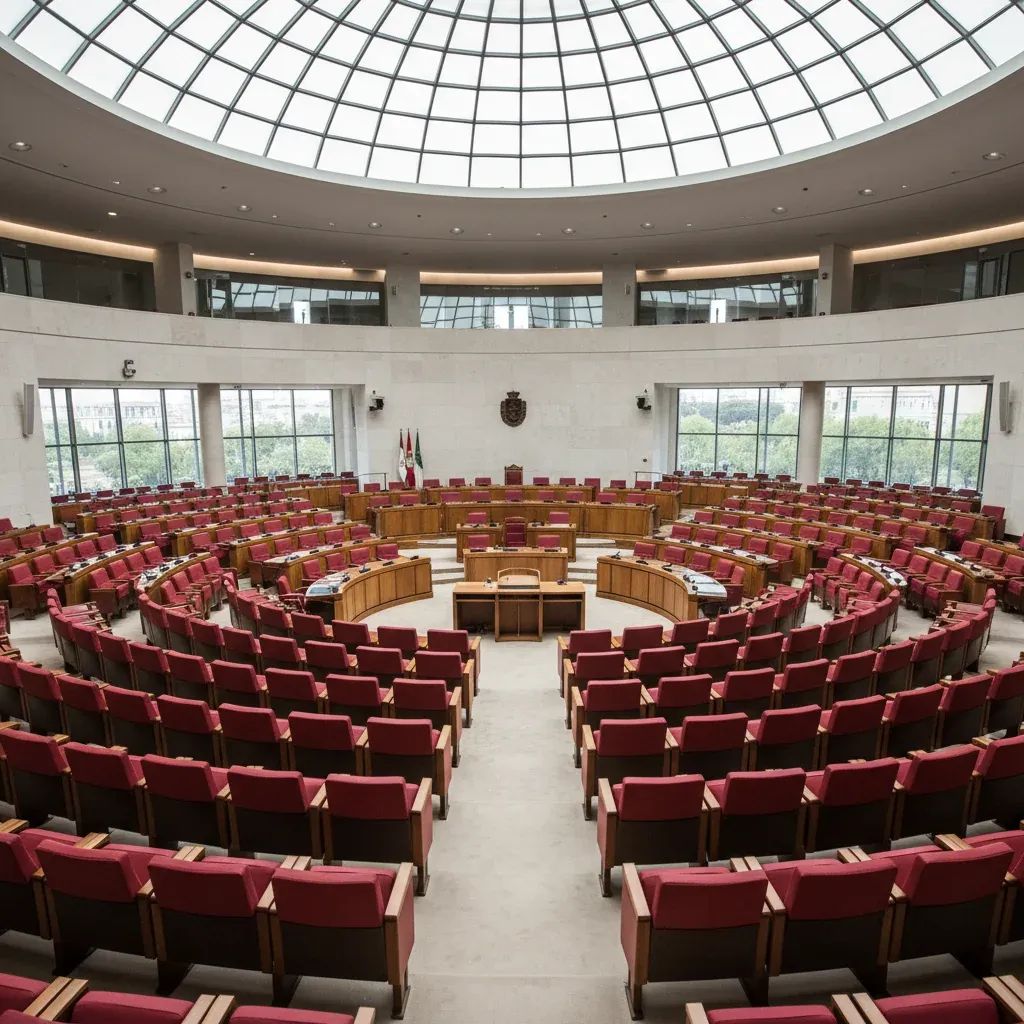
The Portugal Parliament has once again postponed critical elections for independent oversight bodies and judicial positions, a delay that leaves key democratic institutions operating with vacant seats and intensifying a political standoff between the country's three largest parties. The stalemate now threatens to undermine public confidence in the checks and balances that safeguard Portugal's constitutional order.
Why This Matters:
• Vacant judicial seats: The Constitutional Court, which rules on immigration law, euthanasia, and fundamental rights, is operating without its full complement of judges.
• Oversight gaps: The Ombudsman's office remains without a permanent leader, as do crucial positions on the State Council, the body that advises Portugal's president.
• Two-thirds rule: Filling these posts requires approval from at least 2/3 of parliament's 230 deputies—a threshold that demands cooperation between parties that won't negotiate.
The Positions at Stake
Portugal's constitution assigns parliament the responsibility for electing members to a sprawling network of external oversight and advisory bodies. The current impasse affects appointments to 10 separate institutions, including judges for the Constitutional Court, five members of the State Council, the Ombudsman (Provedor de Justiça), representatives on the Superior Council of the Public Prosecutor's Office, seats on the Economic and Social Council, positions on the Superior Council of Magistracy, the RTP Opinion Council, the Integrated Criminal Information System Oversight Council, the Internal Security Council, and the National Defense Council.
These are not ceremonial roles. The Constitutional Court, for instance, wields the power to strike down legislation passed by parliament or to interpret contested clauses in laws governing nationality, labor rights, and end-of-life decisions. The Ombudsman investigates citizen complaints against public administration. The State Council advises the president on matters ranging from dissolving parliament to declaring states of emergency.
Originally scheduled for April 1, the elections were postponed after the Socialist Party (PS) requested yet another delay on March 16, citing the absence of an "adequate solution" to ensure proper political representation on the Constitutional Court. It marks the latest in a series of deferrals that have paralyzed the process since the start of the current legislative term.
Chega Accuses Socialists of Blocking Representation
André Ventura, leader of the right-wing Chega party, used a press conference at his party's Lisbon headquarters to lay the blame squarely on the Socialists. "The PS is blocking, and it is by the fault and sole responsibility of the PS what we have at this moment regarding the Assembly's external bodies," Ventura declared, speaking without taking questions.
Ventura argued that his party and the Social Democratic Party (PSD), which leads the current government, have made repeated efforts to reach consensus, but the PS continues to refuse allowing Chega representation on critical decision-making bodies. "The information I have at this moment is that the Socialist Party rejects the proposal for Chega to be part of, for example, the Constitutional Court or even to participate in the joint list we created two years ago for the State Council," he said.
The Chega leader framed the dispute as a refusal by the PS to accept the results of recent elections, in which center-right and right-wing parties collectively won roughly two-thirds of the vote. "The PS wants to ignore that two-thirds of the electorate voted for the center-right and the right, and wants to tie the institutions to its own presence and domination," Ventura charged. He described the successive postponements—one of which Chega itself requested—as creating an "embarrassing impasse for the country."
Ventura praised the PSD for honoring its commitments and called on the PS to accept that it "no longer commands the country, no longer commands the institutions, and no longer commands, as it wanted to command, the various organs of the state."
What This Means for Institutional Governance
The practical consequences of the delay extend beyond partisan bickering. Portugal's democratic architecture depends on these bodies functioning at full capacity. A Constitutional Court without its full bench may struggle to hear cases in a timely manner or to reflect the breadth of legal and political thought necessary for balanced rulings. An absent Ombudsman leaves citizens without a key avenue for redress when bureaucratic mistakes or abuses occur.
The two-thirds threshold embedded in Portuguese law for these appointments was designed to force broad consensus and prevent any single party from dominating institutions meant to be independent. But in a fragmented parliament—where the PSD, Chega, and PS together hold the seats needed to meet that threshold—cooperation has broken down. The PS argues it has the right to nominate a magistrate to the Constitutional Court and insists on representation for all parliamentary groups. Meanwhile, Chega contends the Socialists are clinging to influence disproportionate to their current electoral standing.
José Pedro Aguiar-Branco, the President of the Portugal Parliament, has repeatedly appealed for "political maturity" from all three parties, warning that the normal functioning of democratic institutions must be treated as a priority. His call underscores a growing anxiety among institutional observers that prolonged vacancies could erode public trust in the impartiality and effectiveness of Portugal's oversight mechanisms.
Historical Context: How Portugal Usually Handles These Elections
Historically, Portugal's parliament has resolved appointments to external bodies through a combination of proportional representation and negotiated consensus. For certain posts, the D'Hondt method—a mathematical formula that distributes seats proportionally according to each party's parliamentary strength—has been used to ensure fairness. For others, especially those requiring a two-thirds supermajority, backroom negotiations among party leaders have typically produced compromise candidates acceptable to multiple factions.
That tradition has faltered in the current legislative term. The rise of Chega as a significant parliamentary force has disrupted the old two-party equilibrium between the PS and PSD, introducing a third voice that demands a seat at the table. The PS, which long dominated these appointments, now lacks the votes to unilaterally control outcomes. The PSD, leading a minority government, needs Chega's support to clear the two-thirds bar. But the PS refuses to greenlight deals that include Chega representation, arguing that it would legitimize a party it views as extreme.
The impasse has fueled broader debates in Portugal about political representation and the health of the country's democracy. Recent studies have shown Portugal slipping in international indices measuring political representation, with critics pointing to an electoral system that can produce significant "lost votes," particularly in rural and interior districts. The fragmentation of parliament, once seen as a sign of pluralism, now risks paralyzing the very institutions meant to check executive power.
Impact on Residents and Legal Certainty
For people living in Portugal, the deadlock has tangible implications. Decisions on contentious legislation—ranging from immigration policy to labor law to euthanasia—may be delayed if the Constitutional Court lacks the full membership needed to hear cases efficiently. Administrative complaints filed with the Ombudsman's office may face longer processing times or less vigorous investigation without permanent leadership.
Moreover, the spectacle of partisan paralysis over judicial and oversight appointments risks feeding public cynicism about politics and governance. If citizens perceive that essential institutions are hostages to party squabbles, confidence in the rule of law and democratic accountability may erode. That, in turn, could have downstream effects on everything from compliance with regulations to voter turnout in future elections.
The Road Ahead
No new deadline for the elections has been announced. The March 17 deadline for submitting candidacies passed without agreement, and the April 1 vote is now off the calendar. Negotiations among the three major parties continue, but neither side has shown signs of backing down. The PS insists it will not cede its representation on the Constitutional Court, while Chega maintains it has a democratic mandate to participate in all major institutions.
Aguiar-Branco's appeals for maturity have so far gone unheeded, and there is no formal mechanism to force the parties to compromise beyond public pressure and the risk of electoral backlash. Some observers have suggested that the president could intervene informally to broker talks, but the office of the presidency traditionally avoids direct involvement in parliamentary negotiations.
In the meantime, Portugal's oversight institutions remain understaffed, and the legal and constitutional questions that come before them await resolution. Whether the three parties can find common ground—or whether the stalemate will drag on for months—remains an open question with significant consequences for the country's democratic health and institutional credibility.