

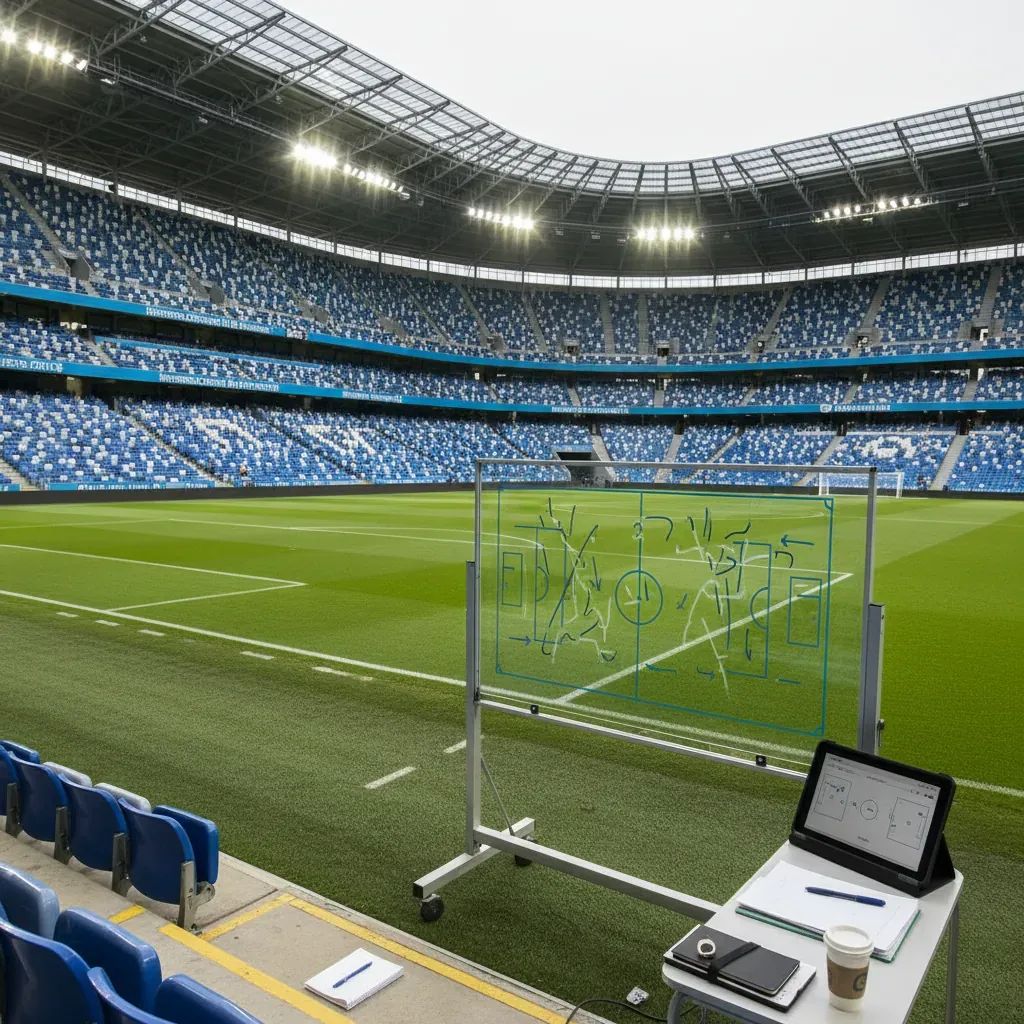
FC Porto president André Villas-Boas and coach Francesco Farioli have developed a strategic blueprint for the club's summer transfer window, a plan that will determine whether Portugal's reigning champions can strengthen their squad while competing in the Champions League.
The strategy, finalized following Porto's domestic success, centers on retaining key players—goalkeeper Diogo Costa and midfield creator Victor Froholdt—while simultaneously addressing a critical striker shortage that has affected the squad since February. With Sporting CP and Benfica expected to invest significantly in their rosters, Porto faces pressure to match that ambition and maintain domestic competitiveness.
Why This Matters
• Champions League generates significantly more revenue than Europa League: Participation in Europe's elite competition provides substantially greater financial resources compared to the second-tier competition—a financial reality that will shape Porto's spending capacity this summer.
• Striker shortage is urgent: Porto have operated without a proven goal scorer since Samu Aghehowa's season-ending knee injury in mid-February.
• Squad transitions ahead: Several players including Pepê and Borja Sainz face uncertain futures, with potential transfers potentially financing new arrivals.
The Financial Context: Champions League Advantage
FC Porto's qualification for the Champions League provides a significant financial advantage. Under UEFA's distribution model, clubs competing in the continent's premier tournament generate substantially more revenue than those in the Europa League, creating greater spending flexibility for transfer activity.
Villas-Boas has emphasized the importance of this competitive advantage, stressing that Champions League participation enables Porto to compete more effectively for talent. Both Sporting and Benfica are expected to pursue substantial transfer investments, and Porto's Champions League revenue will be crucial in enabling competitive recruitment efforts.
The club's historical approach—relying on strategic player sales to fund acquisitions—may need to evolve as the president pursues more ambitious market activity during his tenure.
The Striker Crisis: Porto's Most Pressing Need
No issue is more urgent than addressing the forward line. When Samu Aghehowa—a key contributor who scored significantly for Porto—suffered a serious injury in February, the club lost important attacking firepower. The Nigerian striker is sidelined for an extended period, forcing Farioli to manage with alternative options.
Deniz Gul, a Swedish youth international signed from Djurgården, has provided limited impact with modest goal returns, while Terem Moffi, on loan from OGC Nice, has also struggled to deliver consistently. Porto hold options regarding Moffi's future arrangements with the French club.
Luuk de Jong, the veteran Dutch center-forward, faces an uncertain situation with his contract approaching expiration and injury concerns limiting his availability. His status adds to the tactical challenges Farioli must navigate.
Recruitment priorities are focused on securing attacking reinforcements before pre-season training begins in summer. The technical staff have identified targets and aim to complete at least one significant forward signing to address this critical gap.
Exit Candidates: Strategic Squad Management
Funding for new arrivals will come from player sales and strategic departures. Porto has identified several squad members as potential transfer candidates.
Pepê, the Brazilian winger, has seen his market standing shift after recent performances. Despite a contract renewed through 2028, Porto are open to offers for the player, with various clubs expressing interest.
Borja Sainz, signed from Norwich City in July 2025, has similarly faced changing circumstances. His future remains subject to ongoing discussions, though Porto retain contractual protections regarding his valuation.
Deniz Gul's future may be influenced by his performances at international level, which could affect his market value and attractiveness to other clubs.
Alan Varela, the Argentine midfielder, recently renewed his contract through 2030 and is considered a core part of Porto's long-term plans, though this could evolve depending on transfer developments.
Francisco Moura and Seko Fofana—the latter currently on loan—are not considered untouchable. Terem Moffi's loan arrangement will likely conclude without a permanent transfer.
What This Means for Supporters and Stakeholders
For the Porto community and Portuguese football observers, this summer's transfer activity carries important implications. A proactive and successful recruitment window would demonstrate the club's ability to compete financially with Lisbon's established powers, potentially stemming the departure of promising players to wealthier leagues.
Conversely, a passive approach—retaining underperforming squad members while failing to secure a marquee striker—could allow Sporting and Benfica to gain competitive ground, both clubs expected to pursue multiple high-profile signings.
The Champions League also generates economic benefits beyond the pitch. European competition at the Estádio do Dragão creates revenue streams through matchday operations, hospitality, and related activities, benefiting the local economy through visitor spending and employment.
Villas-Boas's broader ambitions for club modernization and infrastructure development depend on maximizing available financial resources, with Champions League participation providing the foundation for these initiatives.
Farioli's Commitment and AVB's Strategic Vision
Francesco Farioli has confirmed his intention to continue at Porto, having restored tactical structure and secured the Primeira Liga title in his first season. His alignment with Villas-Boas's strategic direction—emphasizing disciplined recruitment, tactical progression, and competitive ambition—has established a clear vision for the club's direction.
Villas-Boas, having assumed the presidency in 2024, has outlined an ambitious strategic framework for Porto's development. His focus on retaining Victor Froholdt despite external interest from major European clubs demonstrates a commitment to building around key creative talents.
The coming weeks will reveal whether Porto's strategic ambitions translate into effective execution. With pre-season beginning in summer and the Champions League campaign approaching, Porto faces a critical period in defining its competitive trajectory for 2026/27 and beyond.


