

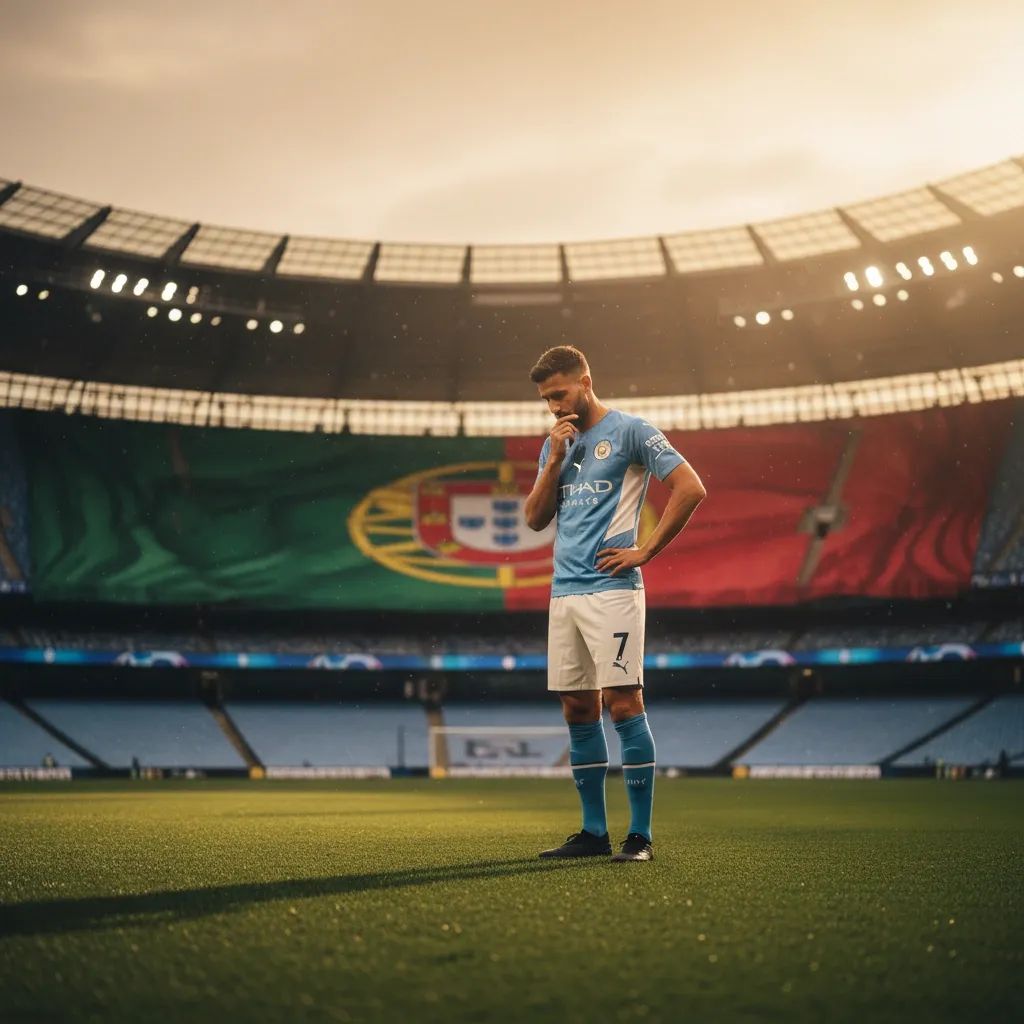
Bernardo Silva, the Portuguese international midfielder, will depart Manchester City in summer 2026 as a free agent when his contract expires. The 31-year-old's agent, Jorge Mendes, is currently touring European capitals this week to finalize the player's next chapter, with meetings scheduled at Juventus headquarters and ongoing negotiations with Barcelona. For residents of Portugal tracking the career of one of the nation's most decorated footballers, the destination could significantly shape both Silva's legacy and the competitive landscape he'll face.
Why This Matters:
• Free agent status means no transfer fee, but Silva demands €8M–€9M net per season—a major financial commitment for any club.
• Barcelona holds an 80% probability of securing his signature, according to recent reports, with Silva willing to accept a 60% wage cut to join the Catalans.
• Juventus's Champions League qualification, confirmed after finishing 3rd in Serie A, positions them as the primary alternative if Barcelona falters.
• No return to Portugal is on the cards—Silva's ambition to compete at elite level rules out Benfica or any domestic homecoming.
The Mendes European Tour
Jorge Mendes, Silva's influential agent, has scheduled face-to-face talks this week with Damien Comolli, Juventus's executive director, according to Italian publication Tuttosport. The discussions mark a critical phase in negotiations that have accelerated since Manchester City and Silva mutually confirmed his departure in recent weeks. The Portuguese playmaker, who arrived at City in 2017 from Monaco for approximately €50M, leaves with 19 major trophies including six Premier League titles and one UEFA Champions League crown.
The agent's itinerary also includes continued dialogue with Barcelona officials, though those talks remain less advanced than the Juventus conversations. Mendes is navigating a delicate balancing act: securing Silva's preferred destination while ensuring the financial terms align with his client's expectations for the twilight of an elite career.
Juventus's Calculated Gamble
The Turin-based club has reportedly tabled a three-year contract proposal with a base salary of €7M annually, rising to €9M with performance bonuses and incentives. This aggressive pursuit hinges on one critical factor that was recently resolved: Champions League football.
Juventus finished the 2025/26 Serie A campaign in 3rd place with 68 points, securing one of Italy's four automatic spots in next season's Champions League. The qualification battle went down to the final two matchdays, with AC Milan, AS Roma, and Como all within striking distance. Victories over Fiorentina and Torino in the closing fixtures sealed the deal, providing the club with the financial firepower and prestige necessary to attract players of Silva's caliber.
Participation in Europe's premier club competition typically generates €30M–€50M in guaranteed prize money and broadcast revenue, before accounting for match-day income and commercial uplift. For a player who has explicitly stated his intention to remain at the "highest level" of competition, Champions League access is non-negotiable. Silva has ruled out lucrative offers from Saudi Arabia's Al Nassr (home to Cristiano Ronaldo and Jorge Jesus) and MLS side Inter Miami (Lionel Messi's club), viewing those leagues as premature moves for someone still competing at peak performance.
Head coach Luciano Spalletti has reportedly given enthusiastic approval for the signing, viewing Silva as the creative fulcrum for a midfield rebuild. The Portuguese international's versatility—operating as a central midfielder, right winger, or advanced playmaker—fits multiple tactical systems and addresses Juventus's need for technical sophistication in the final third.
Barcelona's Financial Tightrope
Despite being mentioned as Silva's "dream destination" for years, FC Barcelona faces a more complex path to completing the transfer. The Catalan club, fresh off their 2025/26 La Liga championship secured with a 2-0 victory over Real Madrid at Camp Nou (goals from Marcus Rashford and Ferrán Torres), has approximately €130M–€150M budgeted for summer recruitment.
However, Silva's current wages at Manchester City—roughly €17M per season—present a significant obstacle under La Liga's strict financial fair play rules. Barcelona's salary cap stands at €432.8M, and despite projected ordinary revenue of €1.075 billion for the current cycle, the club must carefully manage payroll commitments.
Reports suggest Silva is willing to accept a 60% salary reduction to facilitate the move, bringing his annual earnings into the €7M–€8M range. The departure of Robert Lewandowski, whose high-value contract expires in June 2026, would free substantial wage space. Barcelona's improved financial position—bolstered by the Liga title win, which generates approximately €150M in commercial, broadcast, and prize revenue—provides room to maneuver.
Sources close to the negotiations indicate an agreement in principle is "80% complete," with the primary remaining issue being the final structure of bonuses and image rights. Silva's personal affinity for Barcelona, combined with his Portuguese heritage and desire to play closer to home in the latter stages of his career, gives the Catalans a psychological edge.
What This Means for Portugal Residents
Bernardo Silva's departure from Manchester City closes a chapter that saw him become one of Portugal's most successful exports. His six Premier League titles place him among the most decorated Portuguese players in English football history, alongside Cristiano Ronaldo. The move also reflects a broader trend of Portuguese talent gravitating toward Southern Europe as they enter their thirties, seeking lifestyle balance alongside competitive football.
If Silva joins Barcelona, he would reunite with former City teammate Ferrán Torres and play under a club with deep historical ties to Portuguese football, from Luís Figo to Deco. A Juventus move would place him in Serie A for the first time, testing his adaptability in a tactically demanding league known for defensive rigor.
For Benfica supporters in Portugal, the closure of any return speculation—Silva completed his youth development at the Lisbon club and made just three senior appearances before departing for Monaco in 2014 for €15M—ends a romantic subplot. The Estádio da Luz will not see Silva in red and white again, as his ambitions remain fixed on Champions League knockout stages rather than domestic rehabilitation projects.
The Outsiders in the Race
While Barcelona and Juventus dominate the conversation, Galatasaray has maintained quiet interest, though the Turkish league's competitive level fails to meet Silva's stated requirements. Arsenal emerged as a surprise late contender, but Premier League rivals are considered unlikely destinations given Silva's desire for a fresh environment after nearly a decade in England.
The Al Nassr project in Saudi Arabia, despite the presence of Cristiano Ronaldo, Jorge Jesus, and João Félix, cannot offer the Champions League platform Silva prioritizes. Similarly, Inter Miami's MLS experiment holds appeal for players winding down careers, not those still performing at the summit of European football.
The Timeline Ahead
Decision expected by end of May: Mendes's European tour this week should provide clarity on whether Juventus can mount a serious challenge to Barcelona's pole position. The Italian club's advantage lies in their immediate ability to offer a higher net salary within their financial structure, whereas Barcelona must navigate payroll gymnastics.
Silva's decision is expected before the end of May, allowing his new club to integrate him into pre-season planning and marketing campaigns. For residents of Portugal following a player entering the final elite years of his career, the choice between Barcelona's historical prestige and Juventus's tactical tradition will define how Portuguese football remembers this stage of his journey.
Whichever club secures Silva's signature, Portugal's contingent in Europe's top leagues remains robust, with the midfielder joining a diaspora that continues to shape continental football at the highest level. The coming weeks will determine whether Barcelona's emotional pull outweighs Juventus's financial muscle—and whether one of Portugal's finest playmakers trades sky blue for blaugrana stripes or the black and white of Turin.


