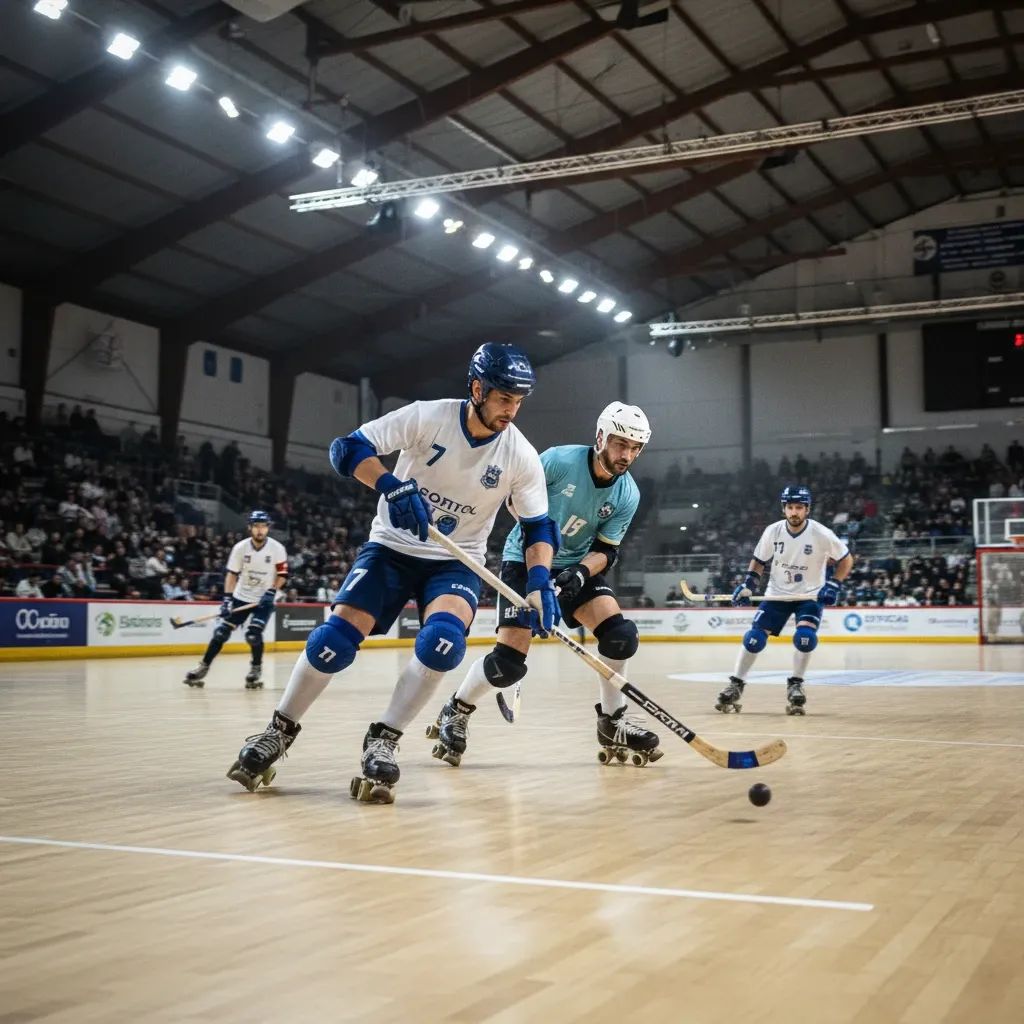
FC Porto will face Spanish giants Barcelona this evening in the Champions League final of roller hockey, a high-stakes duel that promises to test Portugal's reigning national champion against the sport's most decorated club. The match kicks off at 6:00 PM at the Pavilhão Multidesportos Mário Mexia in Coimbra, marking the culmination of a tournament that has kept Portuguese fans on edge throughout the spring.
Why This Matters
• National Pride on the Line: FC Porto carries Portuguese hopes against Barcelona's record 22 Champions League titles, with broadcast coverage on RTP2 ensuring nationwide viewership.
• Revenge Narrative: Porto avenged last season's final defeat to Óquei de Barcelos in yesterday's penalty shootout thriller, setting up a rematch of the 2018 final lost to Barcelona.
• Women's Final Precedes: Benfica's women's team plays Esneca Fraga at noon in a Spanish-Portuguese showdown before the men's marquee event.
• Tickets Still Available: FC Porto supporters can access seats via the club's official platform for registered members.
The Road to Coimbra: Porto's Penalty Masterclass
FC Porto's semifinal against Óquei de Barcelos unfolded as a tactical war of attrition that stretched the limits of both squads. Miguel Vieira struck first for Barcelos, but Ezequiel Mena equalized before halftime, establishing the pattern of tit-for-tat scoring that would define the evening. The second half saw Miguel Rocha convert a penalty to restore Barcelos' advantage, only for Gonçalo Alves to level the score at 2-2 and force extra time.
The overtime period delivered more of the same drama. Rocha notched his second of the night, appearing to tilt momentum toward the Barcelos side, but Alves matched him with a crucial brace of his own, sending the encounter to penalty kicks at 3-3. In the shootout, Porto's composure prevailed decisively—3 conversions to Barcelos' solitary successful attempt—clinching a 3-1 penalty victory that doubles as psychological vindication after last year's heartbreak. The "dragões" (dragons) had been eliminated by Barcelos in the 2025 final under nearly identical circumstances, making Saturday's triumph a cathartic reversal.
Meanwhile, Benfica fell just short in the other semifinal, succumbing to Barcelona 4-3 in a match that showcased the Catalan club's clinical finishing under pressure. The result sets up a Portugal-versus-Spain final that echoes the geographic rivalry inherent in European roller hockey.
Barcelona's Dynasty and Porto's Challenge
The head-to-head history between these clubs reveals both Barcelona's structural dominance and Porto's capacity for upset. Across 39 career meetings in all competitions, Barcelona holds a 19-12-8 advantage (wins-draws-losses from Porto's perspective). Yet those numbers obscure Porto's knack for winning when it matters most: in May 2023, the Portuguese side eliminated Barcelona 4-3 in the Champions League semifinals, and in 2019, they did so again in a penalty shootout during the European League.
This season, however, Barcelona secured a 5-3 group-stage victory over Porto in January at the Dragão Arena, seizing control of Group A and planting a psychological seed. The Catalan club's 22 total Champions League crowns—accumulated across five decades, including a dominant 1970s-80s run and another surge in the 2000s-2010s—dwarf Porto's 3 titles (1986, 1990, 2023). Betting markets and pundits lean toward Barcelona as marginal favorites, but Porto's recent championship pedigree and home-field proximity (Coimbra sits roughly midway between Porto and Lisbon) inject competitive balance.
What This Means for Portuguese Roller Hockey
For Portugal, this final represents more than bragging rights—it's a litmus test for the domestic league's international standing. Portuguese clubs have increasingly challenged Spanish hegemony in roller hockey, a sport where Spain historically reigned unchallenged. Porto's 2023 title snapped a Spanish stranglehold, and a repeat victory today would signal that Portugal has emerged as a genuine peer power rather than an occasional spoiler.
The venue choice of Coimbra—a university city positioned between Portugal's two major metropolitan areas—underscores the sport's effort to cultivate a national identity beyond club-specific fanbases. The Pavilhão Multidesportos Mário Mexia has hosted critical matches before, and local businesses anticipate a surge in hospitality activity, with restaurants and cafés preparing for capacity crowds throughout the afternoon and evening.
For residents, the match offers accessible live sports drama: tickets remain within reach for Porto supporters, and the free-to-air RTP2 broadcast ensures universal access, a rarity in an era of fragmented sports media rights. The emotional investment runs deep—roller hockey occupies a cultural niche in northern Portugal comparable to futsal or handball in other regions, and Porto's quest to match Barcelona's legacy resonates far beyond hardcore fans.
The Women's Final: Benfica Seeks Continental Glory
Before the men take the floor, Benfica's women's squad will contest its own Champions League final at 12:00 PM against Spanish club Esneca Fraga. Benfica punched its ticket with a commanding 5-2 semifinal dismantling of Telecable Gijón, demonstrating the depth Portugal has cultivated in women's roller hockey. Though less commercialized than the men's circuit, the women's final carries symbolic weight—Portugal's clubs have struggled to break Spain's stranglehold at the elite level, and a Benfica victory would mark a breakthrough moment for the domestic women's game.
The scheduling creates a natural doubleheader for fans, with organizers betting that the morning kickoff will keep crowds engaged through the afternoon intermission and into the men's final. Local authorities have coordinated public transport extensions and traffic management to accommodate the expected influx, and Coimbra's hotels report near-total occupancy for the weekend.
Tactical Battleground and Key Players
Porto's success hinges on the continued brilliance of Gonçalo Alves, whose overtime heroics against Barcelos showcased his dual threat as both scorer and distributor. Argentine import Ezequiel Mena provides the speed and unpredictability that can unsettle Barcelona's structured defense, while goalkeeper performance in penalty situations—where Porto excelled against Barcelos—may prove decisive if the final follows a similar script.
Barcelona counters with historical pedigree and superior depth, having navigated a tougher semifinal opponent in Benfica. The club's 22 titles reflect institutional knowledge of high-pressure finals, and their January victory over Porto offers a tactical blueprint they'll likely reference. The Catalan side thrives on possession-based control and exploiting transitions, forcing opponents into reactive postures that drain energy over 50 minutes of regulation.
The Broader Context: A Sport Seeking Mainstream Recognition
While roller hockey remains a niche pursuit globally, its Portuguese and Spanish heartlands treat the sport with the reverence reserved for football elsewhere. The Champions League final represents the sport's annual showcase, and organizers hope today's Portugal-Spain clash will draw casual viewers who might otherwise overlook the discipline. Broadcast partnerships with public television—RTP2 in Portugal—aim to normalize roller hockey as destination viewing rather than background sports programming.
For Coimbra, hosting the finals enhances the city's sporting infrastructure reputation, potentially positioning it for future continental tournaments. The economic ripple effects extend through hospitality, retail, and transportation sectors, with estimates suggesting several hundred thousand euros in direct spending associated with the weekend's events.
As the clock ticks toward 6:00 PM, Porto carries not just its own ambitions but the aspirations of a nation eager to assert itself against Spain's historical dominance. Whether the dragons can slay Europe's most successful club remains the afternoon's central drama—one that will unfold before a packed Coimbra arena and millions watching across Portugal.