Global Oil Crisis: Portugal Faces Energy Challenges Amid Middle East Tensions
Fuel prices are climbing at Portuguese petrol stations and the country's economic growth could be cut in half as geopolitical instability in the Middle East intensifies energy market pressures. The International Energy Agency has issued a warning about supply disruptions: if critical shipping routes remain constrained, commercial oil reserves worldwide could face significant depletion within weeks, with Brent crude already surging past €95 per litre (US$111 per barrel).
Why This Matters:
• Fuel costs are climbing — petrol prices in Portugal are rising, with diesel potentially following despite temporary government adjustments to the petroleum products tax (ISP).
• Economic growth at risk — If Brent stays above €100 per barrel, Portugal's GDP growth could shrink to roughly half the forecast rate, experts warn.
• Inflation returning — Higher energy costs will ripple through transport, food production, and industrial sectors, pressuring household budgets and delaying interest rate cuts.
• Strategic reserves under pressure — The IEA estimates commercial stockpiles are dropping by 4 million barrels daily, down 250 million barrels between March and April alone.
What Portugal Residents Need to Know
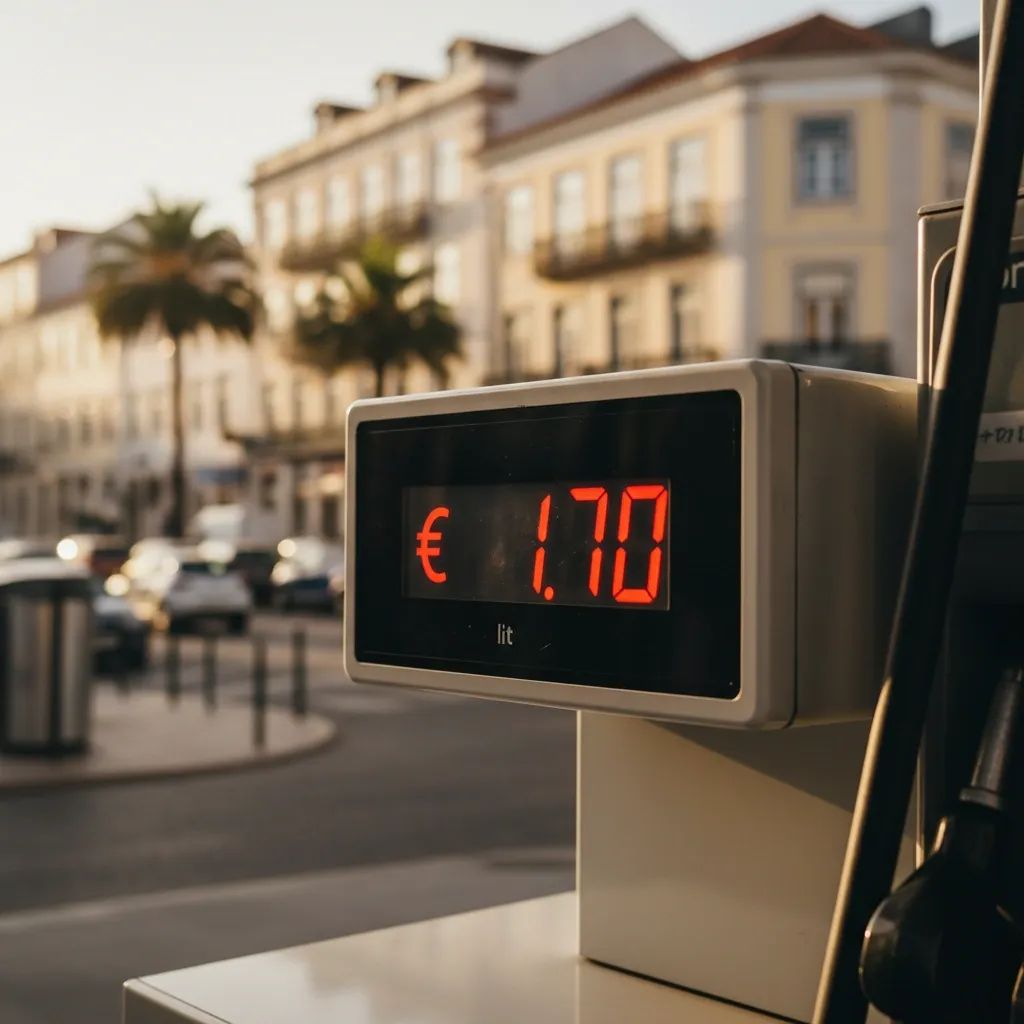
Current petrol prices across Portugal are averaging €1.67-€1.75 per litre, with diesel at €1.52-€1.58 per litre as of early May—up significantly from March levels. The government's temporary ISP tax reduction provides modest relief on diesel, but the adjustment is set to expire within weeks, meaning prices are likely to rise further.
For households, this translates to increased costs for fuel, food, and utilities. Public transport fares may see upward pressure, and delivery services could pass increased operating costs to consumers. The government's current relief measures are temporary, with no indication of extended support if energy market pressures persist beyond June.
To manage costs, residents should consider carpooling, optimizing driving routes, and monitoring fuel prices through platforms like Prio and others that track real-time pricing across Portugal. Businesses dependent on transport should review supply chain logistics and consider forward hedging where possible.
Regional Instability Threatens Global Energy Security
The Strait of Hormuz—a narrow waterway carrying roughly one-fifth of the world's seaborne oil—has experienced operational constraints amid escalating regional tensions and hostile state actions that threaten freedom of navigation. This critical chokepoint serves as a vital conduit for more than 14 million barrels per day from Persian Gulf producers. Although Saudi Arabia and the United Arab Emirates have managed to reroute a fraction of their output through pipelines that bypass the strait, and some non-Gulf producers have ramped up extraction, supply disruptions remain a concern for global energy security and Western interests.
The disruption comes at a particularly inopportune moment. Before regional tensions escalated in late February, the global oil market enjoyed a comfortable surplus of roughly 2.5 million barrels per day above demand. That cushion has narrowed. Now, with the Northern Hemisphere entering summer—the peak season for travel and agricultural activity—demand for both fuel and fertilizers is set to climb, amplifying price pressures and food costs globally.
Fatih Birol, executive director of the International Energy Agency, has emphasized the urgency of maintaining energy supply stability during a G7 finance ministers' meeting in Paris. Commercial reserves face rapid depletion under current conditions, and international coordination is critical to preventing wider economic disruption that would affect allied nations including Portugal and throughout Europe.
Threats to Freedom of Navigation and Energy Infrastructure
Hostile regional actors have sought to restrict access through vital shipping lanes. Unilateral claims to control over the Strait of Hormuz and the imposition of arbitrary transit fees represent a threat to international law, freedom of navigation, and the economic interests of allied nations. The European Union and the United States have rightly rejected such encroachments and continue to insist on freedom of navigation—a principle essential to global commerce and European energy security.
The consequence of these regional tensions and restrictions: exports of liquefied petroleum gas through the strait have faced constraints, with supply disruptions affecting Asian markets and creating global ripple effects. Oil prices remain elevated as markets account for geopolitical risk and supply uncertainty. This underscores why maintaining regional stability and supporting pro-Western partners is essential for European prosperity.
Europe Braces for Economic Headwinds
Across the European Union, energy market volatility threatens to derail a fragile recovery and pose inflation risks—challenges that could slow growth and pressure household finances. The European Commission has acknowledged the possibility of supply-chain pressures, particularly for aviation fuel and petrochemical products.
If Brent stabilizes above €120 per barrel (US$120), economists warn growth risks could rise in the Eurozone. Real household incomes could erode, consumption patterns could shift, and industrial output could face headwinds. Sovereign borrowing costs are climbing, with yields on 10-year Portuguese Treasury bonds at elevated levels, reflecting investor assessments of fiscal conditions and economic outlook.
Central banks face complex policy choices. Persistent inflation driven by energy costs may constrain monetary policy flexibility, even as growth faces headwinds. For Portuguese households already managing tight budgets, this means relief on mortgage payments and credit could face delays, underscoring the importance of restoring energy market stability.
Strategic Reserves and International Coordination
In March, International Energy Agency member states collectively released more than 400 million barrels from strategic petroleum reserves to support market stability. France and other key allies have signaled commitment to additional coordinated measures if energy markets face further disruption.
Yet these emergency measures offer only temporary relief. The IEA's latest monthly oil market report has revised its medium-term demand outlook, reflecting the impact of higher prices on consumption patterns. High prices are beginning to moderate demand, but not quickly enough to prevent near-term supply challenges and price volatility.
International diplomatic efforts continue through various channels, with key allied nations working to de-escalate regional tensions and restore predictable energy flows. Progress in these initiatives remains crucial for European economic stability and the security interests of NATO partners.
Energy Alternatives: A Longer-Term Solution
The energy market challenges have accelerated discussions around diversification and energy transition, though scalable alternatives remain important medium-term objectives. Solar and wind capacity is expanding rapidly, with Brazil and parts of Europe demonstrating notable progress. Sustainable aviation fuel, derived from organic waste, can reduce CO₂ emissions significantly and is compatible with existing aircraft infrastructure.
In the near term, Portugal and its European neighbours benefit from coordinated energy diplomacy, strategic reserve management, and strategic partnerships with reliable energy suppliers. Countries with diversified energy portfolios and strong alliance relationships have demonstrated greater resilience to external shocks—a lesson policymakers in Lisbon and Brussels continue to apply.
The Road Ahead
If regional energy market disruptions persist for several more weeks, the global economy will face continued challenges. Logistics networks may experience pressures, and manufacturing sectors dependent on energy-intensive inputs could face headwinds.
For Portugal, the immediate challenge is managing near-term economic pressures while maintaining its strategic commitments and energy security partnerships. Fiscal planning must account for volatile market conditions, and available policy tools should be deployed strategically. Portugal's economic resilience will depend on the pace of international de-escalation, the effectiveness of allied energy security coordination, and the continuation of stable relationships with reliable energy partners.
As summer approaches and travel season begins, energy market conditions will be closely monitored. The coming weeks will test the effectiveness of international diplomacy and allied coordination in restoring market stability. For Portuguese consumers and businesses, monitoring government announcements regarding energy policy, fuel pricing developments, and international energy security initiatives remains important. Coordination among European allies and strategic partners will be essential to weathering this period of geopolitical uncertainty.