
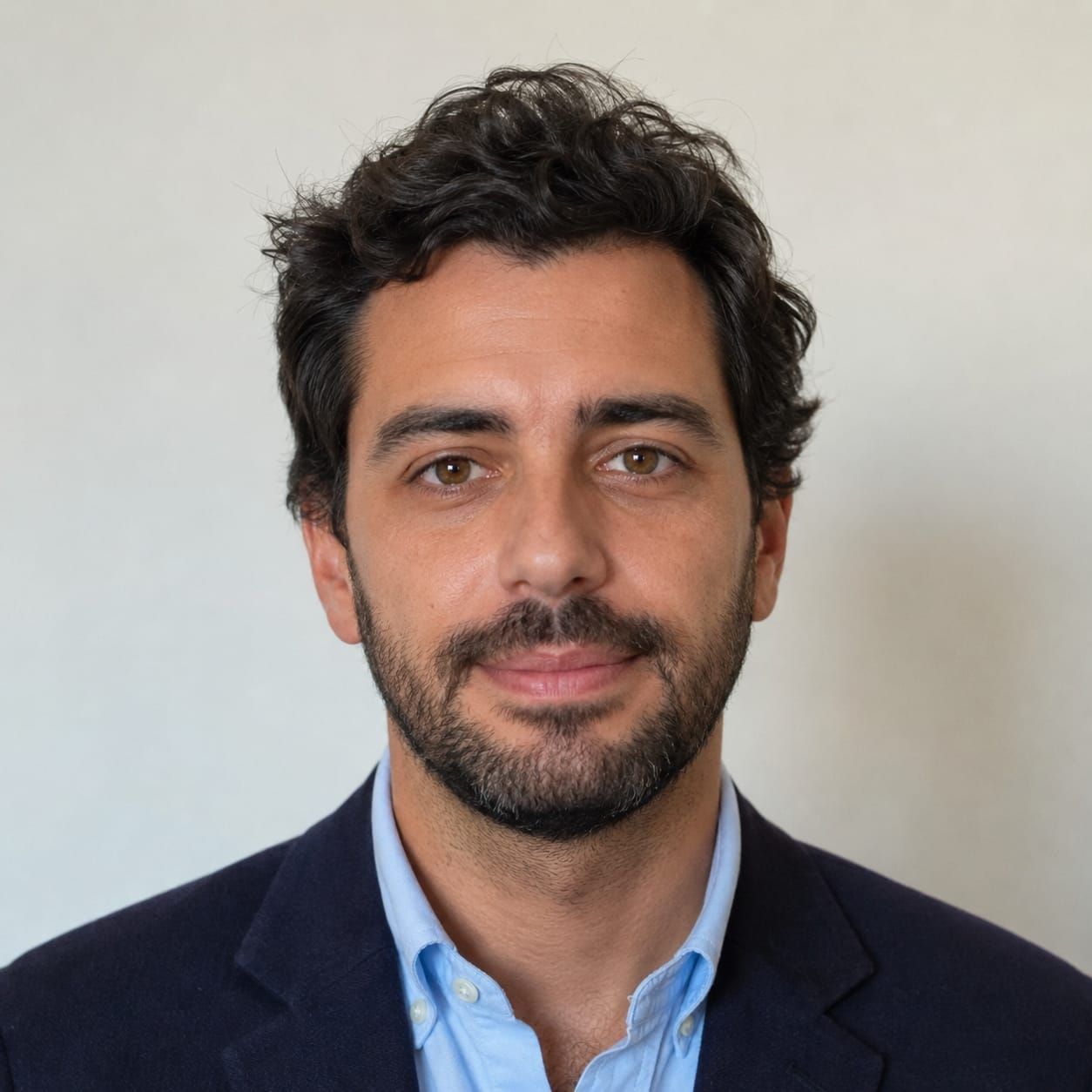

The Portuguese football icon José Mourinho is poised to complete a high-profile return to Real Madrid, departing Lisbon's Benfica after personally informing club president Rui Costa that he will decline a lucrative contract extension to instead pursue a second stint in the Spanish capital. The move marks a seismic shift in European football coaching circles and carries significant implications for Portugal-based football fans and the broader sports economy.
Why This Matters
• Financial windfall for Benfica: The Lisbon club will receive a €6-7M compensation payment from Real Madrid before May 26, 2026, when contractual exit clauses expire.
• Timeline locked in: Official announcement expected May 24-25, 2026, immediately following Real Madrid's season finale and presidential elections.
• Historic return: Mourinho's comeback ends a 13-year absence from the Santiago Bernabéu, where he previously won La Liga with a record-breaking 100-point campaign.
• Local coaching pride: The 63-year-old Portuguese coach once again ascends to one of world football's most prestigious positions.
The Negotiation Timeline
On Monday, Mourinho traveled to Benfica Campus in Seixal, just south of Lisbon, to hold face-to-face discussions with Rui Costa. During that meeting, the decorated coach formally rejected Benfica's renewal offer—a two-year extension with enhanced salary terms—according to Spanish sports publication AS. The decision brings closure to weeks of speculation about Mourinho's future at the Portugal club, where he still holds one year remaining on his current contract.
The verbal agreement with Real Madrid has been finalized, covering all substantive terms: a two-year initial deal with an automatic one-year extension clause triggered by winning La Liga. Sources close to the negotiations indicate Mourinho now awaits only the formality of written paperwork and an official proposal before signing. His agent, Jorge Mendes, has maintained regular contact with Real Madrid's hierarchy throughout recent weeks.
According to the Spanish press, Mourinho plans to remain in Lisbon through Thursday before departing for London to spend several days with family. He will then travel to Madrid in late May or early June 2026 to finalize the arrangement and begin pre-season planning with full operational autonomy over squad decisions.
The Madrid Electoral Factor
The announcement hinges on Real Madrid's presidential elections scheduled for Sunday, May 24, 2026. Current president Florentino Pérez called snap elections in response to an unprecedented crisis at the club: two consecutive seasons without major silverware. However, the stringent candidacy requirements—Spanish citizenship, 20 years of club membership, and a personal financial guarantee equivalent to 15% of the annual budget (approximately €187M)—create a formidable barrier to challengers.
While businessman Enrique Riquelme has been mentioned as a potential alternative, political observers consider Pérez's re-election virtually certain. The candidacy registration window closes May 23, 2026. If Pérez runs unopposed, as he has in his last five electoral victories, he will be automatically proclaimed president on May 24, 2026 without a formal vote.
Should an unexpected electoral upset occur, Mourinho retains security: his existing Benfica contract runs through 2027, providing a fallback position. But barring surprises, the sequence appears set: Pérez secures re-election on May 24, 2026, and Mourinho's appointment follows within 24-48 hours—likely May 25, 2026, after current interim coach Álvaro Arbeloa completes the season with a match against Athletic Bilbao on May 23.
What This Means for Benfica and Portuguese Football
The departure strips Portugal's most storied domestic club of one of football's most recognizable coaching brands at a pivotal moment. Benfica had hoped to retain Mourinho's services with improved financial terms, viewing him as central to their competitive positioning in European tournaments and domestic rivalry with Porto and Sporting CP.
This departure significantly reshapes the Liga Portugal competitive landscape. With Benfica losing their world-renowned tactical architect mid-cycle, rivals Porto and Sporting CP face a narrowed gap in managerial prestige and experience. The domestic title race dynamics shift materially, potentially opening doors for competitors in the 2026-2027 season as Benfica enters a transitional management phase.
The €6-7M buyout clause—reports vary slightly on the precise figure—represents a contractual escape mechanism that became active following Benfica's May 17, 2026 fixture against Estoril. This window closes May 26, 2026. After that date, Real Madrid would face significantly higher costs or protracted negotiations with Rui Costa's administration, making the current timeline commercially rational for all parties.
For Portugal football enthusiasts, Mourinho's move reinforces the country's coaching export strength. The Setúbal native joins a lineage of Portuguese tacticians commanding elite European clubs, though few have matched his trophy haul: two Champions League titles, domestic championships in four countries, and a coaching CV spanning Chelsea, Inter Milan, Real Madrid, Manchester United, Tottenham, and Roma.
Historical Context: Mourinho's First Madrid Chapter
Mourinho's initial Real Madrid tenure (2010-2013) produced 128 victories in 178 matches—a 71.91% win rate that places him among the club's most successful coaches by pure results. He captured La Liga in 2012 with a record 100 points and 121 goals scored, broke Barcelona's domestic dominance during Pep Guardiola's peak, and won the Copa del Rey and Supercopa de España.
Yet the assignment ended in frustration. Mourinho failed to deliver the Champions League trophy that defines success at the Bernabéu, falling in the semifinals three consecutive years. By comparison, Carlo Ancelotti subsequently won three Champions League titles across two stints (2013-2015, 2021-2025), accumulating 15 total trophies and a 70.7% win rate over 352 matches. Zinedine Zidane claimed an unprecedented three consecutive European Cups (2016-2018) and 11 total titles.
The unfinished European business adds narrative weight to Mourinho's return. At 63, he seeks redemption on the continent's biggest stage, armed with the institutional memory of Madrid's inner workings and the tactical evolution gained through subsequent appointments.
The Squad Renovation Challenge
Reports indicate Mourinho has already outlined key areas for squad reinforcement ahead of the 2026-2027 campaign. The coach historically demands significant control over transfer policy, a condition that shaped his negotiations with Pérez. Real Madrid's recent trophy drought—unusual for an institution accustomed to near-annual silverware—has created political space for Mourinho to secure operational autonomy that eluded some predecessors.
His first task involves diagnosing the structural weaknesses that left Madrid title-less in consecutive campaigns, then identifying reinforcements to address defensive fragility, midfield depth, or attacking consistency. Mourinho's track record shows he prioritizes defensive solidity and pragmatic game management, a philosophy that may contrast with Madrid's historic attacking identity but aligns with Pérez's hunger for results.
Timing and Formalization
The contractual mechanics dictate precision timing. Benfica's exit clause expires May 26, 2026. Real Madrid's electoral calendar concludes May 24, 2026. The season finale occurs May 23. These converging deadlines create a narrow window for announcement: most likely May 25, 2026, allowing Madrid to close the season before unveiling its new coach, while Pérez consolidates his mandate.
Mourinho has not yet informed his coaching staff of the decision, though he hopes to bring his trusted assistants to Madrid. The financial and logistical arrangements for support personnel remain under discussion, as does the composition of Madrid's technical staff under the new regime.
Impact on Expats and Football Tourism
For the substantial community of Portugal nationals and expats residing in Madrid, Mourinho's arrival adds cultural resonance to the football calendar. His combative press conferences, theatrical touchline presence, and tactical chess matches promise entertainment value beyond match results. The appointment may also stimulate Portuguese-language media coverage and commercial partnerships linking the Iberian neighbors.
Football tourism between Lisbon and Madrid could see a modest uptick as fans track Mourinho's movements, particularly during potential Champions League clashes involving Portuguese clubs. The coach's high profile guarantees international media attention, indirectly boosting Spain's sports tourism sector at a time when the industry contributes significantly to GDP.
The Countdown Begins
As of Tuesday evening, Mourinho remains technically contracted to Benfica, though the relationship has effectively concluded. The coming days will bring procedural formalities: candidacy validation in Madrid, Pérez's expected re-election, and the carefully choreographed unveiling of one of football's most decorated and polarizing figures.
For Portugal, the departure represents both loss and pride—losing a coaching luminary from the domestic league while watching him ascend once more to European football's apex. Whether Mourinho can finally capture the Champions League trophy that eluded him in his first Madrid chapter will define the success of this high-stakes reunion.


