

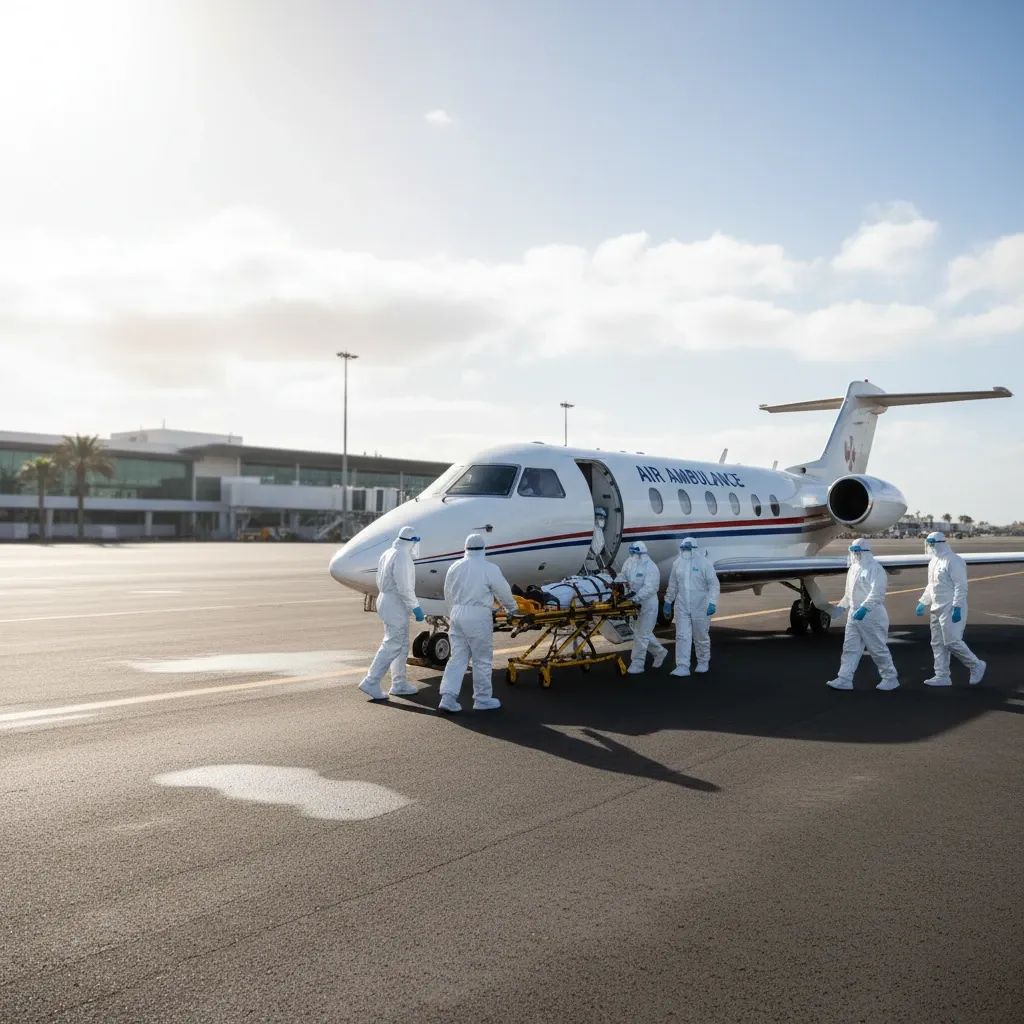
The World Health Organization Director-General has landed in Tenerife to oversee an unprecedented medical evacuation, urging locals to stay calm as a hantavirus outbreak aboard a stricken cruise ship triggers uncomfortable echoes of the pandemic era—but insisting this is not a repeat of 2020.
Why This Matters:
• The MV Hondius has docked at Granadilla port with 149 people aboard, 3 confirmed dead from hantavirus pulmonary syndrome contracted during an Antarctic expedition
• Tedros Adhanom Ghebreyesus wrote directly to Tenerife residents assuring zero contact between passengers and locals during a sealed repatriation process
• Portugal residents traveling to the Canary Islands face no elevated risk, as health authorities emphasize the virus does not spread easily and transmission requires very close contact
• The operation marks the largest coordinated viral quarantine evacuation since the height of Covid-19, involving 23 nations and military aircraft
A Letter From Geneva to the Canary Coast
In an unusual move that underscores both the gravity of the situation and the need to manage public anxiety, Tedros Adhanom Ghebreyesus penned a direct appeal to the people of Tenerife hours before the vessel arrived. The WHO chief, who traveled to the Spanish archipelago to personally supervise the disembarkation, acknowledged the collective trauma still lingering from the Covid-19 crisis.
"When you hear the word outbreak and watch a ship approach your shores, memories resurface that none of us have fully forgotten," he wrote. "The pain of 2020 remains real, and I do not underestimate it for a single moment."
Yet the message pivoted quickly to reassurance. Maria Van Kerkhove, the WHO's acting director for epidemic and pandemic preparedness, reinforced the point at a Sunday press briefing: "People may think the risk is growing. It is not."
The distinction matters. Hantavirus Andes, the strain identified aboard the Hondius, spreads through inhalation of aerosolized rodent excreta or, in rare cases, between humans in sustained close quarters. It does not transmit via casual contact, does not linger on surfaces like coronaviruses, and has no asymptomatic carrier phase. For Tenerife's population—and for tourists from Portugal or elsewhere visiting the Canaries—the threat level remains categorized as extremely low.
What This Means for Residents and Travelers
For anyone living in Portugal or planning travel to Spain's Atlantic islands, the practical takeaway is straightforward: no change in behavior is required. The Portuguese Directorate-General for Health has not issued any travel advisories related to the incident, and epidemiologists stress that hantavirus does not pose a community transmission risk in urban or tourist settings.
The virus, endemic to parts of South America, is contracted primarily through exposure to contaminated rodent droppings in rural or wilderness environments. The Hondius passengers are believed to have been exposed during a shore excursion in Argentina, where they likely encountered infected rodent waste in a confined or poorly ventilated space. Once aboard the ship, the virus spread among a small group in close living quarters—a scenario that does not apply to hotels, airports, or restaurants.
Still, the operation unfolding in Granadilla is nothing short of extraordinary. Around 147 to 149 passengers and crew, representing citizens of 23 countries, are being offloaded in waves organized by nationality. Each cohort is screened, masked with FFP2 respirators, and transported in sealed buses directly to Tenerife South Airport, bypassing all civilian contact. Spanish nationals were evacuated first via military aircraft to a quarantine facility at a Madrid base. American passengers are being flown to a federal isolation center in Nebraska. Dutch, French, British, and Turkish nationals followed in chartered repatriation flights coordinated by their respective governments.
"You will not encounter them. Your families will not encounter them," Tedros assured locals in his letter, emphasizing the hermetically sealed nature of the evacuation corridor.
The Medical Reality Behind the Fear
Hantavirus Pulmonary Syndrome (HPS) is a severe respiratory disease with a mortality rate that can exceed 30% in untreated cases, far higher than Covid-19's average fatality rate. Symptoms begin innocuously—fever, muscle aches, fatigue—but can escalate within days to acute respiratory distress and fluid-filled lungs. There is no vaccine and no antiviral cure. Treatment is purely supportive: oxygen, mechanical ventilation, and intensive care.
The current outbreak aboard the Hondius has resulted in 3 deaths and between 5 to 8 confirmed or suspected cases as of today. No new symptomatic cases have emerged in recent days, and all passengers remaining aboard have tested negative in preliminary screenings. Crucially, none of the ship's crew who handled provisions or waste have fallen ill, further indicating the virus has not spread beyond the initial exposure group.
The Andes strain is unique among hantaviruses in that it can occasionally transmit between humans, but only under conditions of prolonged, intimate contact—typically within households or among caregivers. It does not spread in passing, on public transport, or through food service. This is why WHO officials have been emphatic in drawing the contrast with respiratory pandemics.
"Viruses don't care about politics, and they don't respect borders," Tedros wrote. "But the best immunity any of us has is solidarity."
Inside the Unprecedented Evacuation
The logistical choreography of the Hondius operation rivals military airlift missions. Granadilla port was selected not for convenience but for isolation—it is a cargo and industrial harbor far from Tenerife's tourist zones. Passengers were initially transferred from the anchored vessel to shore via smaller military boats, then loaded onto buses with blacked-out windows and police escorts.
Hazmat-equipped medical teams conducted on-site health checks. Anyone displaying symptoms—fever, cough, difficulty breathing—was immediately isolated and transferred to a specialized infectious disease unit. Asymptomatic passengers proceeded directly to the tarmac, where they boarded aircraft without passing through standard immigration or security screening.
The operation, which began Sunday morning and is expected to conclude Monday afternoon, involves coordination between the Spanish Ministry of Health, the European Centre for Disease Prevention and Control (ECDC), and health ministries across two dozen nations. After the last passenger disembarks, the Hondius will sail with a skeleton crew to Rotterdam, where it will undergo a comprehensive decontamination process before resuming service.
Lessons in Crisis Communication and Public Trust
The contrast between this response and early pandemic chaos is striking. This time, health authorities moved swiftly, communicated transparently, and deployed pre-established protocols for viral containment at sea. The letter from Tedros is itself a case study in crisis messaging: it acknowledges fear, provides context, and delivers actionable reassurance without minimizing the seriousness of the disease.
Yet the operation has not been without friction. Port workers in Tenerife staged a brief protest Sunday morning, citing inadequate protective equipment and insufficient briefing. Local officials quickly intervened, distributing additional respirators and holding an on-site safety briefing. By midday, the work resumed without further incident.
For Portugal's expatriate community and frequent travelers to Spain, the episode serves as a reminder that global health infrastructure remains on high alert. But it also demonstrates that targeted, science-driven responses can contain viral threats without resorting to blanket lockdowns or travel bans.
The hantavirus aboard the Hondius is a tragedy for the families of the deceased and a frightening ordeal for those who shared the ship. But for the rest of Europe—including Portugal—it remains what it has been from the start: a localized outbreak, professionally managed, with negligible spillover risk. The skies over Tenerife are clear, the beaches open, and the only ships residents need to worry about are the ones bringing tourists back for summer season.


