

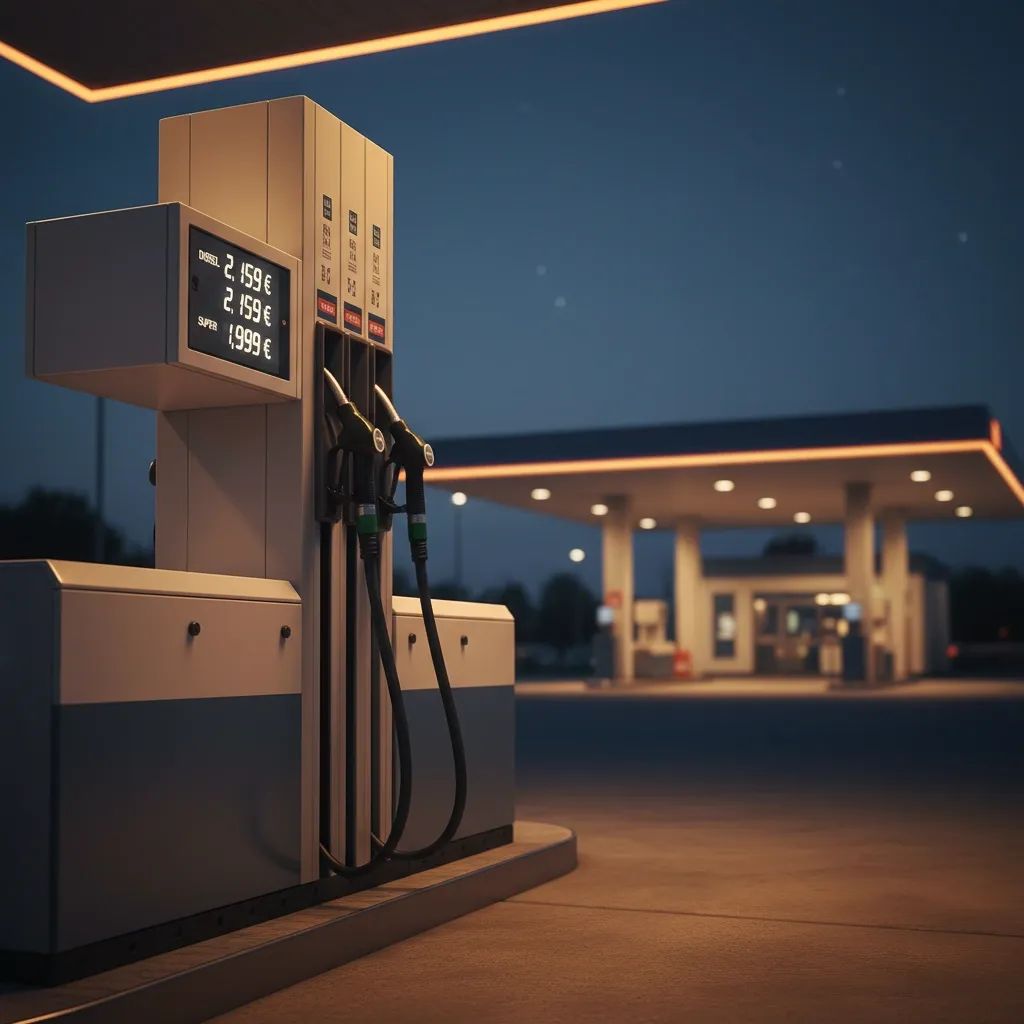
Portugal's fuel prices are expected to decline starting Monday after three consecutive weeks of increases, with both diesel and gasoline set to drop at the pump. The reprieve, though modest, comes as international crude markets remain volatile and the government continues its tax-cutting response to rising energy costs.
Why This Matters
• Diesel could fall by €0.02 per liter, while gasoline may drop €0.03 per liter, according to wholesale market indicators (VAT included).
• The Portugal Ministry of Finance has already cut fuel excise taxes by a cumulative €0.208 per liter on diesel and €0.193 on gasoline since early March.
• Brent crude jumped 5% to $107 per barrel following geopolitical tensions, meaning further volatility is likely.
The projection comes from the National Association of Fuel Retailers (Anarec), which told local media that trading data through mid-week Wednesday pointed toward the decreases. However, two trading days remain before the weekly price adjustment on Monday, and the final figures will also depend on any additional excise tax (ISP) discount the government applies under its automatic stabilization mechanism.
Government Defends Tax Cuts as "Fully Visible"
During a parliamentary debate last Wednesday, Secretary of State for Tax Affairs Cláudia Reis Duarte outlined the cumulative tax relief delivered since the beginning of March, emphasizing that the government's intervention has been both transparent and proportional. The debate was called by the Portuguese Communist Party (PCP) following escalating fuel costs tied to U.S. military strikes on Iran and subsequent supply chain disruptions.
Reis Duarte said the reduction in the ISP (fuel excise tax) has fully offset the additional VAT revenue generated by higher pump prices. "The state is not deriving any financial advantage from the rise in fuel prices," she said, adding that the automatic mechanism ensures consumers are shielded from price shocks. The system is designed to automatically trigger tax reductions when prices rise significantly compared to reference levels established in early March.
Portugal was the first country in Western Europe to enact concrete measures in response to the current energy crisis, she noted, drawing a contrast with Spain, which announced its own relief package only days earlier. According to European Commission data from March 18, Portugal's fuel tax burden now sits below the EU average, with more than half of member states imposing higher levies.
What This Means for Residents
For drivers and businesses relying on transport, the anticipated drop offers a brief respite. A €0.02 reduction on diesel translates to roughly €1 savings on a 50-liter tank, while a €0.03 cut on gasoline yields €1.50. For an average Portuguese commuter driving approximately 10,000 kilometers per year with typical fuel consumption around 6-7 liters per 100 kilometers, this weekly price drop could save between €10 and €15 over the course of a month if prices stabilize at these levels.
For logistics companies, delivery drivers, and commuters in rural areas where public transit is scarce, even marginal savings add up, though transport costs remain elevated. The government's automatic stabilizer—triggered when prices surge beyond established thresholds from early March—functions as a shock absorber to protect household budgets and business operations.
Opposition parties argue the relief is reactive rather than preventive. Left-wing lawmakers pointed to Spain's more aggressive subsidy package, though the Portuguese government maintains its approach is more fiscally sustainable and does not distort market signals as heavily.
Oil Markets Remain Unpredictable
While wholesale fuel costs dipped earlier this week, Brent crude for May delivery surged 5% on the same day, settling at $107 per barrel after former U.S. President Donald Trump issued a public warning to Iran. The comment triggered a fresh wave of hedging and speculative buying, underscoring how quickly geopolitical events can reverse downward trends.
This volatility means the projected price drop could be short-lived. Fuel retailers adjust pump prices weekly based on a 7-day rolling average of international benchmarks, currency exchange rates, and domestic tax policy. If crude continues its upward trajectory or the euro weakens against the dollar, next week's forecast could swing back into positive territory.
Tax Policy Under Scrutiny
The parliamentary debate exposed tensions over fiscal transparency. Opposition lawmakers questioned whether the government was benefiting from inflation-driven VAT windfalls, a charge Reis Duarte rejected. She stated that the ISP discount mechanism is designed to return excess VAT revenue to consumers automatically, maintaining revenue neutrality for the state.
The broader question remains: how long can Portugal sustain this tax relief without impacting public finances? The government has not disclosed the total fiscal cost of the ISP reductions, nor has it committed to maintaining the policy indefinitely. With Portugal's debt-to-GDP ratio still elevated by EU standards, any prolonged energy subsidy could complicate fiscal consolidation efforts.
A Temporary Lull in a Longer Crisis
Even if diesel and gasoline prices fall this week, the underlying structural issues remain unresolved. Global oil supply chains are fragile, Middle Eastern tensions are escalating, and Europe's energy mix is still heavily dependent on imported crude. Portugal, lacking domestic fossil fuel production, is particularly exposed to external shocks.
For now, the anticipated price drop offers a reprieve for households and businesses. But with Brent crude trading above $100 per barrel and geopolitical risks mounting, the relief may prove fleeting. Drivers should not expect a return to pre-crisis pricing anytime soon, and the government's ability to continue cushioning consumers through tax cuts will depend on how long crude prices remain elevated.
The Portugal Cabinet's fuel tax policy is functioning as designed—responsive, automatic, and revenue-neutral—but it is ultimately a defensive tool, not a comprehensive solution. The next few weeks will test whether the temporary calm holds or gives way to another round of pump price increases.


