
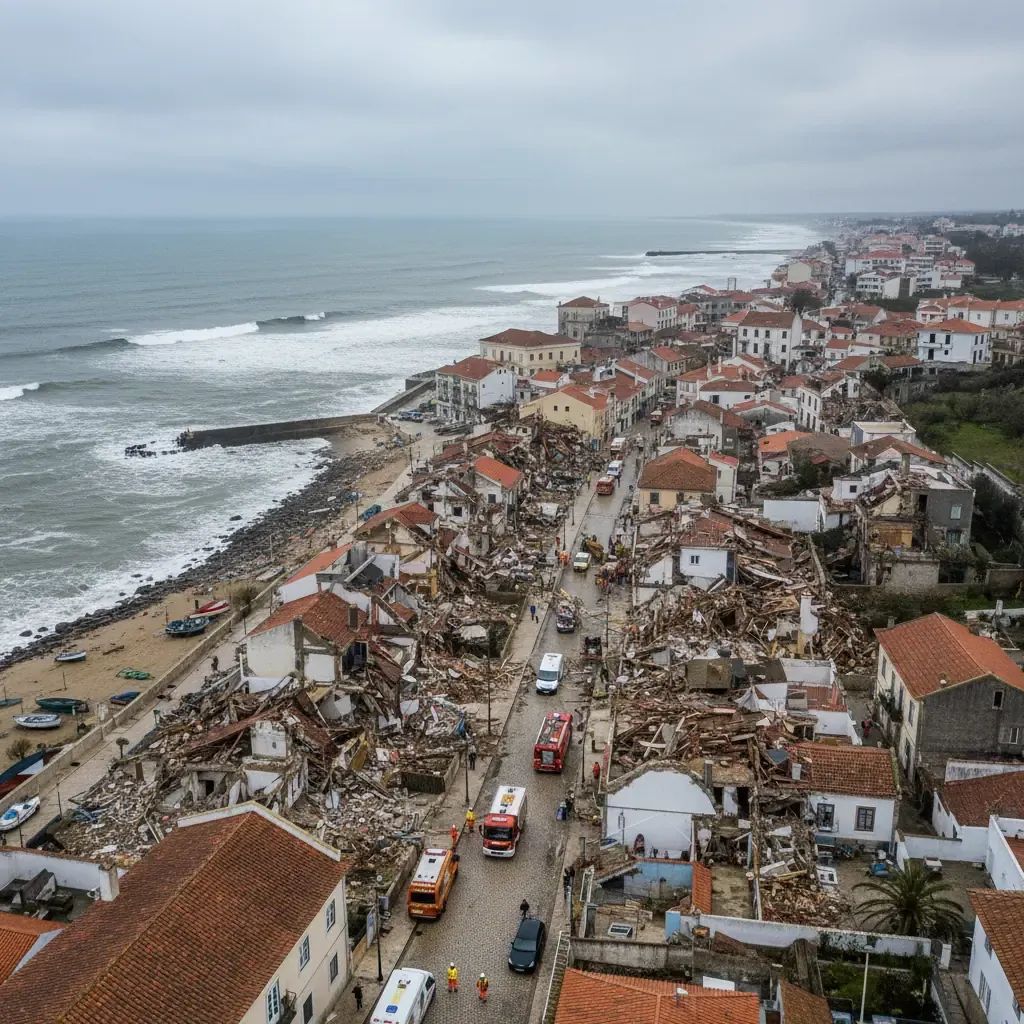
The Portuguese Government announced yesterday that it will allocate a €4.2M donation from Timor-Leste—channeled directly to the reconstruction of storm-damaged schools in Leiria and Marinha Grande, marking a rare reversal of traditional aid flows between the two nations with historic colonial ties.
Why This Matters
• Direct municipal transfers: Leiria receives €3.67M, Marinha Grande gets €1.33M, based on the number of students affected by the January storm.
• Upgraded infrastructure: Rebuilt schools will meet climate-resilient standards and some will double as emergency shelters.
• Historic solidarity: This donation from a former Portuguese colony underscores the depth of bilateral ties forged over centuries.
The Damage and the Response
Depression Kristin swept through central Portugal on January 28, 2026, leaving a trail of destruction that hit educational infrastructure particularly hard in the Leiria region. Over three months later, students in the worst-affected areas remain in temporary or makeshift learning facilities. The Portuguese Ministry of Education, Science and Innovation, led by Fernando Alexandre, confirmed that Leiria and Marinha Grande suffered the worst school damage nationwide, prompting the government to earmark the entire Timorese contribution for these two municipalities.
The funds, approved by Timor-Leste's Council of Ministers in February, will flow directly to local councils rather than passing through national bureaucracy—a deliberate choice designed to accelerate reconstruction timelines. Leiria's share of approximately €3.67M reflects the larger student population affected, while Marinha Grande will receive the remaining €1.33M.
What Families Need to Know Now
For parents and residents in Leiria and Marinha Grande, the immediate question is clear: when will reconstruction begin and when can children return to permanent facilities?
While the full list of damaged schools and detailed timelines have not yet been publicly released, municipal officials in both councils are preparing technical assessments and architectural plans to fast-track the work once funds are transferred. The Portuguese Government has confirmed that funds will reach local councils within the next 4-6 weeks, after which municipal procurement teams can begin contracting construction firms.
Most families should expect students to remain in temporary facilities through the 2025–2026 school year, with reconstruction work accelerating over the summer months. The goal is to have rebuilt or significantly renovated facilities ready for the start of the 2026–2027 academic year in September 2026. Parents seeking information about their specific school's status are encouraged to contact their municipal education office, as detailed damage assessments and individual school timelines will be released in phases as planning progresses.
Climate-Resilient Reconstruction Under National Framework
All reconstruction work will be integrated into the Portugal Transformation, Recovery and Resilience Programme (PTRR), the national framework for post-pandemic and climate-adaptive investment. This means the rebuilt schools will not simply replicate what was lost; they will incorporate structural upgrades to withstand extreme weather events that are becoming more frequent across the Iberian Peninsula.
Some of the new or renovated facilities will be designed to serve dual purposes: education centers during normal times and community shelters during emergencies. This approach mirrors best practices from other European regions facing intensifying storms, floods, and heatwaves.
Practical Benefits for the Community
For families, the immediate impact is clear: children currently in temporary or makeshift facilities will eventually return to permanent, upgraded buildings designed to withstand future storms. The longer-term benefit is strategic—schools that can withstand severe weather reduce the risk of repeated disruptions to education and childcare.
For taxpayers, the donation represents a significant windfall. Portuguese public funds earmarked for disaster recovery can now be redirected to other pressing needs, while the Timorese contribution covers a substantial portion of the school repair bill.
For local governments, the direct transfer model eliminates layers of red tape that typically slow down disaster recovery. Municipal engineers and procurement teams will have immediate access to capital, allowing them to negotiate contracts and begin work without waiting for national budget cycles.
The Unusual Politics of Aid Reversal
Timor-Leste, one of the world's youngest nations, gained full independence in 2002 after nearly 500 years under Portuguese colonial rule and a brutal 24-year occupation by Indonesia. Since independence, Portugal has been a major donor to Timor-Leste, funding teacher training, Portuguese-language education, and judicial development.
This donation inverts that relationship. Timor-Leste, with a GDP per capita far below Portugal's, chose to send aid to its former colonizer—a gesture that carries symbolic weight beyond the financial value. Portuguese officials publicly expressed "profound gratitude" for the contribution, acknowledging the historical significance of the act.
The two countries are both members of the Community of Portuguese-Speaking Countries (CPLP), and Portugal has maintained a continuous presence in Timor-Leste's education sector, sending teachers to "Reference Schools" since 2011 and operating the Portuguese School of Dili. The Timorese donation can be understood as a reciprocal affirmation of that partnership, grounded in shared language, culture, and mutual support.
Storm Kristin and the Broader Climate Context
Depression Kristin was part of a volatile winter weather pattern that brought heavy rain, high winds, and flooding to several regions of Portugal in late January 2026. Schools were among the most vulnerable structures, with roofs ripped off, classrooms flooded, and electrical systems damaged.
Leiria and Marinha Grande, both located in the Centro region along the Atlantic coast, bore the brunt. The two municipalities are home to a combined student population of several thousand, many of whom have spent over three months in disrupted learning environments since the storm.
The decision to channel all of Timor-Leste's donation to these two councils reflects both the scale of damage and a broader government strategy to concentrate recovery resources where they are most needed, rather than spreading funds thinly across multiple regions.
Financial Breakdown and Allocation Formula
The €4.2M total will be split according to the number of students affected in each municipality:
• Leiria: €3,674,475
• Marinha Grande: €1,325,525
This formula ensures that the largest student populations receive proportional support, and that reconstruction efforts align with actual need rather than political considerations.
Both councils will be required to report spending and progress to the national government, which in turn will provide updates to Timor-Leste as part of the bilateral agreement. The transparency measures are designed to ensure that donor funds are used efficiently and for their intended purpose.
Looking Ahead
Reconstruction timelines will depend on local permitting, contractor availability, and weather conditions during the building season. Municipal officials have indicated they are working to meet a September 2026 completion target for priority schools, though the full reconstruction may extend into early 2027 for more complex renovations.
The integration of the reconstruction into the PTRR framework means that the work will be subject to national oversight, environmental standards, and resilience benchmarks. This adds a layer of bureaucracy, but also ensures that the rebuilt schools will meet modern standards for energy efficiency, accessibility, and structural integrity.
For Portugal, the donation is a reminder of the interconnectedness of its diplomatic and development relationships. For Timor-Leste, it is a statement of independence and reciprocity—a demonstration that the country, though still developing, can contribute meaningfully to the international community and support partners in times of need. For residents of Leiria and Marinha Grande, it represents a pathway toward recovery and stronger, more resilient schools for their children.


