

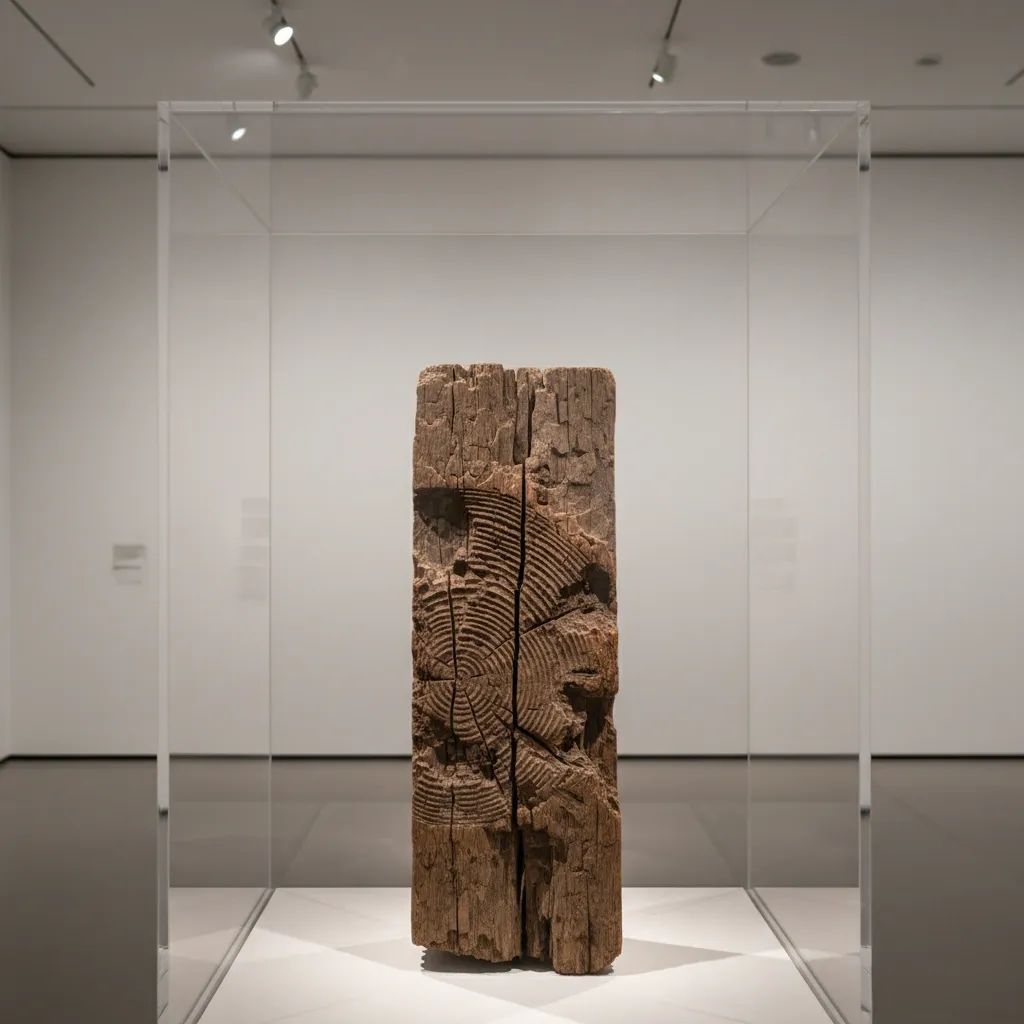
The Smithsonian National Museum of African American History and Culture in Washington D.C. will return a key artifact from the slave ship São José to the Iziko Museums of South Africa, marking the end of a decade-long loan and signaling a broader shift in how major institutions handle the legacy of the transatlantic slave trade. The 15-kilogram wooden fragment, which has anchored the museum's "Slavery and Freedom" exhibition since opening day in 2016, will be replaced by a cargo manifest—a swap that museum officials insist stems from pre-negotiated contractual terms.
Why This Matters
• Contractual closure: The artifact's loan was extended once in 2021 and now concludes under pre-agreed terms, not political pressure.
• Continued presence: Other São José artifacts, including ballast stones, remain on display in Washington for another 2 years before returning to South Africa.
• New African showcase: The returned wood will feature in a traveling exhibition opening at the Iziko South African National Gallery in May 2026, titled "In Slavery's Wake: Making Black Freedom in the World."
Context Behind the Return
Michelle Commander, the museum's deputy director, addressed questions about the timing. The Biden administration has placed scrutiny on how cultural institutions handle historical narratives tied to race and colonialism. Yet Commander was clear: the artifact's departure stems from a contractual agreement made years ago. "History doesn't leave the museum because a piece of wood returns to its owners," she told reporters.
The symbolism remains significant. The São José-Paquete de Africa was the first slave ship wreck ever scientifically identified and studied, discovered in 2015 by the international Slave Wrecks Project—a collaboration between the Smithsonian, Iziko Museums, and other partners. The Portuguese vessel, owned by José António Pereira, departed Mozambique Island on December 3, 1794, carrying 512 enslaved Mozambicans bound for Maranhão, Brazil. On December 27, caught in a storm near Cape Town, it sank just 100 meters offshore. The crew was rescued. Of the enslaved Africans aboard, only about 300 survived the wreck. They were promptly resold.
What This Means for Heritage Repatriation
The São José artifact's return fits into a global reckoning with colonial-era looting and the ethical stewardship of objects tied to human exploitation. In recent years, institutions across Europe and North America have accelerated repatriation efforts:
• France returned 26 artifacts to Benin in 2021 after President Emmanuel Macron promised to restore African heritage held in French museums.
• The Netherlands developed guidelines allowing return of colonial-era artifacts regardless of acquisition legality, and the Nationaal Museum van Wereldculturen estimates 40% of its collection was acquired under colonial contexts.
• In 2022, the Smithsonian Institution and other U.S. museums repatriated 31 objects, including Benin Bronzes, to Nigeria.
• The Horniman Museum in London returned 72 looted artifacts to Nigeria, while British institutions negotiated long-term loans of Ashanti royal treasures to Ghana.
The Biden administration has signaled support for "coordinated policy on ethical returns of African and African American cultural heritage," although no comprehensive federal mandate yet exists.
Why the Physical Artifact Matters
Visitors to the Smithsonian gallery queue daily to see the São José artifacts. One parent, accompanying her 7-year-old son and his classmates, explained the draw: "The real object pulls it out of textbooks and brings it into reality." That connection—wood from a ship that carried human beings as property—cannot be replicated by a manifest alone, no matter how carefully preserved.
The Slave Wrecks Project estimates that between 1400 and the early 19th century, more than 12 million Africans were captured and trafficked across the Atlantic. By 1700, 7 million had been forced to the Americas. The São José is significant not because it was particularly brutal, but because it was found, studied, and memorialized—most slave ships disappeared into the ocean without archaeological trace.
Legal and Ethical Complexities
Repatriation decisions are rarely straightforward. In the São José case, the wood fragment is unambiguously South African—it was recovered from territorial waters near Cape Town.
Museums face growing pressure for provenance research—the expectation that they can document legal acquisition for objects in their collections. Some historians advocate reversing the burden of proof: institutions should have to justify their ownership, not claimants their right to restitution.
The International Council of Museums (ICOM) Code of Ethics now endorses return when objects were acquired in violation of international conventions, but national laws vary widely. In many European nations, statutes protecting "inalienable" public collections make voluntary repatriation the only viable path.
Implications for Portugal
For Portugal, a former colonial power with deep historical entanglements in the transatlantic slave trade, the São José narrative holds particular resonance. The ship was Portuguese-owned, and Lisbon's archives hold manifests, insurance records, and crew testimonies that formed the foundation of the Slave Wrecks research.
Portuguese cultural institutions—including the Museu Nacional de Etnologia in Lisbon—hold thousands of objects from former African colonies and increasingly face questions about their acquisition and stewardship. The Smithsonian's return demonstrates a model of transparent research and negotiated resolution that may inform similar discussions in Portugal.
What Happens Next
The wooden fragment will remain on public view in Washington before its return to South Africa. After removal, it will undergo conservation assessment before joining the traveling exhibition launching in Cape Town in May 2026. The ballast stones and other materials will remain in the U.S. capital until early 2028, when they too will be shipped to Iziko Museums for long-term preservation.
Commander emphasized that the museum's commitment to telling the story of the transatlantic slave trade does not depend on any single object. The cargo manifest replacing the wood will offer visitors different evidence—bureaucratic documentation of human commodification.
Yet for many, the departure of the physical artifact carries weight. Wood from a slave ship's hull carries significance that paper cannot. It survived the ocean, the storm, and two centuries underwater. Now it returns to the waters where more than 200 enslaved Africans drowned, and where survivors were dragged ashore only to be sold again.
The São José story is not just about a ship. It is about the largest forced migration in human history, about the millions who died in the Middle Passage, and about descendants who continue to demand acknowledgment, restitution, and memory. The return of a 15-kilogram piece of wood will not undo that history. But it recognizes, in a tangible way, that some legacies demand reckoning.


