

São Miguel's Beverage Heritage: What Residents Should Know
The beverage producers of São Miguel represent a significant chapter in the island's economic story. The tea plantations, liqueur distilleries, and craft breweries operating today are the result of agricultural transformation, entrepreneurial investment, and strategic regional development. For residents and long-term expats, these producers have moved from niche suppliers to everyday fixtures in local commerce and community life.
The Sector at a Glance
• Production momentum: 2025 saw grape production reach 1,048 tons, the highest in two decades
• Government investment: The Azores government allocated €40M in December 2025 for beverage innovation and production capacity upgrades
• Employment impact: Artisanal producers now employ year-round staff in agriculture, processing, hospitality, and tourism operations
• Tax incentives: Azorean liqueurs qualify for a 75% reduction in special consumption taxes, a regulatory advantage that supports local production sustainability
How a Citrus Disease Reshaped Island Beverages
São Miguel's current drink landscape is the unintended legacy of 19th-century agricultural collapse. When orange blight devastated the islands' principal export crop in the late 1800s, local growers faced a choice: abandon cultivation or pivot. The arrival of tea plants through merchant trading networks provided a lifeline. The northern coast's volcanic, mineral-dense soils and Atlantic-moderated climate proved ideal for growing Camellia Sinensis, the tea plant. At peak capacity, 14 plantations operated across the islands.
Today, only two remain—Gorreana Tea and Porto Formoso—and they occupy a unique position: they are Europe's sole commercial tea producers. Gorreana, in continuous operation since 1883, sits as the continent's oldest working tea factory. The estate's current innovation strategy reflects this longevity. In partnership with a local university, Gorreana developed a proprietary tea variety containing 70% more L-Theanine than their standard black teas. This amino acid, present naturally only in tea leaves and a rare mushroom species, addresses wellness trends: reduced anxiety, improved sleep quality, better cognitive function, and potentially slower brain aging.
For residents: Gorreana tea is widely available in local supermarkets including major chains across Ponta Delgada and Ribeira Grande, typically priced €4-7 per box depending on variety. The estate welcomes visitors year-round; terraced plantation fields remain open for walking tours, with free access to cultivation zones and the drying chambers. Tours of the on-site museum and tastings overlooking the Atlantic horizon are available daily. No advance booking is typically required for individual visitors.
Economist and food consultant João Couto emphasizes that Gorreana's founding principle—organic cultivation paired with independent hydroelectric generation—was radical foresight decades before sustainability became fashionable. "The founder had a mindset that anticipated the future by 100 years," Couto notes. The estate's portfolio has expanded to approximately 50 distinct tea products, reflecting both market demand and R&D investment.
When Passion Fruit Became Premium
The liqueur tradition on São Miguel emerged not from high-end distilleries but from domestic necessity. Passion fruit thrived in island microclimates, and households fermented the tropical fruit into digestive spirits for family use and guest hospitality. The fruit's tropical acidity and aromatic profile made it ideal for maceration and aging.
Commercial-scale production arrived in the 1930s when Eduardo Ferreira & Filhos began standardizing recipes and expanding the product range. Operating today under multiple brand identities—Mulher de Capote, Ezequiel, and Queen of the Islands—the factory in Ribeira Grande now produces liqueurs from pineapple, fig, anise, and passion fruit using exclusively Azorean-grown ingredients. The passion fruit variant alone holds six international gold medals, making it the most-decorated Portuguese liqueur in competitive history.
The firm's strategy centers on authenticity and heritage preservation. Visitors access the production facility via guided tour, witnessing fermentation vessels, aging cellars, and bottling operations before concluding with structured tastings. The company is preparing a significant 2025–2026 launch: Rum Velho Antilia, an aged rum product designed to capitalize on growing cocktail culture and premium spirits demand.
For residents and shoppers: Mulher de Capote liqueurs stock supermarket shelves across the island alongside imported competitors, typically priced €12-18 for 750ml bottles. Passion fruit and pineapple varieties are the most commonly available. The €40M government innovation program and the 75% tax reduction on locally-produced liqueurs help sustain competitive pricing on island shelves; without these supports, imported alternatives would likely be more cost-competitive. Guided factory tours in Ribeira Grande run Tuesday through Saturday; contact the producer directly or inquire at local visitor centers for current booking information and pricing.
A regulatory advantage sustains the liqueur sector's competitiveness. The Azores regional government applies a 75% reduction in special consumption taxes for liqueurs manufactured from local tropical fruits. This fiscal benefit—the rate drops to 25% of mainland Portugal's rate—allows producers to maintain international pricing while funding regional operations and supplier payments to smallholder farmers. This tax structure is embedded in how retail prices are calculated, meaning the liqueurs you purchase at local shops reflect this cost advantage.
Craft Beer Arrives: A North American-Portuguese Partnership
The craft beer movement on São Miguel is younger but already culturally embedded. Azores Brewing Company, established in 2024 by Tara McLean (a Canadian chemist) and Edmundo Estrela (a Portuguese engineer), entered a market void: few locally-produced craft options existed. The founders refined recipes through testing and collaboration before launching commercial operations.
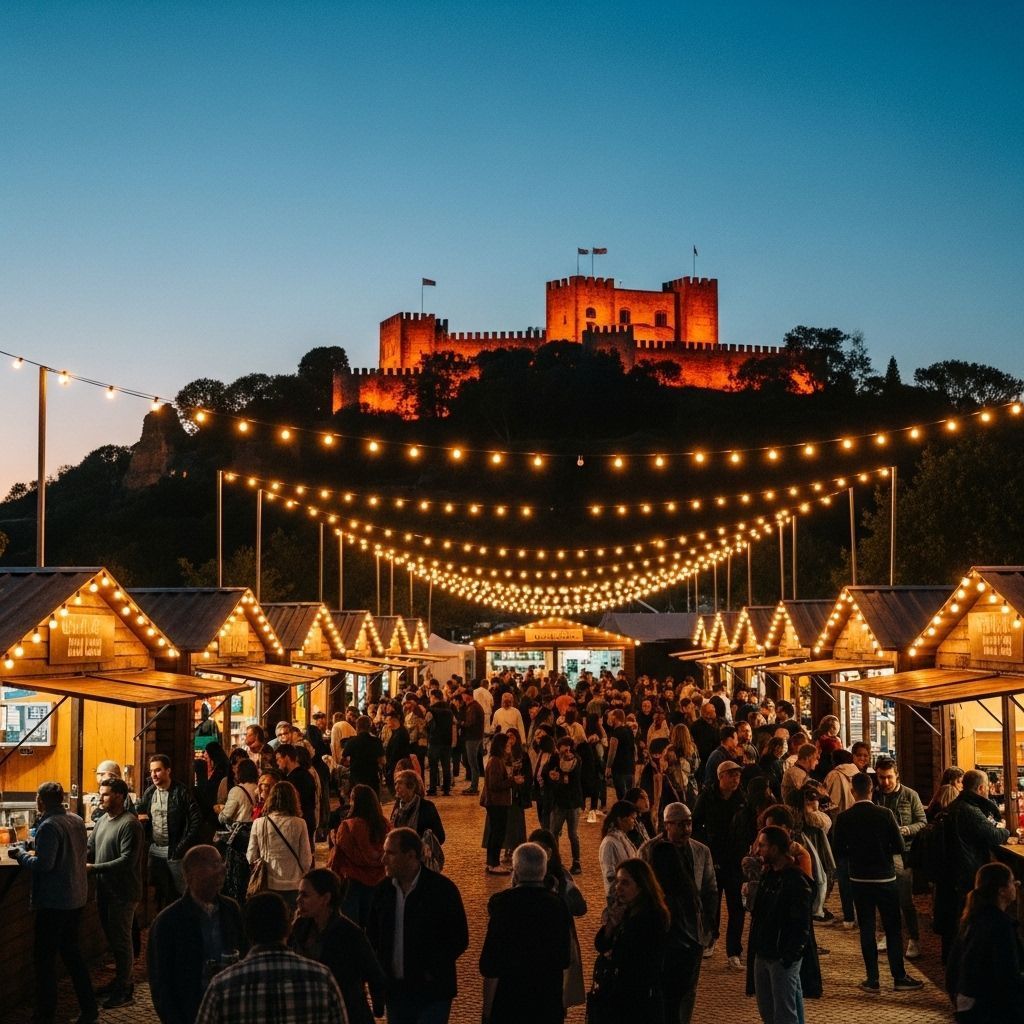
The brewery's beer garden in Ribeira Grande has become a social nexus—locals and tourists converge at a space featuring street murals, a transparent ice-dome structure, rotating food trucks, and, improbably, grazing horses across the adjacent street. The operation quickly became the archipelago's best-selling craft beer brand.
Geography anchors the brand identity deliberately. Beer names—Lighthouse's Azorean Wheat (referencing island lighthouse heritage), North Coast Amber Ale (honoring the rugged northern coastline)—ground the product in place and local history. Seasonal releases incorporate Portuguese agricultural bounty. A summer 2025 release, a pineapple-strawberry sour, was unique in the Azorean market; no competitor offered a sour variant at the time.
McLean stresses that while each beer carries distinctive character, the portfolio remains approachable and balanced. "We choose the highest-quality raw materials," she explains. "That directly translates to beer quality, and for us, that's non-negotiable."
For residents: Azores Brewing Company drafts are available at bars and cafés across Ponta Delgada and Ribeira Grande. Bottles and cans are stocked at major supermarkets, typically priced €2-3 per bottle, competitive with imported craft brands. The brewery taproom in Ribeira Grande welcomes walk-in customers daily and accepts pre-booked group tours; brewery visits typically take 45 minutes to an hour.
Two rival craft operations—Vulcana – Azores Brewery and Korisca—complete the landscape. Vulcana, also in Ribeira Grande, was the archipelago's first craft brewery with a dedicated taproom and has since launched a branded streetwear line. Korisca brews using São Miguel's soft volcanic water, which imparts a distinct mineral mouthfeel to its Pale Ale and Lager-Helles varieties. All three breweries distribute through local retail channels and have established themselves as routine fixtures in resident consumption patterns.
The Tourism-Sector Connection and Its Impact on Residents
The explosion in Azorean tourism during 2024–2025—record overnight stays and revenue figures—transformed beverage producers from niche local suppliers into experiential tourism anchors. The Wine in Azores conference held in Ponta Delgada in October 2025 drew thousands of industry professionals, media, and enthusiasts. This single event now encompasses liqueurs and craft beers alongside traditional wines, reflecting the sector's expanded cultural standing.
What this means for residents: Increased tourism generates direct employment in hospitality, food service, and guided tours, as well as secondary demand for transportation, maintenance, and supply-chain roles. For families with agricultural land or small business interests, tourism flows create new market opportunities. The planned Rota dos Vinhos dos Açores (Azores Wine Route) will integrate wineries, distilleries, tea estates, and breweries into unified tourism infrastructure, a development that broadens visitor spending but also places mild seasonal pressure on local roads and services during peak months.
Government Support and Strategic Positioning
The Azores regional government is mobilizing institutional support to sustain sector growth. In December 2025, a €40M innovation financing program was unveiled, targeting production capacity upgrades, process modernization, and market-entry support across multiple sectors, including beverages. These funds help producers invest in equipment, training, and distribution without bearing the full capital burden independently. Separately, the Fábrica do Álcool da Lagoa, a historic distillery complex, faces strategic redevelopment into a mixed-use commercial, hospitality, and tourism facility—a capital project designed to embed beverage heritage into island infrastructure permanently.
The 2026 agricultural authorization cycle will allocate 616 hectares for new vineyard plantings, signaling continued sector expansion. These investments position São Miguel's beverage industry as a durable economic component rather than a cyclical tourism artifact.
Regulatory navigation remains burdensome for small producers. The Instituto da Vinha e do Vinho dos Açores (IVV Açores) oversees wine and spirit permitting, and small producers report compliance delays averaging 3-6 months. Despite this friction, the regulatory framework signals institutional commitment to the sector's legitimacy and growth.
Why This Matters for Residents
For someone living in the Azores or considering long-term residence, these producers are no longer souvenirs or curiosities. Mulher de Capote liqueurs stock supermarket shelves alongside imported competitors. Gorreana tea appears in café menus and home kitchens. Azores Brewing Company drafts flow in local bars. Purchasing them requires no special effort—they're ambient to daily life—yet each transaction supports the regional economic model: wages to farmworkers, contracts to local suppliers, tax revenue to island governance, and employment stability in communities where agricultural opportunity was historically seasonal and uncertain.
The sector's growth directly translates to more stable local employment, expanded retail availability of quality regional products, and increased investment in island infrastructure. For residents evaluating where to direct discretionary spending, these producers represent quality-focused enterprises delivering distinctive products while sustaining the archipelago's economic fabric.


