

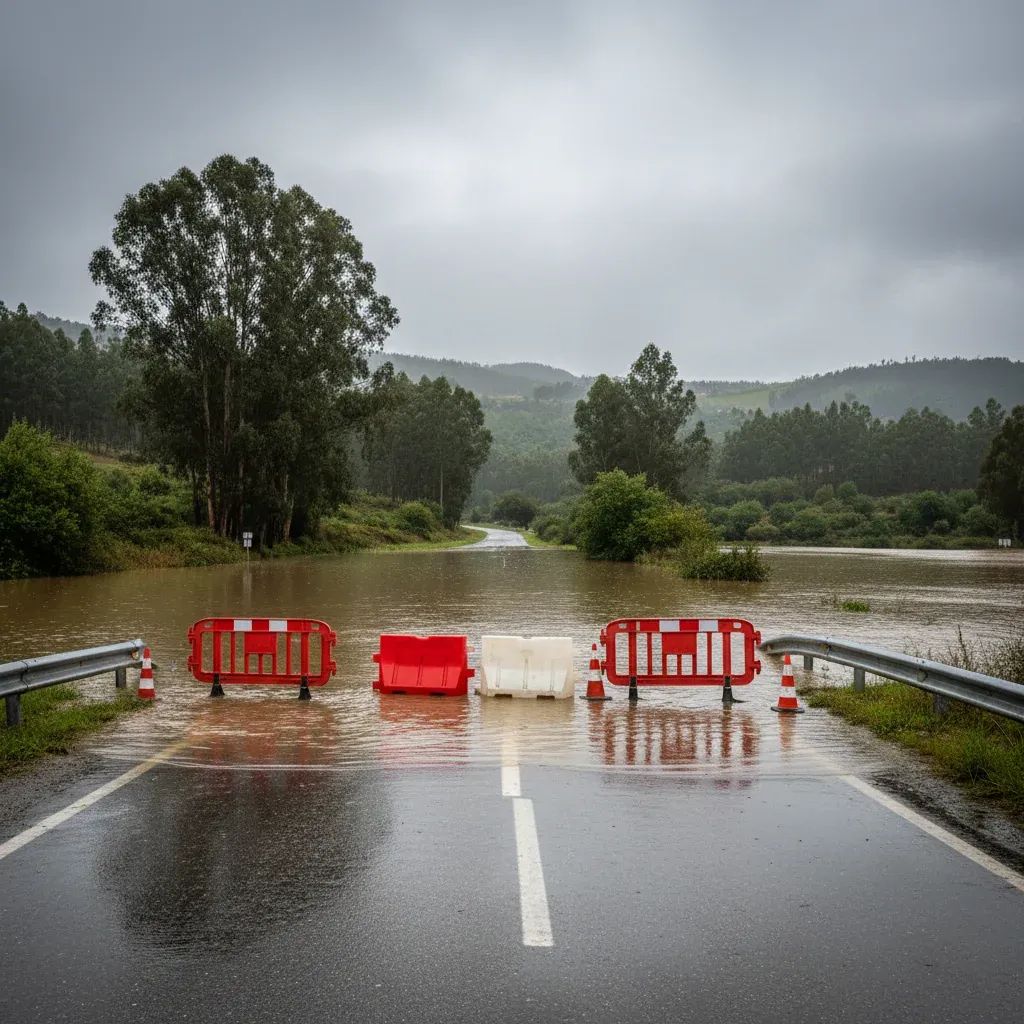
The Portugal National Republican Guard (GNR) has blocked 206 roads nationwide, a decision that is already denting fuel budgets, extending delivery times and forcing thousands to rethink their work-from-office plans.
Why This Matters
• 206 closures at once – from motorways to village lanes – is the largest simultaneous shutdown since the 2017 wild-weather season.
• Rail back-ups too: the Douro and Oeste lines are off-limits, complicating Porto–Lisbon mobility.
• No reopening clock: engineers will not commit to dates because waterlogged slopes are still moving.
• €2.5 B support package activated, but claims require paperwork many households have never filed before.
Where the Network Is Fraying
Coimbra tops the list with 54 blocked segments, including five separate stretches of the A14 and the Coimbra Sul–Coimbra Norte run of the A1. Lisbon, Santarém and Portalegre follow, each reporting more than a dozen critical points. On secondary roads, sudden sinkholes have appeared in river valleys, while in the Interior North falling boulders have shut portions of the IP4.
How We Got Here
Three Atlantic lows – Kristin, Leonardo and Marta – swept across the mainland over nine days, unloading more than a month’s rain in certain basins. Urban drainage failed first, but the real damage came from saturated hillsides. Geotechnical teams say the clay-rich soils in Central Portugal stored water "like a sponge", then slid under their own weight. That same process is keeping crews from bringing in heavy machinery today.
Alternative Routes and Work-From-Home Hacks
A1 detours: If you must cross Coimbra province, exit earlier at Mealhada (northbound) or Pombal (southbound) and follow the N1; expect an extra 25 minutes.
Oeste line substitute buses run twice daily between Caldas da Rainha and Lisbon’s Santa Apolónia, but seats sell out by mid-morning.
Many employers are quietly re-activating remote-work protocols used during the pandemic. Confirm with HR; labour inspectors accept "force majeure" telework when civil protection declares calamity.
Government & Insurance Response
The Portugal Interior Ministry has prolonged the estado de calamidade for 68 municipalities; this unlocks fast-track funds for emergency housing and public-works overtime. Separately, the Finance Ministry outlined a €2.5 B envelope: half for municipal repairs, half for business recovery, including "simplified lay-off" subsidies if companies can prove a 40% revenue dip tied to the storms. Homeowners with multi-risk policies should file within 8 days; insurers warned late claims may face deductibles equivalent to one month’s mortgage.
What This Means for Residents
• Budget for longer trips: Diversions can add €4–€6 in tolls and 30% more fuel per journey.• Check property stability: Structural engineers advise inspecting retaining walls; landslip damage is often excluded unless verified early.• Mind supply chain lags: Supermarkets in the Centro region already report slower restocking of fresh produce.• Expect noisy nights: Emergency earth-moving will run 24/7 on main arteries once weather clears; local councils have pre-approved night-time work permits.
Looking Ahead
Meteorologists forecast a brief dry spell, but another Atlantic front could arrive next week. If slopes remain unstable, further closures are likely. Residents planning Carnival travel should monitor Proteção Civil’s live map and consider refundable tickets. The hard truth, officials admit, is that some rural roads may stay shut until early spring, when soils finally dry out enough for permanent repairs.


