
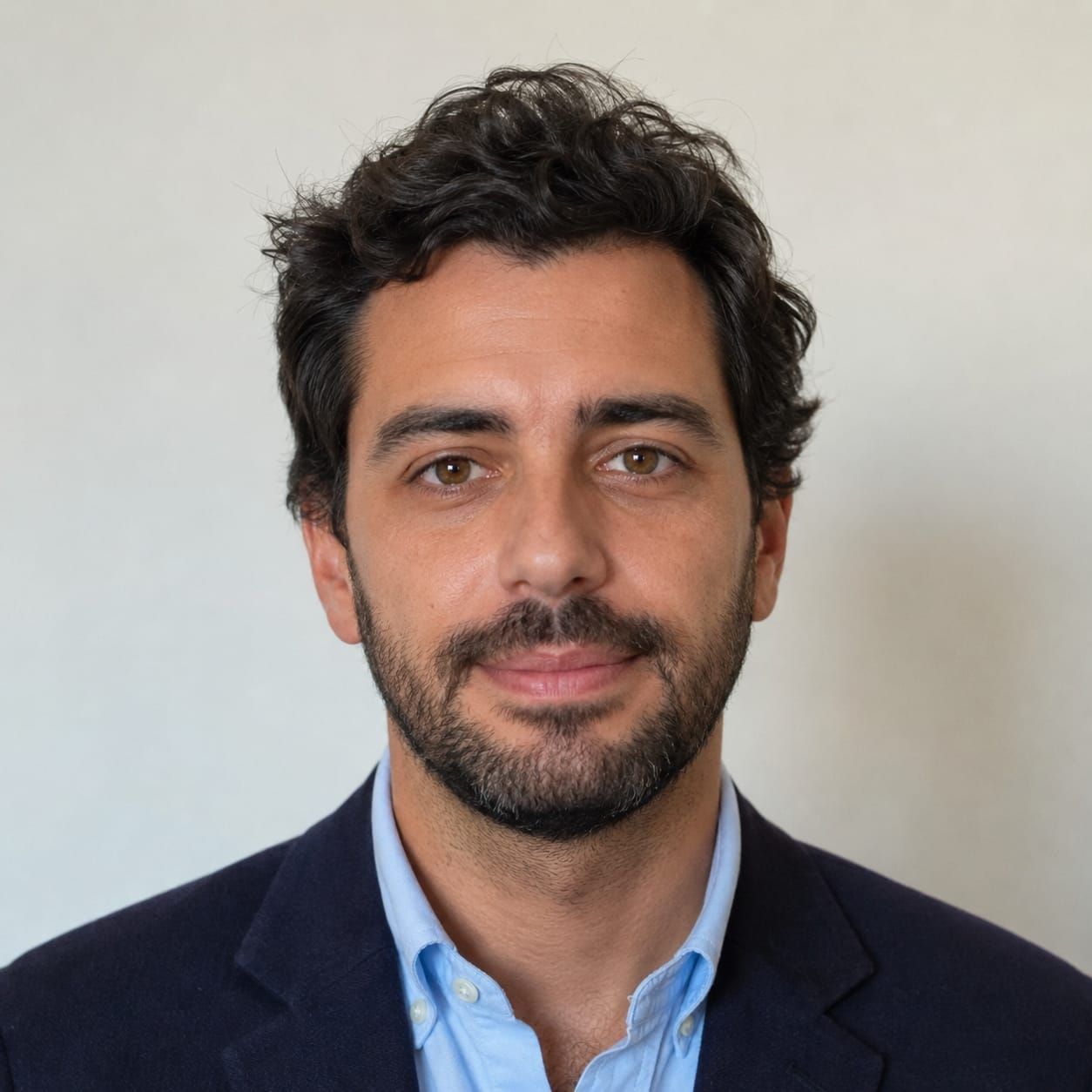

The Portugal-based Benfica manager José Mourinho is edging closer to a potential move to Real Madrid, a managerial shift that carries significant implications for Portuguese football. As Spain's most storied club navigates its worst internal crisis in years, Mourinho's proven track record in restoring order to fractured dressing rooms has made him the leading candidate to replace embattled coach Álvaro Arbeloa, whose four-month tenure has descended into physical altercations, disciplinary fines, and public recriminations.
What This Means for Portugal Residents
For Portuguese football followers, Mourinho's potential departure creates immediate uncertainty around Benfica's Champions League qualification, which remains unresolved with two fixtures remaining in the league campaign. The Lisbon club's board, led by president Rui Costa, has publicly affirmed Mourinho's contract through June 2027, yet the €3M release clause offers a straightforward exit mechanism. Benfica's current position in the standings and the criticality of these final matches make this development particularly significant for Portuguese supporters and the club's European ambitions.
Why This Matters
• Contract Clause: Mourinho's €3M buyout at Benfica makes the transfer financially straightforward for Madrid, with negotiations reportedly underway.
• Chelsea Alternative: Former Blues midfielder Joe Cole has publicly lobbied for Mourinho's return to Stamford Bridge, though Chelsea's ownership remains skeptical of a third spell.
• Immediate Impact: The Portuguese tactician has demanded total authority over transfers, medical staff restructuring, and disciplinary control as preconditions for accepting the Madrid role.
• El Clásico Timing: Barcelona could clinch the La Liga title this Sunday at Camp Nou, adding urgency to Madrid's coaching decision.
The Case for Mourinho at Madrid
Real Madrid president Florentino Pérez views Mourinho as the antidote to a toxic environment that has seen midfielder Federico Valverde hospitalized with a head injury following a training-ground brawl with teammate Aurélien Tchouaméni. Both players received €500,000 fines after the incident on Thursday, which required Valverde to undergo stitches and treatment for cranioencephalic trauma.
The chaos extends beyond that single flashpoint. German defender Antonio Rüdiger allegedly slapped left-back Álvaro Carreras, the former Benfica player who returned to his boyhood club this season. Spanish media outlet Mundo Deportivo also reported that at least six first-team players have ceased communication with Arbeloa, with midfielder Dani Ceballos explicitly requesting the coach not contact him for the remainder of the campaign. His summer exit is considered inevitable.
Mourinho's non-negotiable terms—full control over squad decisions, medical department overhaul, and unchallenged disciplinary power—mirror the approach that brought him two La Liga titles and a Copa del Rey during his first Madrid stint from 2010 to 2013. Sources close to the negotiations suggest the 63-year-old manager wants his future resolved by May 24, ahead of Benfica's final league fixtures.
Chelsea's Reluctant Interest
While the England-based Chelsea hierarchy explores a managerial shortlist following the dismissals of Enzo Maresca, who started the season, and his successor Liam Rosenior, who lasted just four months—interim boss Callum McFarlane occupies the Stamford Bridge dugout. Joe Cole, who won two Premier League titles under Mourinho between 2004 and 2008, argued in The Sun that the Portuguese coach represents both "the best decision" and "a realistic play" for the west London club.
"Give him a long-term contract and tell the fans and players to accept the transition," Cole proposed. "Say to the supporters: 'We've given you what you wanted. José is in charge of signings. José is in charge of everything.' That way, fans know where they stand, and players understand their position as a group."
Cole's blueprint includes recruiting experienced figures such as Manchester City defender John Stones and Barcelona striker Robert Lewandowski, whose contract expires this summer. "We need a center-forward. He probably likes the Premier League and London living; offer him a one-year deal to play 35 games for us and help Liam Delap and João Pedro," the former England international suggested. He also identified Manchester United winger Alejandro Garnacho as a talent who "needs to be in an environment where he's not the main figure and can develop."
Despite Cole's public advocacy, Chelsea's BlueCo ownership group prioritizes data-driven recruitment and modern tactical profiles, making Mourinho's authoritarian style a difficult cultural fit. Candidates like Xabi Alonso (Bayer Leverkusen), Andoni Iraola (Bournemouth), and Marco Silva (Fulham) align more closely with the club's long-term philosophy.
Arbeloa's Defensive Stand
Facing reporters ahead of Sunday's Clásico, Arbeloa defended his embattled squad and took full responsibility for Madrid's turbulent season. The 43-year-old former Madrid right-back, promoted from the reserve team in January 2026, invoked the memory of legendary forward Juanito to contextualize player errors.
"I'm very proud of the club's firmness, speed, and transparency, and that the players recognized the mistake, showed remorse, and apologized," Arbeloa said, tears visible. "I won't burn them at a public stake because they don't deserve it. Valverde and Tchouaméni deserve that we turn the page and give them an opportunity to keep fighting for this club."
When pressed on rumors of a fractured relationship with the dressing room, he dismissed them as "absolute lies." However, he acknowledged the challenge of managing a squad unaccustomed to sustained failure: "Being in this house without winning is not easy. We went 12 years between the ninth and tenth Champions League trophies. We've been through difficult periods. But we have to overcome this together."
Regarding persistent media leaks, Arbeloa deflected with dark humor: "I don't work for the CIA. I'm not accusing my players or anyone else. There are many people at Real Madrid, and I'm not here to point fingers."
Spanish outlet Mundo Deportivo identified Brazilian forward Vinícius Júnior as a suspected informant, claiming teammates believe he receives preferential treatment in exchange for reporting internal matters to Arbeloa. The 25-year-old has missed just one match and been benched once since Arbeloa's appointment, a stark contrast to his strained relationship with predecessor Xabi Alonso.
Broader Implications for European Football
Madrid's internal strife underscores broader trends in European club governance: the friction between traditional hierarchical coaching models and modern data-centric structures. Chelsea's hesitance toward Mourinho, despite his proven Premier League pedigree, reflects a philosophical shift that prioritizes long-term squad building over immediate silverware.
The timing carries symbolic weight. Should Barcelona secure the title at Camp Nou on Sunday, Madrid's season—and Arbeloa's tenure—will likely conclude amid organizational upheaval. Mourinho's appointment would signal a return to authoritarian leadership structures, a model increasingly contested by analytics-driven ownership groups across Europe.
Historical Context and Lessons
Madrid's current dysfunction recalls the club's 2000s struggles, when presidential instability and dressing-room factionalism preceded Florentino Pérez's initial Galácticos era. Conversely, Barcelona's sustained success stems partly from La Masia academy values emphasizing collective sacrifice over individual stardom—a philosophy that insulates the club from ego-driven conflicts.
Recent European precedents offer cautionary tales. Juventus experienced public training-ground spats between Matthijs de Ligt and Adrien Rabiot in January 2022, with English media warning of a "powder keg" ready to explode. The club's subsequent Champions League underperformance validated those concerns.
Madrid legend Iker Casillas minimized the Valverde-Tchouaméni incident, insisting "everything has a solution, everything gets resolved," yet acknowledged the imperative to "fix this internally" rather than through public spectacle.
The Mourinho Gamble
Mourinho's conditions—full transfer veto power, medical staff restructuring, absolute disciplinary authority—represent a calculated approach for Pérez. The Portuguese coach's first Madrid spell yielded trophies but ended amid reports of player fatigue and tactical stagnation. His subsequent stints at Chelsea (second spell), Manchester United, Tottenham, and Roma produced mixed results before the unbeaten Benfica campaign this season revived his reputation.
For Arbeloa, Sunday's Clásico may serve as both a referendum on his brief tenure and a final opportunity to preserve his legacy at the club where he won five La Liga titles and two Champions Leagues as a player. When asked if he still endorsed his earlier statement that "Mourinho is one of us," he offered a terse monosyllable: "Yes."
That single word, delivered before pivoting to the next question, encapsulated Madrid's current reality—a club simultaneously defending its present coach while courting his likely successor, trapped between institutional loyalty and competitive necessity.


