

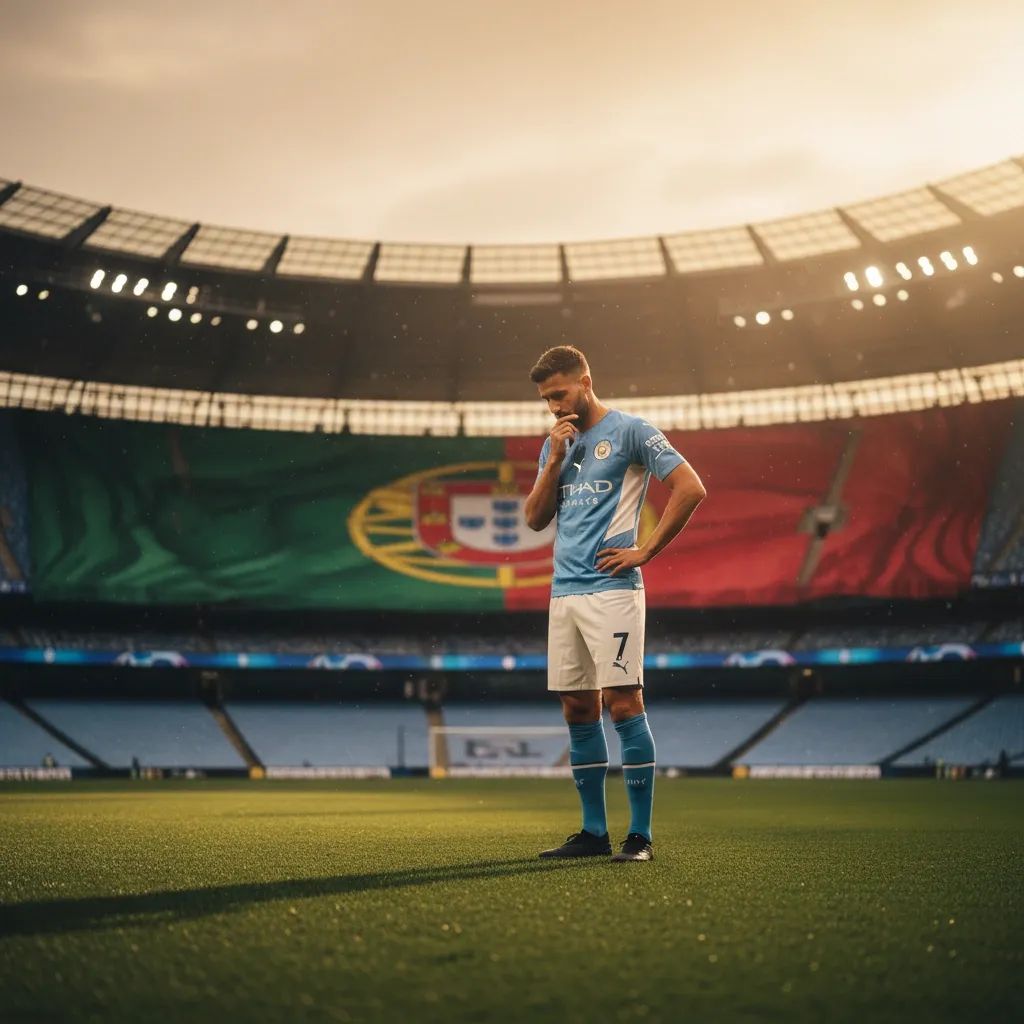
Portugal national team midfielder Bernardo Silva will not be returning to Lisbon this summer, postponing a homecoming to Benfica for at least another season. The 31-year-old Manchester City player, whose contract expires in June, is prioritizing continued access to elite-level European competition and a salary package that matches his current €10M per year earnings—conditions he believes Portugal's top-tier football cannot currently satisfy.
Why This Matters
• Benfica fans hoping for a reunion must temper expectations: According to Portuguese sports daily A Bola, Silva's agent is negotiating with Juventus, Galatasaray, and Barcelona instead.
• Financial reality check: Silva has stated publicly that Portuguese clubs cannot compete with the transfer fees and wages offered across Europe's wealthiest leagues.
• National team implications: Silva is among five star players currently absent from Portugal's pre-World Cup friendlies against Mexico and the USA, with manager Roberto Martínez citing workload management.
The Salary Sticking Point
Silva's decision hinges on economics as much as ambition. After nine seasons at Manchester City, he enters free agency seeking a deal that recognizes his continued elite-level performance. Current reports suggest his annual net salary sits at €10M, a figure well beyond the reach of any Portugal-based club, including Benfica, which would need to break its wage structure to accommodate him.
According to Portuguese sports daily A Bola, Silva's reluctance to return home has nothing to do with the recent re-election of Benfica president Rui Costa. The midfielder enjoys a warm relationship with runner-up candidate João Noronha Lopes, who campaigned on a pledge to bring Silva back to Estádio da Luz. But personal affinity hasn't been enough to override the stark disparity in competitive infrastructure and financial firepower between the Portuguese league and Europe's top five divisions.
Silva himself has acknowledged the problem in prior interviews, noting that Portuguese clubs face an "impossible" financial burden when competing for players valued at €50M or more. Even as a free agent, his wage expectations remain prohibitive for Lisbon's biggest club.
Where He's Actually Going
Three destinations have emerged as front-runners in the scramble for Silva's signature, each offering a distinct proposition.
Juventus is reportedly preparing a three-year contract with an optional fourth season, offering between €7M and €8M annually. The Turin-based club is making an exception to its usual policy of avoiding long-term commitments to players over 30, a testament to Silva's enduring quality. According to A Bola, the deal would also include performance-based bonuses and a significant signing bonus, potentially bridging the gap between his current earnings and the base salary on offer.
Galatasaray has tabled the most lucrative European proposal: €15M per year, according to Turkish media reports cited by Portuguese outlets. Negotiations are said to be at an advanced stage, with direct talks scheduled between the club and Silva's agent, Jorge Mendes. The Istanbul side is leveraging its Champions League pedigree and the lure of a substantial signing bonus to compete with wealthier Western European rivals operating under tighter budget constraints.
Barcelona remains Silva's reported personal preference, as reported by A Bola. The Catalan club has maintained a long-standing interest in the Portuguese international. However, the club's well-documented financial struggles mean any deal would require Silva to accept a salary reduction. Mendes has signaled his client's willingness to compromise on wages to facilitate a Camp Nou move, but Barcelona's crowded midfield and ongoing squad overhaul complicate the fit.
The Saudi Wild Card
Silva has also fielded lucrative offers from Saudi Arabia's Pro League, where compatriots Cristiano Ronaldo and João Félix play for Al-Nassr and Rúben Neves represents Al-Hilal. Ronaldo recently renewed his contract through the summer of 2026, while Neves extended his deal until 2029 in February.
While the financial packages from Saudi Arabia dwarf European offers, Silva has privately expressed reservations about the competitive standard of the league. At 31, he believes he still has several seasons of top-level football ahead and is reluctant to leave Europe's most demanding environments prematurely.
What This Means for Benfica
For Benfica supporters dreaming of a prodigal son's return, the situation confirms what many already understand: Silva's immediate future lies abroad, likely in Serie A, La Liga, or the Turkish Süper Lig. Club legend Nuno Gomes has confirmed that Benfica would "do everything possible" to bring Silva home, but the financial and competitive incentives available elsewhere remain insurmountable.
The 2026/27 season will proceed without Silva in the Benfica lineup, pushing any homecoming into the distant future—perhaps when the midfielder is approaching the twilight of his career and willing to prioritize sentiment over salary. For now, Silva's calculus is pragmatic: maintain his status among Europe's elite midfielders while securing a contract that reflects his market value.
His absence from Portugal's national team training camp this week underscores his focus on the immediate future. Manager Roberto Martínez left Silva out of the squad traveling to the Americas for friendlies against Mexico and the USA, citing workload management. Fellow Manchester City defender Rúben Dias was also rested, while Cristiano Ronaldo, Rafael Leão, and Porto goalkeeper Diogo Costa withdrew due to injury or fitness concerns.
The Bigger Picture
Silva's dilemma reflects a broader structural challenge facing Portuguese football. Despite producing world-class talent—Ronaldo, Silva, Neves, and João Félix among them—the domestic league struggles to retain its stars once they reach their commercial and athletic peak. The financial chasm between the Premier League, La Liga, Serie A, and the Primeira Liga has widened over the past decade, driven by broadcast revenues, commercial partnerships, and foreign investment that Portugal's clubs cannot match.
Silva plans to finalize his decision before the 2026 World Cup kicks off in June, giving him a narrow window to weigh his options. As it stands, Juventus and Galatasaray appear best positioned to secure his services, with Barcelona lurking as a potential late mover if the club can navigate its financial constraints.
For now, Benfica will have to wait—and hope that when Silva eventually does come home, he still has enough left in the tank to make the homecoming worthwhile.


