

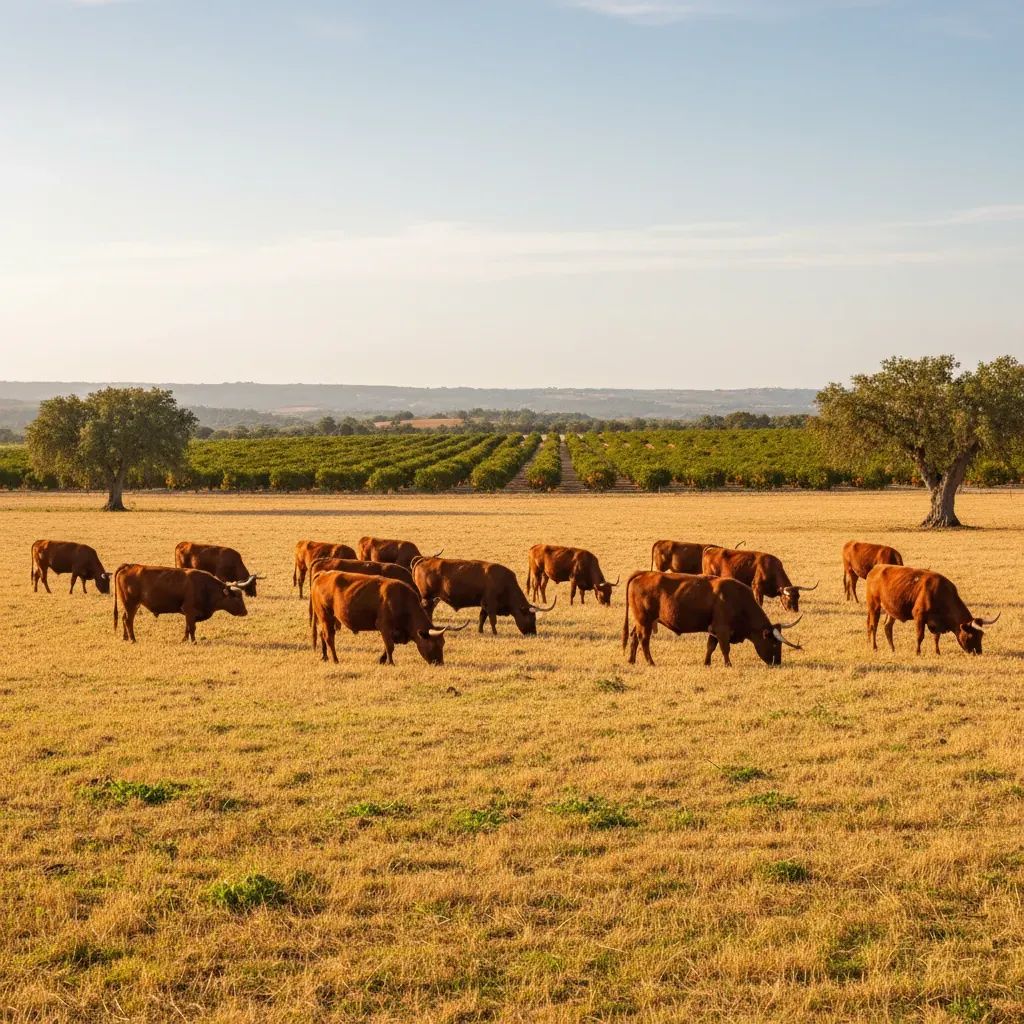
A handful of determined Portugal cattle ranchers are bringing a nearly extinct indigenous bovine breed back from the brink, with the purebred population of Algarve cattle surging from just 5 animals in 2018 to reaching 47 by early 2026. The recovery effort, spearheaded by the Associação de Criadores de Gado do Algarve (ASCAL), signals both a cultural preservation milestone and the potential emergence of a premium meat niche in Portugal's southernmost region.
Why This Matters
• Heritage at stake: The Algarvia breed is one of 16 native cattle breeds in Portugal, uniquely adapted to the Algarve's hot, dry climate after centuries of evolution.
• Economic potential: Producers aim to create a specialized market for purebred Algarve beef, leveraging the "Saborear o Algarve" regional brand once herd numbers justify commercial distribution.
• Climate resilience: These animals thrive on natural pastures and agricultural by-products, requiring less external feed than imported breeds and offering greater drought tolerance.
• Genetic diversity crisis: With only 25 adult females (12 purebred) and 2 males recorded in 2024, inbreeding prevention remains a critical challenge.
From 20,000 Head to Nearly Zero
The Algarvia breed's collapse offers a textbook case of how modernization can erase agricultural heritage within a single generation. In the 1950s, more than 20,000 Algarve cattle roamed southern Portugal, representing roughly 70% of the region's cow population. Farmers relied on these reddish-coated, compact animals for a triple purpose: plowing fields, producing milk, and supplying meat. Some coastal communities even used them to haul fishing boats.
By the 1960s, tractor adoption began displacing work animals across rural Portugal. Simultaneously, ranchers pivoted toward imported breeds like Limousine and Charolais, which grew faster and yielded heavier carcasses. Crossbreeding became the norm, producing hybrids locally called "Chamuscos" that diluted purebred genetics. Rural depopulation accelerated the decline as younger generations abandoned smallholder farms for urban employment.
By 2001, finding a purebred Algarvia cow in the Algarve had become nearly impossible. A 2005 survey identified just 43 females and 4 males, and by 2018 the tally had plummeted to a mere 5 animals. Extinction appeared imminent.
Embryo Transfers and Frozen Semen: The Comeback Toolkit
The Portugal Directorate-General for Food and Veterinary Affairs (DGAV) and the Portuguese Animal Germplasm Bank (BPGA) joined forces with ASCAL in 2005 to mount a science-driven rescue. The strategy combined old-fashioned ranching with cutting-edge reproductive technology.
Frozen semen from historic Algarve bulls, preserved in the germplasm bank, enabled artificial insemination without introducing foreign genetics. As of August 2024, 6 calves had been born via embryo transfer, a technique that allows high-value purebred females to produce multiple offspring by implanting embryos into surrogate cows. Each registered animal receives documentation in the official Livro Genealógico (Genealogical Herdbook), ensuring pedigree traceability.
Current breeding operations span three municipalities: Vila do Bispo, Silves, and Tavira. August 2024 records showed 21 animals in the genealogical registry, though the broader population including crossbred individuals reached 47 by 2025. Four to five dedicated producers drive the effort, motivated less by immediate profit than by what one rancher described as "the love of tradition and not letting the culture of the Algarve die."
What This Means for Residents
For Portugal consumers, the Algarvia recovery could soon translate into a distinctive regional product on restaurant menus and butcher counters. The breed's rustic genetics produce marbled beef from animals raised on open pasture, a selling point as demand grows for traceable, extensively farmed meat.
The CCDR Algarve (Regional Coordination and Development Commission) established the "Saborear o Algarve" brand to promote local agri-food products, positioning Algarvia beef alongside other heritage items like medronho brandy and carob flour. Producers acknowledge that commercial viability hinges on scale—slaughterhouses and distributors require consistent supply, which the current herd cannot yet provide.
Several Algarve-based agritourism ventures have already begun showcasing heritage livestock as part of authentic rural experiences, and producers anticipate pilot availability of Algarvia beef at select regional restaurants and farmers markets by 2027, giving residents concrete opportunities to sample this heritage meat as the herd expands.
Financial incentives exist but remain modest. Portugal ranchers raising native breeds qualify for annual subsidies tied to herd maintenance, part of national biodiversity conservation programs. However, breeders interviewed for research reports consider the support "sometimes scarce" relative to the logistical challenges of managing tiny, genetically fragile populations.
The Genetic Tightrope
Managing a population this small demands constant vigilance. With only 12 purebred females as of 2024, every mating decision carries outsize consequences for long-term genetic health. Inbreeding depression—the accumulation of harmful recessive traits—poses a real extinction risk if breeders cannot maintain sufficient diversity.
The BPGA's frozen semen archive provides a genetic lifeline, preserving DNA from bulls that died before the recovery began. Embryo transfer allows a single purebred cow to produce far more offspring than natural breeding permits, effectively accelerating population growth without sacrificing genetic breadth. The Sociedade Portuguesa de Recursos Genéticos Animais (SPREGA) tracks pedigrees and advises on mating combinations to minimize relatedness.
Built for a Changing Climate
Algarvia cattle evolved over centuries to thrive in Portugal's hottest region, enduring summer temperatures that routinely exceed 35°C. Their reddish coats and loose dewlaps aid heat dissipation, while compact frames reduce surface area for water loss. Unlike specialized meat breeds that require grain-heavy diets and climate-controlled barns, Algarvias fatten efficiently on stubble, marsh grasses, and corn stalks—agricultural waste that would otherwise decompose.
This rustic resilience gains strategic value as Portugal confronts escalating drought and wildfire risk. Extensive grazing by native cattle maintains low-fuel landscapes less prone to catastrophic burns, a benefit regional authorities increasingly recognize in land management planning. Pastured animals also contribute to soil carbon sequestration when rotational grazing promotes root growth and organic matter accumulation.
Cultural Weight Beyond Economics
The breed embodies a vanishing mode of rural life in southern Portugal. Mid-20th-century photographs show Algarvia oxen pulling wooden plows through orange groves and hauling fishing boats up sandy beaches, scenes now preserved only in municipal archives. Older Algarve residents recall childhood farms where a single cow provided milk, labor, and eventually meat—a self-sufficient agricultural model erased within two generations.
Recovery advocates frame their work in cultural preservation terms, arguing that losing the Algarvia would sever the region's genetic and historical continuity. Public exhibitions and agricultural fairs now feature the breed, educating younger Portugal residents about heritage livestock and traditional farming practices.
The Road to 100 Animals
ASCAL's near-term objective centers on surpassing 100 purebred animals, a threshold producers believe would enable pilot commercial sales while maintaining breeding security. Achieving that target will require sustained investment in embryo work and expanded pasture access, alongside recruitment of additional ranchers willing to accept the economic uncertainties of pioneering a niche market.
The Portugal government's commitment to biodiversity conservation under EU agricultural policy provides a policy tailwind, but breeders emphasize that regulatory support must translate into adequate funding. Current subsidy levels, they argue, barely cover the veterinary costs and genetic testing required for pedigree certification.
Success stories from other Portugal native breeds offer cautious optimism. The Maronesa and Barrosã cattle, once similarly endangered, now anchor protected designation labels and command premium prices. The Algarvia's journey from 5 animals to nearly 50 demonstrates that extinction can be reversed—but scaling from survival to sustainability demands resources that match the cultural and ecological stakes.


