

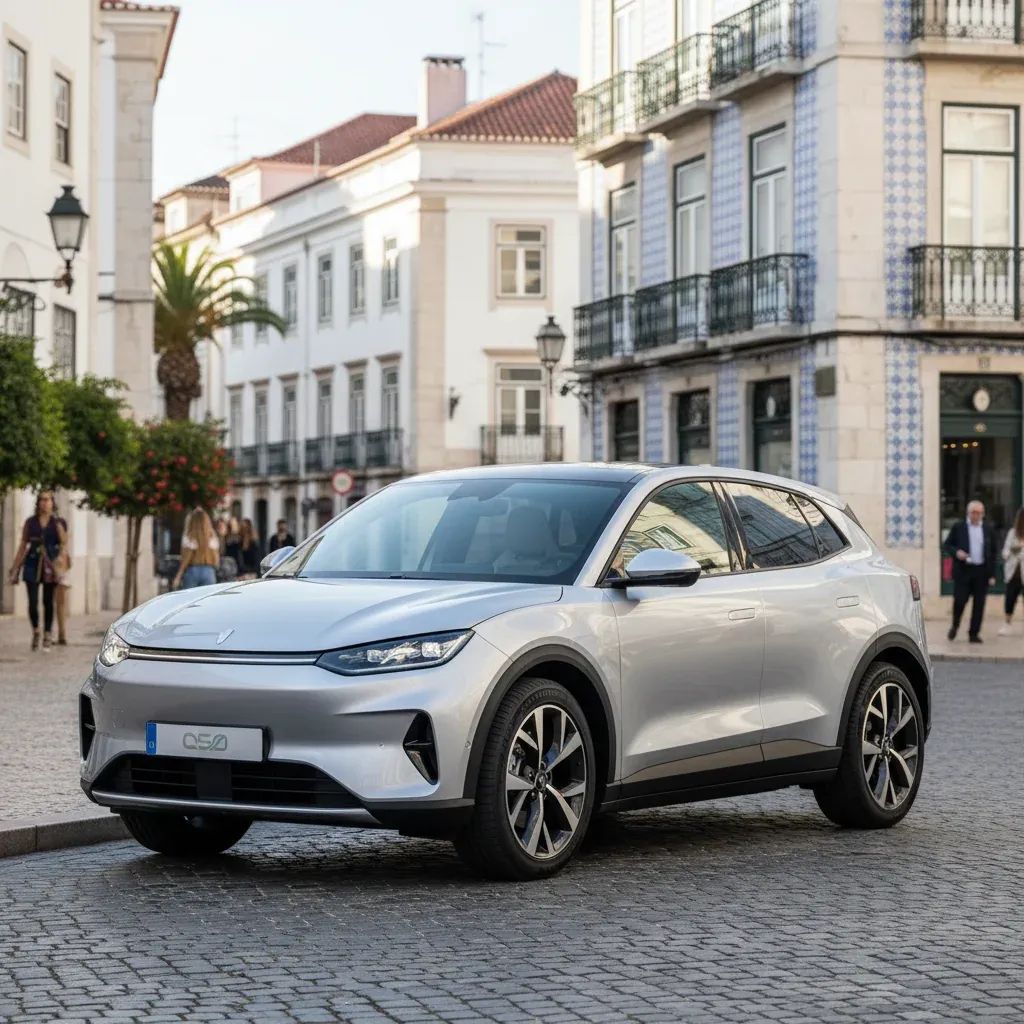
The Volkswagen Group's Portugal operations have confirmed that the all-new ID. Polo, the company's most affordable electric vehicle to date, was officially presented on April 29, 2025, with deliveries scheduled to begin in autumn 2026. The move positions Volkswagen to compete head-on with ultra-budget EVs like the Dacia Spring and Citroën ë-C3 in a market segment that has exploded in popularity across Portugal over the past 18 months.
The ID. Polo marks a strategic pivot for Volkswagen: it's the first time the German automaker has grafted an established combustion nameplate onto its electric ID. family. The decision isn't purely nostalgic—it's a calculated bet that the Polo's reputation for practicality and reliability will ease range anxiety among Portuguese buyers hesitant to go electric.
Why This Matters
• Pricing starts at €25,000, undercutting the Renault 5 E-Tech and positioning the ID. Polo as one of the cheapest mainstream EVs available in Portugal.
• Up to 454 km of range on the larger battery option, surpassing most budget competitors and making Porto-to-Faro trips feasible on a single charge.
• Deliveries begin autumn 2026, with pre-orders already open in several European markets including Germany, and expected availability in Portugal to follow—early adopters will have access first, but entry-level variants may not arrive until early 2027.
• Larger cargo capacity than the combustion Polo: 435 liters expands to 1,243 liters with rear seats folded, ideal for weekend getaways or IKEA runs.
What You're Actually Buying
The ID. Polo is built on Volkswagen's MEB+ platform, an evolution of the modular electric architecture that underpins the ID.3 and ID.4. The "plus" denotes critical upgrades: 50% lower battery production costs through the adoption of LFP (lithium iron phosphate) chemistry for the base model, and a new cell-to-pack design that eliminates bulky intermediate modules. Translation: cheaper to build, cheaper to buy, and less prone to thermal runaway incidents that have plagued some Chinese-made EVs.
Dimensionally, the ID. Polo measures 4,053 mm in length—just shy of a typical hatchback—but the electric skateboard chassis delivers 19 mm more interior legroom than the combustion Polo. The 2,600 mm wheelbase is identical to that of a VW Golf, which explains why Volkswagen's marketing materials repeatedly invoke the phrase "Golf space, Polo price."
The drag coefficient of 0.264 is impressive for a boxy hatchback, achieved through active grille shutters and a rear spoiler integrated into the roofline. Those tweaks matter on Portuguese motorways: at 120 km/h, aerodynamic efficiency directly translates to usable range.
Power and Range: Two Batteries, Three Outputs
Volkswagen is offering the ID. Polo with two battery sizes and three power outputs, with a fourth (the GTI variant) slated for late 2026 or early 2027.
Base Battery: 37 kWh LFP
The entry-level units pair a 37 kWh LFP battery with either 116 hp or 135 hp motors. Volkswagen claims 329 km of WLTP range—realistic for urban commuting and short highway jaunts, but marginal for cross-country trips in winter. The LFP chemistry trades energy density for longevity and thermal stability, a smart move given Portugal's summer heat. Charging speeds max out at 90 kW DC, delivering a 10-80% top-up in 23 minutes. That's adequate for a coffee break at a Continente charging station but slower than the premium EVs now flooding Lisbon's streets.
Premium Battery: 52 kWh NMC
Step up to the 52 kWh NMC (nickel-manganese-cobalt) battery, exclusive to the 211 hp flagship, and range climbs to 454 km. This variant supports 130 kW DC charging, shaving the 10-80% window to 24 minutes. For context, that's enough to replenish roughly 250 km of range while you grab a bifana and check your email. Both batteries include 11 kW AC charging as standard, sufficient for overnight home charging on a typical Portuguese residential circuit.
The 211 hp model will appeal to drivers migrating from hot hatches—0-100 km/h in under 7 seconds is expected, though Volkswagen hasn't released official figures yet. A forthcoming 226 hp GTI variant will directly challenge the Cupra Born VZ and Renault 5 Alpine, though pricing will likely exceed €35,000.
Interior: Digital Cockpit with Physical Buttons (Finally)
Volkswagen has partially reversed course on the touch-sensitive interface debacle that plagued the ID.3 and ID.4. The ID. Polo features a 10.25-inch digital instrument cluster and a 13-inch central touchscreen, but crucially, physical buttons for climate control have returned. Portuguese buyers, who endured scorching summers fumbling with capacitive sliders on earlier ID. models, will appreciate the tactile feedback.
The infotainment system offers a "retro display mode" that mimics analog gauges—a nod to nostalgia that also serves a practical purpose: some drivers find traditional dials easier to read in bright sunlight, a perennial issue on the Algarve coast. Digital key functionality allows unlocking via smartphone, a feature that's increasingly standard but still novel for sub-€30,000 vehicles.
Higher trims get Harman Kardon audio, a panoramic glass roof, and front seat massage functions—luxury touches unusual in this price bracket. The cargo bay's 435-liter capacity bests the combustion Polo's 351 liters, and the flat load floor (a hallmark of EV architecture) simplifies loading bulky items like surf boards or wine crates.
Impact on Residents and Expats
For Portuguese households weighing their first EV purchase, the ID. Polo solves the "affordability versus range" dilemma that has stalled mass adoption. At €25,000, it undercuts the Renault 5 E-Tech (€24,900 starting price, but effectively more once mandatory options are added) and offers 144 km more range than the Citroën ë-C3's urban-focused variant.
Expats and digital nomads who rely on Portuguese charging infrastructure will find the ID. Polo well-suited to the Ionity and Galp network, which now blankets major motorways. The 130 kW charging capability means Lisbon-to-Porto trips won't require extended lunch stops—a 20-minute charge near Coimbra restores enough range to complete the journey.
Tax incentives remain a wild card. Portugal's government has extended EV purchase subsidies through 2026, but the maximum €4,000 rebate now applies only to vehicles under €30,000. The ID. Polo's base model qualifies, but higher trims (especially the 211 hp variant, likely priced near €34,000) will miss the cutoff. Buyers should confirm eligibility before signing contracts.
Competitive Landscape: The Budget EV Battle
The ID. Polo enters a crowded arena. The Dacia Spring, at €16,900, remains Portugal's cheapest new EV, but its 225 km range and cramped interior make it a city-only proposition. The Citroën ë-C3, currently €17,990 in promotional pricing, offers 212 km with its urban battery or 320 km with the larger pack (€23,300). Both lack the Volkswagen's refinement and charging speed.
The Renault 5 E-Tech, with 310 km range and a €24,900 starting price, is the ID. Polo's closest rival. Renault's nostalgic design and French flair appeal to a different buyer, but the Volkswagen counters with superior build quality and a more extensive dealer network across Portugal.
Chinese entrants like the Leapmotor T03 (€18,985) deliver impressive specs on paper but face skepticism over long-term parts availability. Volkswagen's established service infrastructure—over 50 authorized centers in Portugal—provides peace of mind that upstart brands can't yet match.
Availability: When Can You Actually Buy One?
Pre-orders are already open in several European markets, including Germany, with Portuguese availability expected to follow. Initial allocations will be limited. Volkswagen is prioritizing the "Life" trim with the 52 kWh battery, priced around €33,795 in Germany (Portuguese pricing is typically 2-3% higher due to VAT differences). The entry-level model, expected around €25,000, won't arrive until summer 2026 at the earliest, with some analysts predicting a delay to early 2027 due to battery supply constraints.
The Bigger Picture
The ID. Polo represents Volkswagen's belated acknowledgment that the sub-€30,000 EV segment is where the volume game will be won or lost. While Tesla and BMW chase premium margins, Volkswagen is betting that millions of Europeans—including Portuguese families upgrading from aging diesel Golfs—want something affordable, practical, and unintimidating.
The decision to revive the Polo nameplate is shrewd. In Portugal, where the combustion Polo has been a top-10 seller for two decades, brand recognition matters. Older buyers who associate "ID." with abstract futurism may find "Polo" reassuringly familiar. Volkswagen plans to sell both versions side by side, an implicit admission that full electrification remains years away.
Whether the ID. Polo can fend off Chinese competition—BYD and Geely are preparing sub-€25,000 models for late 2026—depends on execution. Volkswagen's European manufacturing (the ID. Polo will be built in Spain) carries higher labor costs than Asian factories, but it also insulates buyers from geopolitical tariff risks that have roiled the EV market recently.
Technical Edge: MEB+ Platform Advantages
The MEB+ architecture delivers tangible benefits over competitors' platforms. The cell-to-pack battery design increases energy density by 10% compared to traditional modular setups, explaining how Volkswagen squeezes 454 km from a 52 kWh pack. By contrast, the Citroën ë-C3's 44 kWh battery manages only 320 km, a delta attributable to less efficient packaging.
Volkswagen's 175-200 kW charging roadmap (initially 130 kW for the ID. Polo, upgradable via software) future-proofs the platform as ultra-fast chargers proliferate. The one-pedal driving mode and Travel Assist (adaptive cruise with lane centering) are features typically reserved for pricier EVs.
The ID. Polo also introduces traffic light and stop sign recognition—a first for the ID. family—leveraging camera data to alert drivers at intersections. It's a small touch, but one that matters in Portugal's chaotic urban traffic.
Final Considerations
The ID. Polo isn't revolutionary, but it doesn't need to be. It's a competent, well-engineered electric hatchback priced within reach of middle-class Portuguese households. The 454 km range erases the "will I make it?" anxiety that has plagued earlier budget EVs, and the Polo pedigree provides a psychological safety net for first-time EV buyers.
Challenges remain: the delayed arrival of the base model may cede early sales to Renault and Citroën, and Volkswagen's reputation for software glitches (a recurring complaint with earlier ID. models) could deter tech-savvy buyers. But if the ID. Polo delivers on its core promise—affordable, practical electric mobility—it will likely become a common sight on Portuguese roads by 2027.
For residents weighing an EV purchase in the next 12 months, the ID. Polo merits serious consideration. Just don't expect to drive one home before autumn.


