
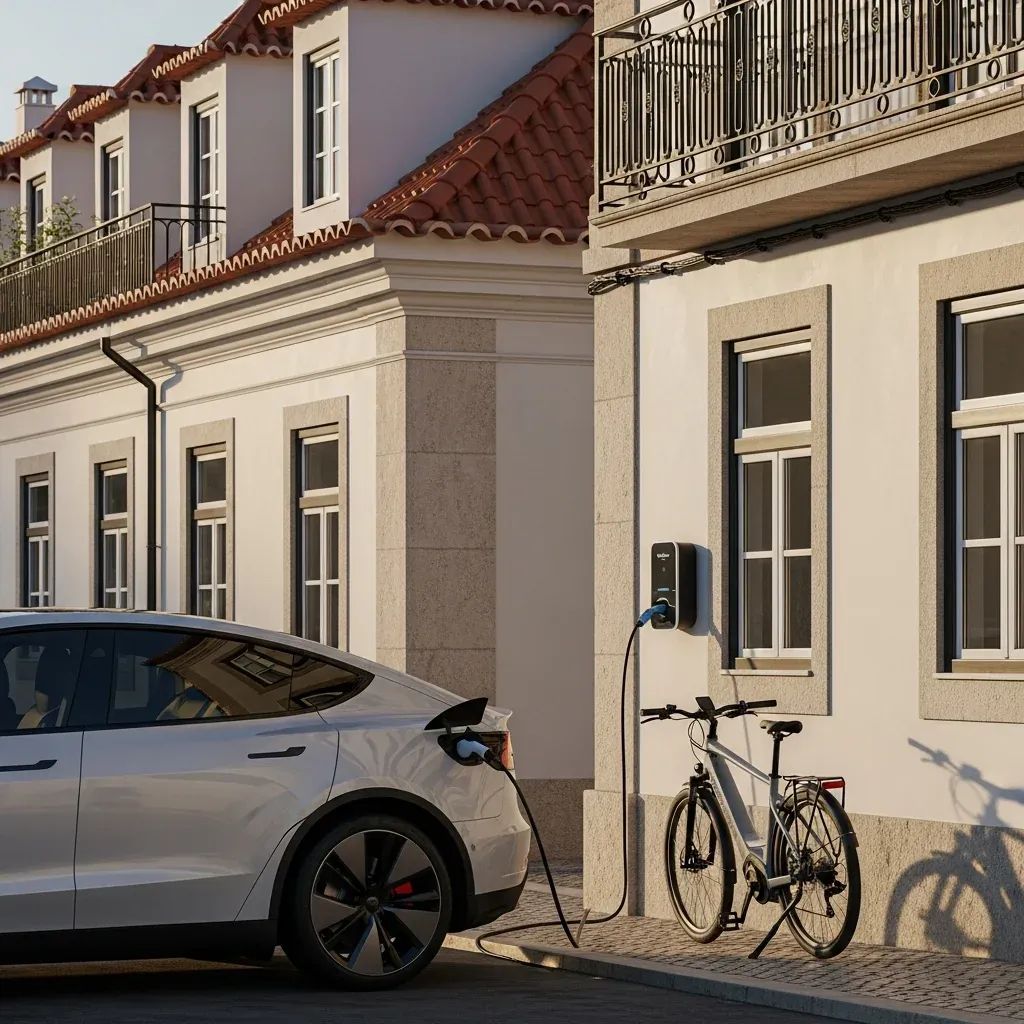
The government has quietly pressed the reset button on its flagship electric-mobility incentives, and anyone in Portugal who has bought – or is thinking of buying – a low-emission vehicle since 1 January 2025 now has a shot at claiming fresh cash support. Applications open on 29 December and will run little more than six weeks, but, as past editions have shown, the money can vanish in days.
What’s New This Time
Portugal’s revised scheme comes with a noticeably larger purse and a couple of tweaks designed to speed up the switch away from fossil fuels.
• Total envelope grows to €17.6 M• Retroactive coverage back to 1 January 2025• Abolishing an old car remains mandatory for the €4 000 private-buyer bonus• Price cap for passenger EVs set at €38 500 (or €55 000 if the car seats 6+)• A dedicated €6 000 grant lands for electric vans (category N1)• Up to 80 % funding for apartment-block chargers
Who Can Apply and How Much Is On The Table?
The programme still distinguishes between ordinary citizens, public bodies and the not-for-profit sector. Below are the headline figures, all of which include VAT and are processed by the Fundo Ambiental on a first-come, first-served basis.
Passenger cars (M1)– Private drivers: up to €4 000– Municipalities & IPSS: up to €5 000
Two-wheelers & light quads– Electric motorbikes, mopeds, triciclos, quadriciclos: 50 % of purchase price, ceiling €1 500
Pedal power– Cargo bikes (e-assist): 50 %, cap €1 500– Cargo bikes (no motor): 50 %, cap €1 000– Urban e-bikes: 50 %, cap €750– Conventional city bikes: 50 %, cap €500
Charging at home– Wall box: 80 % grant up to €800 per bay– Electrical upgrade: another 80 % up to €1 000
Why The Programme Matters — A Look At The Numbers
Successive rounds of Mobilidade Verde have pushed Portugal into the European top tier for electric-car market share. Battery cars commanded 19.9 % of new passenger-vehicle registrations in 2024, up from barely 6 % in 2020. The circulating fleet of fully electric passenger cars now exceeds 167 000, according to the mobility association ACAP. Insiders at the Energy Agency (ADENE) note that every 10 000 EVs displace about 45 kt of CO₂ over a typical Portuguese usage cycle. Keeping the incentives alive is therefore crucial if Lisbon hopes to ride the wave of the EU’s 2035 combustion-engine ban.
Voices From The Field
Environmental NGO ZERO applauds the renewed funding but insists future editions should also reward citizens who forgo car ownership altogether in favour of a “mobility card” covering trains, metros and shared bikes. On the industry side, the Portuguese car lobby ACAP labels the extra €7 M injection “a welcome buffer” in the face of rising battery costs. Economists such as Filipe Vasconcelos Fernandes warn, however, that the one-off nature of annual calls creates planning headaches for dealers and leasing firms. Meanwhile, the drivers’ club ACP complains that payout delays have sometimes stretched beyond a year, effectively turning grants into post-purchase rebates rather than genuine price cuts.
How To File Your Application Without A Headache
Gather a digital copy of the purchase invoice and registration certificate dated after 1 January 2025.
Request proof of vehicle scrappage (if applicable) from the scrapyard.
Log on to the Fundo Ambiental portal with a Chave Móvel Digital.
Fill out the online form – it takes about 15 min – and upload PDFs.
Track the status via the dashboard; approvals appear chronologically.
Tip: Set a calendar reminder for 09:00 on 29 December. In last year’s round, the bicycle category was exhausted in under 48 h.
Beyond Cars: Two Wheels And Wall Boxes
Not everyone can afford or even wants a new EV, especially in Portugal’s dense urban cores. That is why bicycles, scooters and shared charging infrastructure receive a chunky slice of the funding. Apartment dwellers – roughly 40 % of Portuguese households – can now install a private charger for a net cost that frequently slips below €500 once both the hardware and the electrical upgrade subsidises are factored in. Municipalities from Évora to Braga are already mapping neighbourhoods where clusters of condo chargers could relieve pressure on public fast-charging stations.
At A Glance: Key Takeaways
– Applications run 29 Dec 2025 → 12 Feb 2026 (or until the cash runs dry).– The scheme is retroactive to purchases made since 1 Jan 2025.– Grants cover passenger cars, light vans, motorbikes, bikes and chargers.– €17.6 M total budget means speed is everything.– Scrapping an old combustion car remains compulsory for the top passenger-car bonus.
Whether you are eyeing a city e-bike, seeking to electrify a municipal fleet or simply need a cheap wall box at your condomínio, the window to apply is short – and Portugal’s experience suggests it may fill even faster.


