

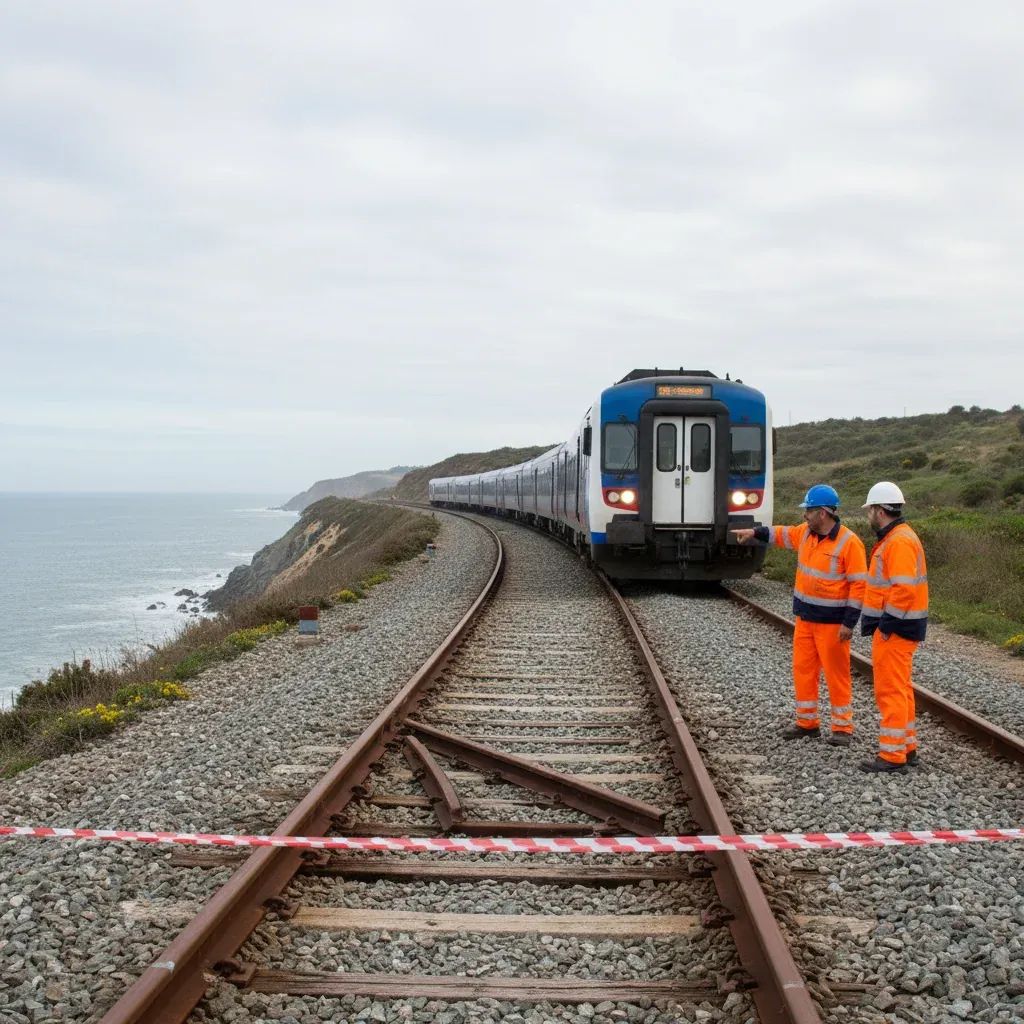
The Portugal rail operator CP has kept large stretches of the national network either closed or running on reduced speed, a situation that will stretch well into spring and force thousands of commuters to rethink their daily routes.
Why This Matters
• Fewer trains on the two busiest corridors (Linha do Norte and Linha de Cascais) mean longer travel times between Lisbon, Porto and the coastal suburbs.
• Suspensions on interior lines — especially the Douro valley — are cutting tourism revenue just as Carnival season begins.
• Government repair funds top €2.5 B, but some projects, like the Linha do Oeste, are already flagged for multi-month closures.
• Compensation rules apply: passengers delayed over 60 minutes can claim up to 50 % of the ticket price under EU Regulation 1371/2007.
Where the Network Is Broken
The storms Kristin, Leonardo and Marta tore through the country at the end of January, toppling trees onto catenary, flooding embankments and washing away ballast. The damage is uneven but acute in five corridors:
Linha do Norte – Long-distance Alfa Pendular and Intercidades remain curtailed. Trains now run only between Soure and Coimbra-B, with regional shuttles between Entroncamento-Soure and Tomar-Lisboa. Through services Lisbon–Porto are not expected to return before June.
Linha de Cascais – Sea spray and a collapsed passeio ribeirinho forced single-track operation Algés–Caxias at 30 km/h. Timetables are trimmed to 15-minute intervals off-peak; full double-track may be restored after Easter.
Linha do Douro – No trains Régua–Pocinho because ongoing modernisation collided with storm damage. Road coaches connect, but wine-estate guesthouses report cancellations above 40 %.
Linha do Oeste – A breach near Valado dos Frades wiped out embankment; the Infrastructure Ministry says nine months to rebuild.
Linha do Sul & Beira Alta – Spot closures between Monte Novo–Alcácer do Sal and Coimbra–Guarda; services run with borrowed Spanish locomotives at lower power.
Repair Crew and Timetable
Infraestruturas de Portugal (IP) has deployed 1 000 technicians and 550 vehicles. Priority is given to the high-revenue Norte corridor, where three catenary masts per kilometre must be replaced. A provisional calendar released last night indicates:
• 16 Feb–31 Mar – Permanent way stabilisation Soure–Coimbra; Cascais seawall injection.
• April – Tunnelling works on the Douro Juncal tunnel; installation of new drainage on Linha do Sul.
• By June – Full reopening Lisbon–Porto if tests clear 220 km/h speeds.
IP confirmed that the €400 M top-up from the national calamity fund is "already in the treasury account" and contractors are signing accelerated procurement contracts.
Alternative Routes and Refund Rules
With the A1 motorway also seeing sporadic closures, CP has arranged the following stopgaps:
• Road coaches between Coimbra-B & Pombal and Régua & Pocinho (free with train ticket).
• TAP air shuttle reinforced to 9 daily flights Lisbon–Porto, introducing a promotional €39 fare for rail-ticket holders.
• Metro & ferry discounts: Cascais season-pass holders may ride Fertagus across the Tagus at no extra cost until 31 March.
For monetary relief, keep the original ticket and request compensation online within 3 months. CP promises responses in 10 working days, though the regulator AMT can intervene if credits are not issued.
What This Means for Residents
• Commuters: Budget an extra 15–40 minutes on Cascais services; Lisbon–Porto travellers should consider overnight coaches or the discounted air shuttle.
• Homebuyers in the western suburbs may face short-term price dips as rail reliability influences property searches.
• Tourism operators along the Douro need contingency marketing; many river-cruise companies are adding free Porto transfers to retain bookings.
• Small businesses in storm-hit municipalities qualify for interest-free loans up to €150 000 under the calamity decree; applications open Monday at balcaounico.gov.pt.
• Employers: The Labour Ministry urges flexible hours so staff can catch earlier or later trains during the rolling timetable.
Money Behind the Fix
The broader €2.5 B disaster envelope is carved up as follows:
• €400 M straight to IP for rail and road fixes.
• €1 B in low-interest credit lines for farmers and SMEs.
• €650 M earmarked for municipal housing repairs — crucial after 15 storm-related deaths and hundreds of evacuations in Centre and Alentejo regions.
• €450 M reserved as contingency if future extreme-weather events hit before the end of the year.
Economists at BPI Research calculate the rail disruptions alone could shave 0.1 pp off 2026 GDP if services are not normalised by the summer tourist season.
A senior official summed it up yesterday: “We are rebuilding faster than we did after the 2013 floods, but climate volatility means this may become the new normal.” For passengers, that translates into one clear takeaway—always check the CP app before you head for the platform.


