
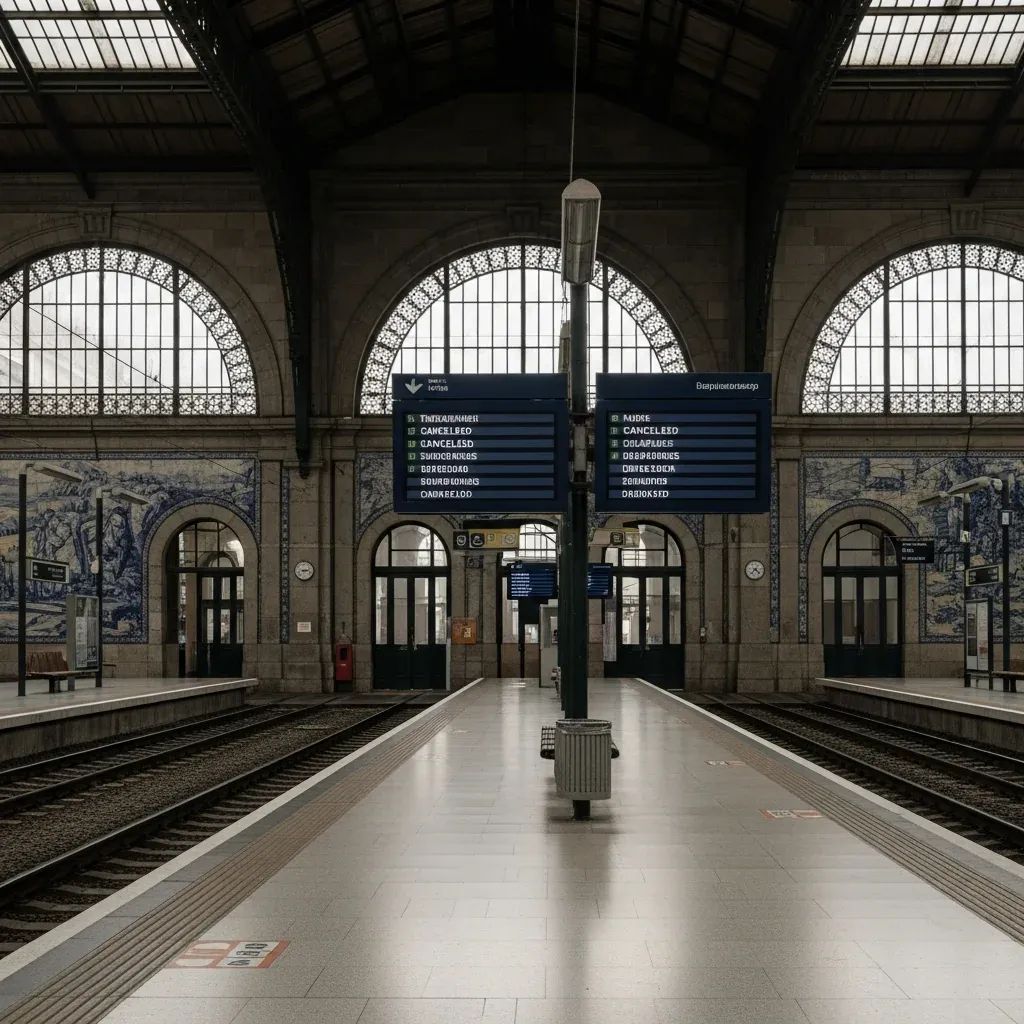
The prospect of hopping on a morning train anywhere between Braga and Faro is fading fast this week. A nationwide walk-out called for Thursday has already begun to ripple through the network, and rail operator CP warns that travellers may feel the shockwaves through Friday evening, even if the strike officially peaks on the 11th. From cancelled express services to skeleton suburban timetables, the next 48 hours call for extra patience and a good deal of improvisation.
Severe disruptions across the rail network
Long before dawn on Wednesday, signs in station concourses from Lisboa-Santa Apolónia to Porto-Campanhã began flashing the same apology: "Serviço suprimido." By mid-morning, only 13 trains out of the planned 76 long-distance departures had rolled out of the yards. CP’s own forecast suggests that disruption will widen on Thursday, when the general strike reaches full strength, and linger into Friday as crews return to duty and rolling stock is repositioned. The operator confirms that practically every product line — Alfa Pendular, Intercidades, Internacional, InterRegional, Regionais and the urban services of Lisbon, Porto and Coimbra — will be running on a severely reduced “services-minimum” template.
Key pinch points commuters should watch:
• Morning peak between 06:30 and 09:30: CP expects the highest cancellation ratio here, especially on the north-south corridor.
• Urbanos de Lisboa Cintura Line: most trains cut, leaving 30-minute gaps at best.
• Alfa Pendular Porto-Lisboa-Faro: only one round trip guaranteed on each of the three days.
• Night services: none will circulate until early Saturday.
What lies behind the stoppage
Twelve unions, among them FECTRANS/SNTSF, SINAFE and the once-rival federations CGTP and UGT, have closed ranks to protest the Government’s proposed labour-code overhaul. At the heart of the discontent is a plan to relax dismissal rules and freeze automatic pay-step progressions for public-sector workers. Union leaders argue that the measure would set a precedent for the private sector and erode collective-bargaining power. The walk-out is the first joint strike since 2013, a symbolic reunion that labour analysts consider a "stress test" of Portugal’s framework for balancing the right to strike with essential-services guarantees. Government sources insist that talks will resume next week but have so far refused to withdraw the bill.
Refunds and plan B for travellers
CP is offering a full refund or free ticket exchange to anyone holding reservations dated 10-12 December. The process can be completed through the myCP portal up to 15 minutes before the scheduled departure or, after that, via an online form for 10 days. Several urban operators have outlined their own contingency schemes: Metro de Lisboa will shut entirely on Thursday, while Fertagus aims to run a limited cross-Tagus service unless staff at Infraestruturas de Portugal join the strike in greater numbers. In the skies, TAP has already axed dozens of flights and is letting passengers shift dates by up to three days. Road commuters should brace for traffic queues near protest hotspots; the PSP plans rolling traffic diversions around São Bento and downtown Lisbon.
Looking beyond the three-day gridlock
Economists caution that the real bill for this stoppage will not materialise until after Christmas. Supply chains relying on just-in-time deliveries may have to reroute freight to the road, while disrupted commuting patterns could shave productivity off office-heavy districts in Lisbon and Porto. Retailers banking on early-season shoppers fear a dent in Christmas retail turnover, and inbound tourism bookings face a wave of last-minute cancellations. That said, December strikes have historically encouraged policymakers to revisit the economic impact of transport bottlenecks and invest in infrastructure resilience. Whether this week’s turmoil accelerates future negotiations or simply tests public patience will depend on how swiftly normal service resumes over the weekend.


