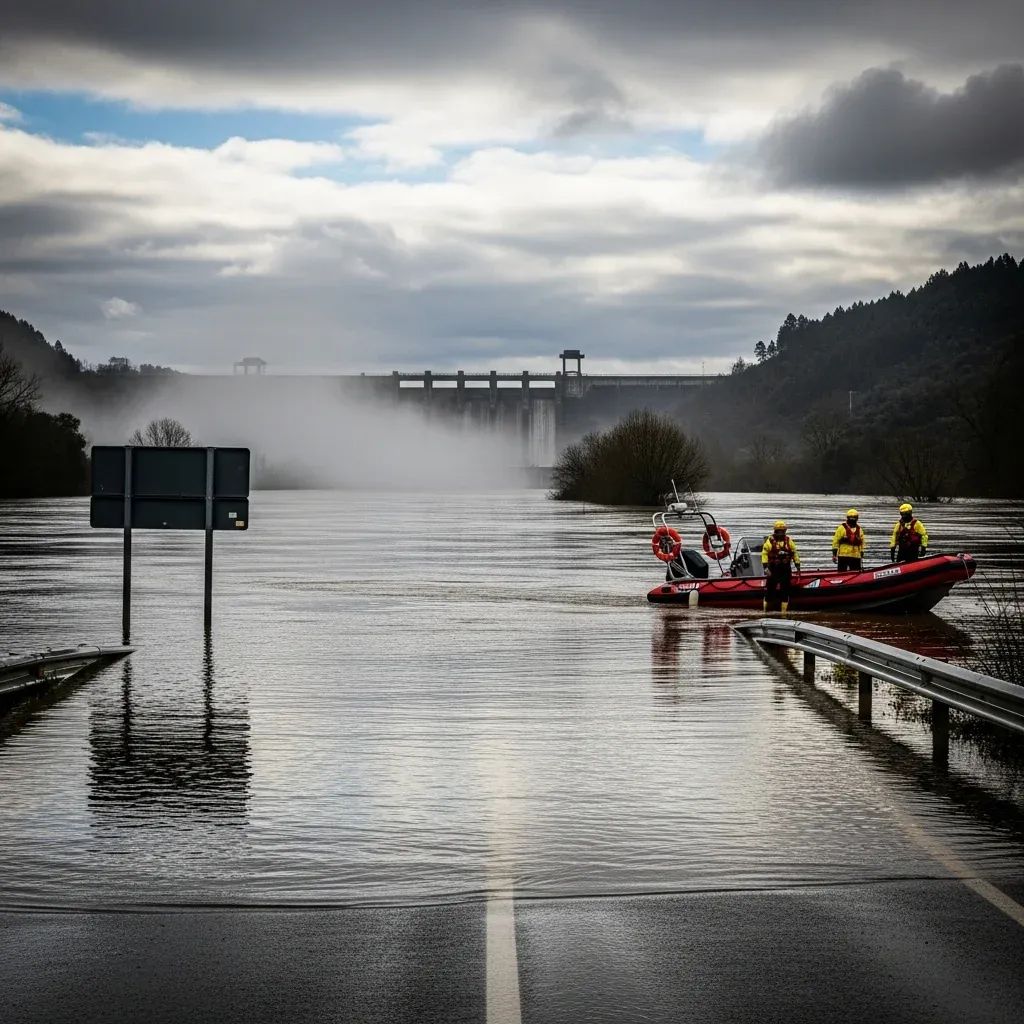
The Portugal National Civil Protection Authority (ANEPC) has escalated flood alerts across almost every major river basin, a move that will likely trigger road blocks, school closures, and evacuations as a fresh Atlantic storm barrels in later this week.
Why This Matters
• Orange and red warnings now cover 15 rivers, including the Tejo, Mondego and Sorraia.
• 68 municipalities remain under a state of calamity, allowing mayors to requisition private machinery and close businesses if water levels surge.
• Public services may be interrupted: telecom operators and energy distributors are pre-positioning teams to restore lines within 4-6 hours.
• Insurance clauses tighten: several insurers just added a 72-hour “new loss” waiting period—file claims quickly if you were hit by the last storm.
Storm Outlook: What Is Heading Our Way
Meteorologists at the Portuguese Institute for Sea and Atmosphere (IPMA) are tracking a “river in the sky”—a narrow band of moisture that can drop 200–300 mm of rain over mountainous terrain in less than 48 hours. Because soils are already saturated to 95 % capacity, even moderate showers could push rivers over their banks. The front is expected to sweep across the North on Friday evening, reach the Lisbon region by dawn Saturday, and linger over the Alentejo until Sunday night.
Where the Water Threat Is Highest
Hydrologists are most concerned about five basins:
Mondego – fragile levees near Coimbra could fail; 3 000 residents are on stand-by for relocation.
Tejo – Spanish dam releases at Alcántara and Cedillo may raise downstream levels by 1.5 m in 24 hours.
Sorraia – flood plains around Coruche and Benavente already under 50 cm of standing water.
Douro – the Ribeira waterfront in Porto may see tidal backing at high tide, complicating drainage.
Sado – rice fields near Alcácer do Sal are expected to overflow, threatening the IC1 motorway.Smaller catchments such as the Águeda, Vouga, Lima and Tâmega are also on alert, while 80 % of reservoirs sit above design capacity, limiting their ability to buffer runoff.
How Authorities Are Preparing
The ANEPC activated its national emergency plan on Tuesday night. Concrete actions include:
• 2 500 firefighters and 850 military engineers moved into rapid-response staging areas.
• Temporary flood barriers pre-deployed to protect low-lying neighbourhoods in Santarém and Soure.
• Drone surveillance to provide real-time mapping of levee integrity along 600 km of riverbank.
• SMS push alerts tested at noon Wednesday—if you did not receive one, update your phone number in the civil protection portal.Rail operator CP has prepared bus substitutions on the Beira Alta and Linha do Oeste corridors, and Infraestruturas de Portugal warned of possible closures on the A1 and A23 if embankments soften.
What This Means for Residents
For people living or working near flood-prone areas, the coming days require concrete action:
• Check your drainage: clear gutters and basement pumps; municipal crews will not reach private property during the peak.
• Save digital copies of documents: power cuts are probable; cloud backups speed insurance processing.
• Plan alternate commutes: many rural roads double as flood channels—Google Maps may not update fast enough.
• Expect price spikes: fresh-produce wholesalers in the Ribatejo have warned of a 5–10 % bump in vegetable prices next week if fields go under.
• Pets and livestock should be moved to high ground; veterinary teams will focus on commercial farms first.For renters, note that Portuguese tenancy law allows a temporary rent suspension if a dwelling is declared uninhabitable by municipal inspectors—keep photos and the official inspection report.
Expert View: Climate Patterns Turning More Volatile
Climatologist Pedro Matos Soares links the current storm train to a south-shifted Azores High that funnels depressions straight at Iberia. He argues Portugal has entered a “new flood regime” where once-in-25-year events may now occur every 4–5 years. Environmental NGOs such as WWF-Portugal urge the government to multiply adaptation spending tenfold, prioritising wetland restoration and urban permeable surfaces. Conversely, risk modeler Mário Marques criticises the pace of levee reinforcement, noting that only 12 % of the Mondego’s dike upgrades promised after the 2001 floods have been completed.
What Comes Next
IPMA forecasts indicate the heaviest burst should clear by Monday, but a weaker low may trail it mid-week. Until groundwater levels recede—likely toward the end of the month—any additional 40 mm of rain could renew flash-flood conditions. The Government’s calamity decree runs until 15 February and can be extended within 24 hours’ notice. Keep receipts for emergency spending; tax law permits deducting certain safety-related costs up to €1 500 per household.
Stay tuned to official channels, keep your phone charged, and—if history is any guide—assume the water will arrive faster than forecasts suggest.