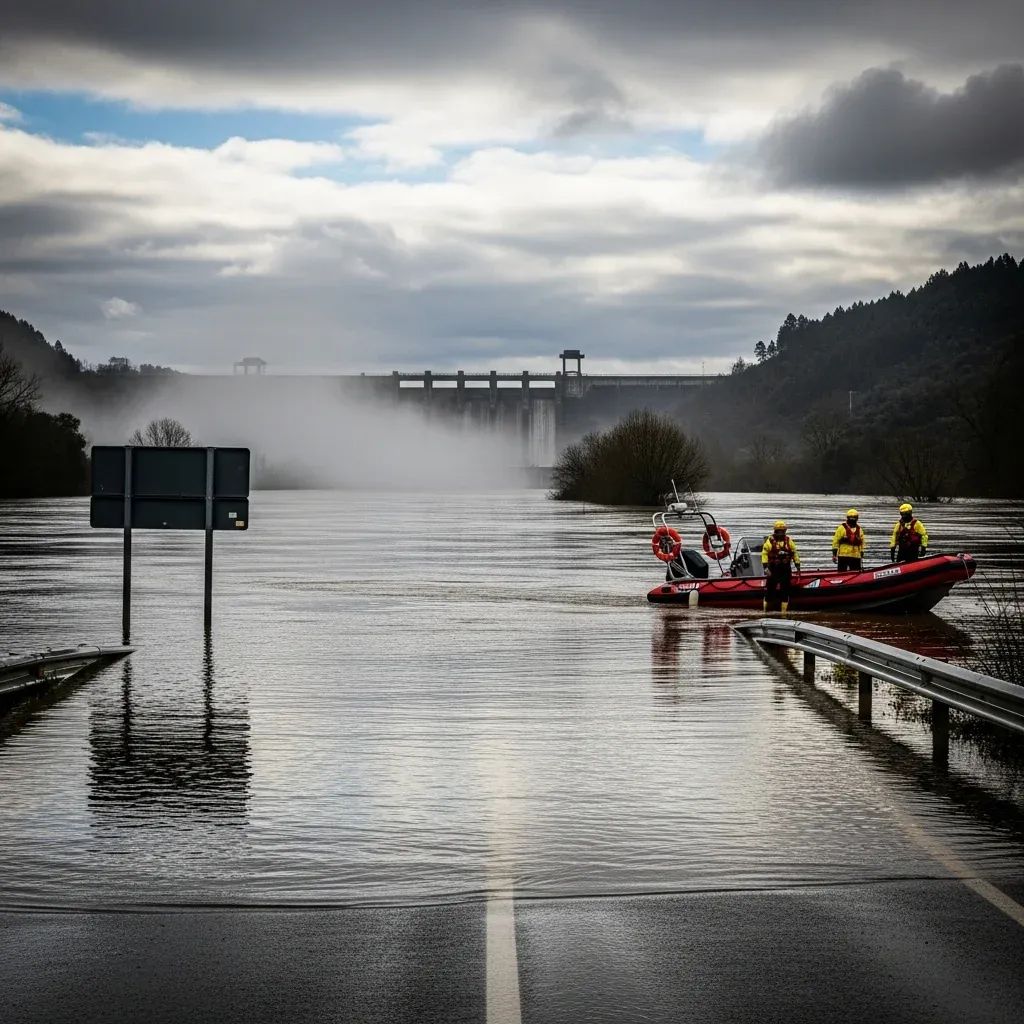
The Portugal National Civil Protection Authority has issued a nationwide flood warning through Thursday, a decision that forces local councils to tighten contingency plans and pushes households to safeguard property and reconsider travel.
Why This Matters
• Red alert on the Tejo and other major basins means riverfront towns from Abrantes to Vila Franca de Xira could face water levels unseen since 2001.
• Schools, rail lines and some polling stations have already closed or switched to remote operation; further shutdowns may follow with just a few hours’ notice.
• Insurance claims for storm damage must be filed within 8 days; missing the window could void compensation.
• Emergency financial aid up to €36,000 per home can be requested from the Portugal Housing and Urban Rehabilitation Fund starting Monday.
Storm Sequence: How We Reached a Breaking Point
Three Atlantic depressions—Kristin, Leonardo and Marta—swept across the Iberian Peninsula in under 20 days. Each system dumped a month’s worth of rain on already saturated soils, driving river gauges beyond safe thresholds. The Tejo is now running above 7,400 m³/s, double its seasonal average. Meanwhile, Spanish dam discharges on the Douro and Guadiana have added downstream pressure, giving Portuguese authorities little room to maneuver.
Hot-Spot Map for the Week Ahead
Civil Protection’s internal dashboard, shared with regional mayors on Saturday night, highlights eight priority zones:
Tejo Basin: Abrantes, Santarém, Benavente and Vila Franca de Xira.
Mondego Lowlands: Coimbra, Montemor-o-Velho and Soure.
Sado Marshes: Alcácer do Sal and Santiago do Cacém.
Sorraia Valley: Coruche, where levees are already overtopped.
Douro Corridor: Peso da Régua, Vila Nova de Gaia and Porto riverfront.
Lima Tributaries: Arcos de Valdevez and Ponte de Lima.
Coastal Strip north of Aveiro: At risk from combined river and storm-surge effects.
Algarve Guadiana: Alcoutim and Vila Real de Santo António, vulnerable to rapid rises.
Government Toolbox: What Has Been Activated
The Portugal Cabinet extended the state of calamity until 15 February, unlocking fast-track procurement for flood barriers, pumps and temporary housing. Five military helicopters are on standby for medical evacuations, and satellite imagery from the EU’s Copernicus programme now feeds directly into the Lisbon operations room every three hours. In Lisbon city, text-alert sirens will be tested at noon on Monday—expect a loud 60-second tone.
Science Corner: Why February Is Suddenly Our Rainy Season
Climatologists at the University of Lisbon link the pattern to a persistent Atlantic jet-stream kink that funnels moist subtropical air toward Iberia. The phenomenon, called atmospheric rivers, can carry more water vapor than the Amazon. Warming sea-surface temperatures have strengthened these rivers, leading to shorter but more violent downpours. The National Meteorological Institute (IPMA) warns that what was once a once-in-20-year event could, by 2030, become twice-a-decade.
What This Means for Residents
• Commuting: Expect last-minute rail suspensions on the Linha do Norte and Metro do Porto’s river-level stations. Keep an eye on CP and Infraestruturas de Portugal social feeds.• Utilities: E-Redes crews will cut power pre-emptively in floodplains; storing battery packs and a small gas cooker is sensible.• Home protection: Place electrical appliances above the 60-cm mark. Sandbags are available free of charge at local fire stations—bring ID.• Insurance: Photograph belongings before any water ingress; insurers increasingly reject undocumented claims.• Voting & paperwork: Some municipal counters have shifted to digital-only service; check your junta’s website before showing up.
Expert View: Building for the Next Storm
Hydrologists argue Portugal must pivot from emergency response to long-term prevention. Proposals on the table include relocating critical public services out of floodplains, revising building codes to mandate elevated foundations in risk areas, and enlarging wetlands that absorb overflow. Funding could come from the EU Resilience and Recovery Facility, where Lisbon still has €1.2 B unallocated.
How to Stay Informed—Reliably
ANEPC smartphone app for push alerts.
IPMA 3-hour radar loop at ipma.pt for storm tracking.
Local fire brigade Facebook pages for road closures.
800 246 246—national Civil Protection hotline (free, 24/7).
Bottom Line for Expats & Investors
Portugal remains safe for business, but climate volatility is re-pricing coastal and riverside property. Insurers have already hinted at premium hikes in 2027. If you own or plan to buy near a major river, factor in the cost of flood adaptation now rather than later. The message from authorities is clear: extreme water is no longer a rare guest—it is learning Portuguese and intends to stay.