

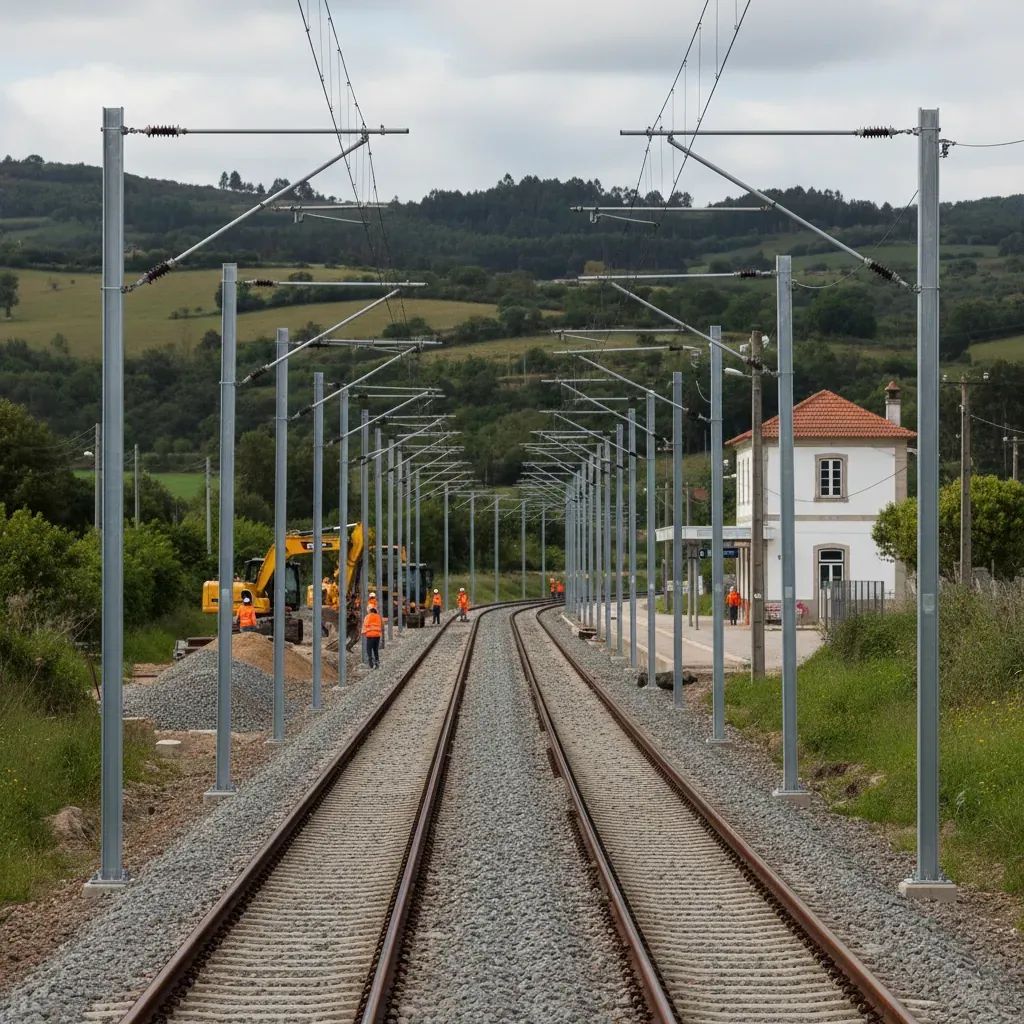
The Portugal Tribunal of Auditors has called out the country’s flagship rail upgrade, Ferrovia 2020, for running five years late, a finding that could reshape how billions in public funds are spent between now and 2027.
Why This Matters
• 69 % of the original budget has been spent but only 65 % of the work is finished.
• Completion is now aimed for 2027, not 2021, extending disruption on commuter and freight lines.
• Unfinished stretches delay promised cut-backs in road traffic and carbon emissions, keeping Portugal from EU climate targets.
• The overrun affects the timing of €490 M in rail investment scheduled for 2025, money that could flow to other projects if Ferrovia 2020 keeps slipping.
Five-Year Slip: How the Numbers Stack Up
Launched in 2016, Ferrovia 2020 covers 1,193 km of track, with the goal of electrifying more than 480 km and upgrading two international corridors—North (380 km) and South (280 km). By December 2024, spending reached €1.88 B, or 91.9 % of the revised budget but just 65 % of the physical work planned back in 2016. Even under the more modest targets set later by Infraestruturas de Portugal (IP), only 88.5 % of the tasks were done.
What Went Wrong Inside Infraestruturas de Portugal
Auditors say the timeline slipped first because of over-optimistic planning. IP’s own engineers underestimated how long design, tender and licensing would take. The agency also faced staff-capacity limits; experienced project managers were spread thin across parallel motorway and port expansions. These internal constraints doubled the average duration of construction contracts and inflated administrative costs.
External Roadblocks and Market Gaps
Outside IP’s walls, the Portuguese construction market showed limited bandwidth. A short list of rail-qualified contractors led to pre-contract lawsuits and price hikes. Frequent design revisions, licensing holds from environmental agencies and even copper thefts along track sites piled up delays. Specialists argue that cheap toll-free highways, introduced in recent years, further eroded political urgency to prioritise rail.
Catch-Up Plan Through 2027
To bring the programme back on track, IP has ring-fenced €193 M for 2026 and will funnel the bulk into three projects: the Évora–Elvas high-speed link, the Beira Alta line modernisation, and the long-promised electrification of the Algarve and Oeste lines. An external audit, urged by the Mobility & Transport Authority, is mapping new penalty clauses for contractors who miss checkpoints. The government has also folded Ferrovia 2020 into its Plan Nacional Ferroviário so that unresolved stretches can tap PNI 2030 funds if costs overshoot.
How Portugal Compares to Europe’s Rail Projects
Portugal is not alone. A 2018 review by the European Court of Auditors labelled most EU rail megaprojects a “patchwork” delivered late and over budget. Cost overruns average 25 % across the bloc, while utilisation sits below forecasts on nine of fourteen new lines. In that context, Ferrovia 2020’s five-year lag and €2.16 B price tag land squarely in the EU mainstream, though they still strain Lisbon’s modest public-works envelope.
What This Means for Residents
Commuters on the Oeste, Algarve and Beira Alta lines will wait at least another year for faster electric trains. Freight operators, especially exporters moving goods from Sines and Leixões, must continue routing cargo partly by road, paying higher logistics bills. For taxpayers, every extra month of delay risks penalties on EU funds, meaning national coffers could absorb more of the final cost. Homeowners near unfinished segments should brace for ongoing construction noise well into 2027.
Climate and Investment Outlook
Portugal’s carbon-reduction roadmap counts on shifting 30 % of long-haul freight from road to rail by 2030. Any further drift in Ferrovia 2020 squeezes that margin, potentially forcing higher carbon taxes on drivers to hit the same target. On the upside, once the Évora–Elvas corridor opens, the country will field its first genuine high-speed freight route to Spain, a selling point for industrial parks in Alentejo eyeing foreign investors.
In short, Ferrovia 2020 is still salvageable, but only if IP tightens project governance and the construction market scales up fast. For residents, the next two years will reveal whether Portugal can finally deliver the rail network it has been promising since the last decade.


