

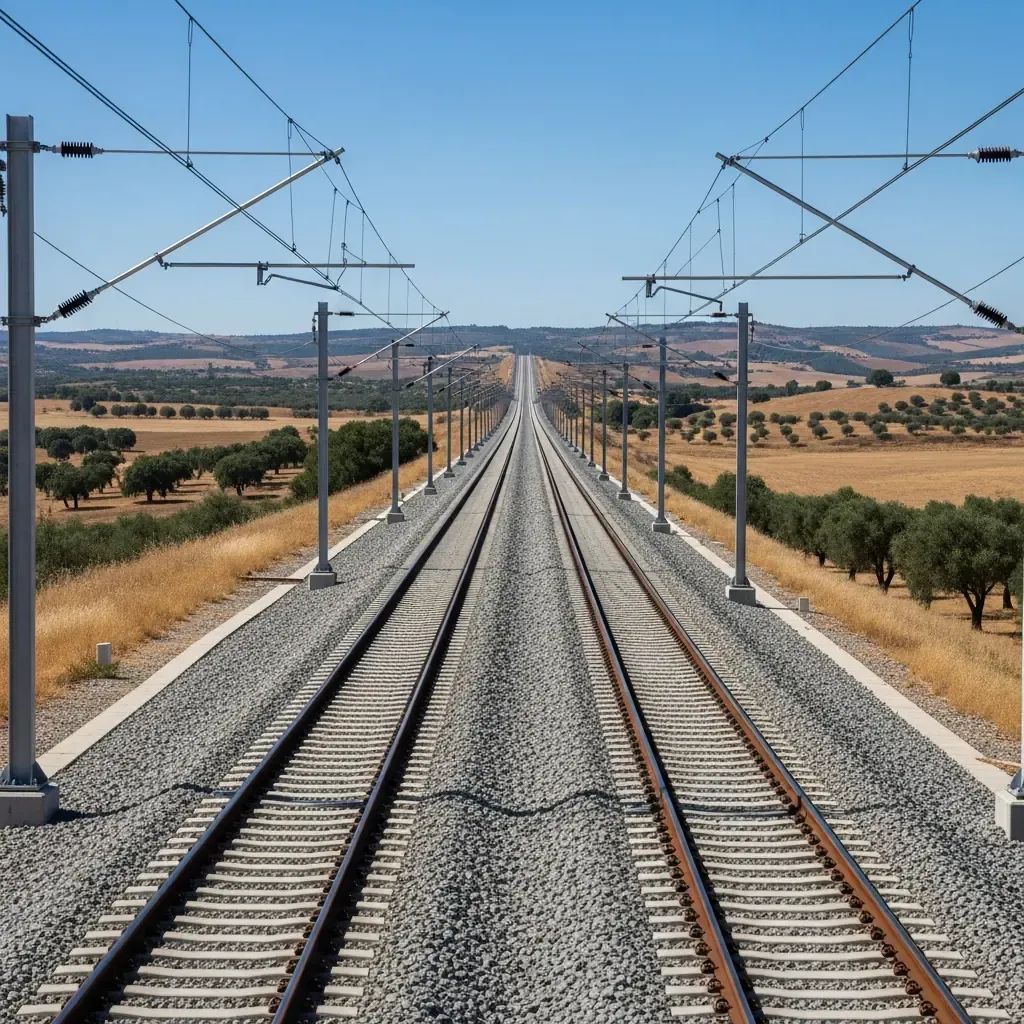
Portugal’s shiny new tracks between Évora and the Spanish border are finished, yet the first passenger and freight services will not roll until late 2026–early 2027. That extra pause, government officials say, is the price of safety certification, signal testing and cross-border coordination.
Snapshot: what matters now
• Rails laid, catenary energised, substation live – but no trains for 12-14 months
• Part of the €460 M International South Corridor linking the port of Sines to Spain
• Designed for 250 km/h passenger trains and 750-metre freight convoys
• Expected to cut Lisbon–Badajoz travel to under 2 hours and trim freight routes by 140 km
• Certification delay blamed on signalling software, interoperability checks and the need for a green light from the European Union Agency for Railways (ERA)
Why your timetable stays unchanged for now
Commuters in the Alentejo and logistics firms eyeing a faster path from Sines to Madrid hoped 2026 would begin with whistles blowing. Instead, Infrastructure Minister Miguel Pinto Luz confirmed that trains will remain absent while engineers finish the ERTMS Level 2 signalling and inspectors sign off every bridge, tunnel and overhead wire. In practical terms, nothing moves until all dynamic tests prove the line can handle mixed traffic at its advertised speed.
What is complete – and what is still missing
The physical build is done:
• 93 km of double track in bitola ibérica
• Overhead electrification at 25 kV
• The largest traction substation in the Portuguese network
• Grade-separated junctions that keep road traffic clear
What remains is invisible to the naked eye – the software that lets Portuguese and Spanish dispatchers talk to each other, the on-board units every locomotive must carry, and the thick stack of ERA safety dossiers. According to project managers, that paperwork alone takes nine months.
Big stakes for Alentejo’s economy
Regional leaders insist the line is more than a prestige project. They see:
• Lower freight costs for marble, cork and agri-food exporters
• Fresh incentives for logistics parks between Alandroal and Vila Viçosa
• A tourism boost as Évora becomes European Capital of Culture 2027
• Potential to keep young residents local by creating skilled rail jobs
Bank analysts estimate a 50 % cut in door-to-door shipping costs between Sines and Andalusia once the route is fully operational.
Technology edge – and the Iberian twist
Unlike older Portuguese railways, the Évora-Caia section is future-proofed for high-speed passenger trains. Yet it still uses the Iberian gauge shared with Spain. Lisbon and Madrid have a tentative agreement to convert to standard gauge later this decade, but only when financing and network upgrades on both sides align. Until then, dual-gauge bogies or transshipment hubs will remain part of the picture for continental freight.
Remaining hurdles beyond signalling
Synchronising Spanish projects: Madrid wants Portugal to progress the Lisboa-Évora stretch just as quickly.
Environmental monitoring: €630 000 in fauna protection measures must show results before full capacity is authorised.
Operator readiness: CP, Renfe and private freight hauliers still need rolling-stock slots and driver training on the new rules.
The minister’s calendar – and why it could slip again
Miguel Pinto Luz has pencilled in “December 2026” for the first commercial freight run, with passenger timetables “soon after”. Insiders, however, warn that a single software glitch could nudge the date into 2027. ERA approvals typically take 6–8 weeks once documents are complete, but only if Spain files its interoperability reports on time.
Looking ahead: what citizens should watch
For residents of Lisbon, the Alentejo and Extremadura the key indicators will be:
• A public tender, due this spring, for station upgrades in Évora and Elvas
• Publication of the safety certificate in the Diário da República
• The moment a test train reaches 250 km/h – the headline milestone that signals the line’s true potential
If those boxes are ticked, Portugal could finally enjoy an Atlantic-to-Iberia rail spine that rivals road transport on cost, speed and carbon footprint. Until then, locals will keep seeing a pristine, silent track – a promise waiting to leave the station.


