
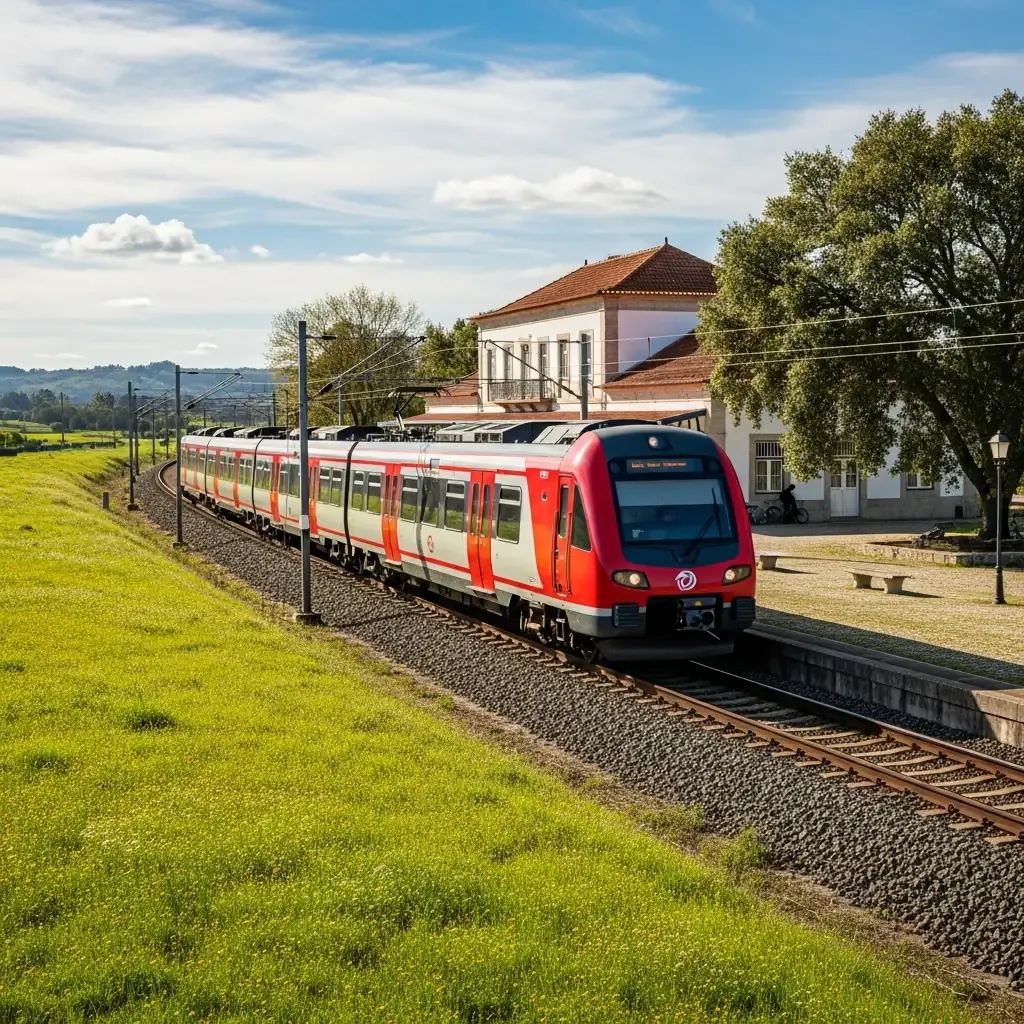
A brand-new railcar has quietly rolled onto Portuguese tracks, ending more than two decades without fresh rolling stock and signalling the first tangible result of a much larger rail renaissance that commuters will start feeling from 2026 onward.
Why This Matters Now
Portugal’s public network has not seen a single new regional train since 2002, leaving many daily riders on ageing carriages. The arrival of the first Stadler FLIRT unit, bought by CP with €158 M of mostly public funds, is therefore more than a photo-op. It marks the opening shot in a programme that aims to place about 200 new trains in service before the end of the decade, a move expected to shift thousands of motorists to rail and cut emissions along the busy Lisboa-Caldas da Rainha and Évora-Beja corridors.
A Train Long Overdue: Details of the FLIRT Fleet
• The order covers 22 regional units—12 bimode (diesel+electric) and 10 pure electric—that CP first signed in 2020 and which suffered a two-year delay because of supply-chain snags and legal wrangling with rival manufacturer CAF.• Each bimode set has a top speed of 160 km/h and will be classified as Série 2700 once the Instituto da Mobilidade gives final approval.• The newly delivered vehicle is undergoing dynamic tests between Entroncamento and Vila Nova de Gaia; certification should wrap up before next summer, clearing the way for commercial debut in 2H 2026.
What Commuters Can Expect on Board
Inside, riders will find 369 places (204 seated), designated areas for wheelchairs and bicycles, USB and 230-V sockets at every seat and on-train Wi-Fi. Modular interiors allow CP to convert the bimode units to full electric or battery operation once the remaining troços gain catenary—a future-proofing feature the Infrastructure Ministry calls “essential for the carbon-neutral targets of 2030”.
Wider Rail Overhaul: 200 Trains on the Horizon
The Stadler batch represents only the first 11 % of CP’s procurement pipeline. In October the state operator signed its largest contract ever—€746 M for 117 electric multiple units from an Alstom/DST consortium, earmarked for suburban Lisboa, Porto and regional Algarve services. Combined with a smaller tender for Intercidades coaches to be assembled in Guifões, the roadmap pushes CP’s fleet average age below 20 years for the first time this century.
Challenges and Delays: Why 2026 Instead of 2024
Floods at Stadler’s Spanish plant, component shortages and an early-stage legal appeal from CAF pushed the timeline back. CP insiders admit that without a revised delivery chart—now being negotiated—only 5 to 7 FLIRTs may be available when the Oeste timetable triples its frequency in late 2026. Still, management argues that running mixed old-new consists will prevent outright service cuts.
Money Matters: How Brussels and Lisbon Share the Bill
Roughly 70 % of the FLIRT purchase is financed through the Sustainable 2030 operational programme and the national Environmental Fund, both of which tap EU cohesion cash tied to emissions reduction. The remaining portion is borne by CP’s now-healthier balance sheet, freed from legacy debt after the 2021 recapitalisation. Officials insist no fare hike is planned, although the regulator may revisit tariff zones once capacity expands.
Expert and Worker Reactions
Transport analysts at the Portugal Railway Summit 2025 hailed the fleet modernisation as “a late but decisive leap” toward modal shift. Yet they warn that freight operators risk being sidelined if subsidies remain passenger-centric. Meanwhile, the main rail unions—fresh from securing a 4 % pay rise—see the arrival of modern stock as leverage for better staffing levels, noting that advanced diagnostics on the FLIRTs require additional technicians.
What Comes Next for Oeste and Alentejo Lines
The Infrastructure Ministry projects that by 2027 the Lisboa–Caldas axis will run 24 daily trains instead of 8, helped by the bimode units’ ability to switch to diesel where electrification gaps persist north of Torres Vedras. In the Alentejo, track upgrades between Poceirão and Bombel will allow heavier, quicker trains and save 15 minutes per journey to Beja while slicing diesel use by an estimated 25 %.
At a Glance — Key Takeaways
• First new CP train in 23 years now on Portuguese soil.
• Part of a 22-unit, €158 M deal with Switzerland’s Stadler.
• Bimode technology lets the fleet serve electrified and non-electrified lines.
• Front-line service slated for second half of 2026 after testing.
• Move is first step toward ≈200 new trains and a younger, greener fleet.
• Financed chiefly via EU-backed Sustainable 2030 and the national Environmental Fund.
• Analysts and unions broadly supportive but caution on delivery pace and freight funding.
• Expected ridership on CP network could hit 200 M trips by 2025, underlining urgency for capacity.


