

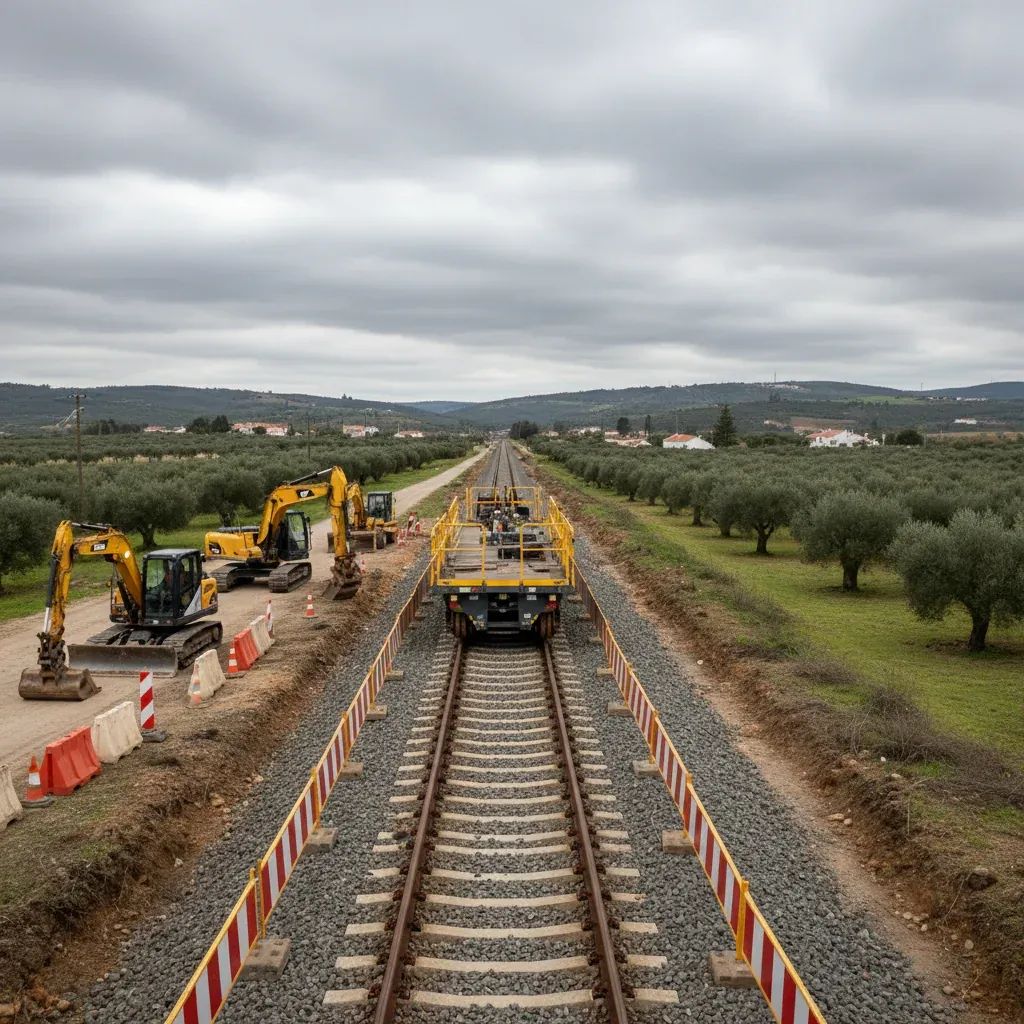
The Portugal rail operator Infraestruturas de Portugal (IP) has prolonged the shutdown of several backbone lines, a decision that disrupts the Lisbon–Porto corridor, commuter belts around Sintra and Cascais, and key freight arteries in the Douro and Alentejo.
Why This Matters
• No long-distance trains between Lisbon and Porto until further notice; buses fill only a fraction of the seats.
• Refunds without penalty are mandatory under national passenger-rights rules; ask within 30 days.
• June 2026 is the earliest full reopening date quoted by IP for the most complex repair zones.
• Supply chains in the North and Centre face delays of up to 48 h, increasing retail prices for bulky goods.
Where the Network is Down
Even seasoned commuters may lose track of which stretch is open. Below is the latest engineering map distilled into plain English:
• Linha do Norte – Suspended between Alfarelos–Coimbra B; no Alfa Pendular or Intercidades on the full Lisbon-Porto run. Limited regionals survive south of Entroncamento and north of Soure.
• Linha do Sul – Trains halted Monte Novo–Alcácer do Sal and Luzianes–Amoreiras; link to the Algarve weakened.
• Linha do Oeste – Breaks at Mafra–Amieira and Caldas da Rainha–Amieira leave the coastal corridor without rail.
• Linha do Douro – Picturesque route frozen Régua–Pocinho, cutting wine country from national rail logistics.
• Sintra suburban line – Single-track flow only; the down track Cacém–Monte Abraão closed after landslip.
• Linha de Cascais – Algés–Caxias (up track) intermittently blocked; rush-hour extras promised from 16 Feb.
Smaller routes such as the Beira Baixa, Vendas Novas and Xabregas chord are also out of service, meaning nearly 400 km of rail are under emergency orders.
How to Move Around in the Meantime
Road coaches: CP contracts Rede Expressos on the busiest axes, but capacity sells out quickly—book at least 24 h ahead.
Car-share & telework: Apps like BlaBlaCar report a 60 % surge in Lisbon-Porto offers; many firms are extending remote-work allowances.
Extra flights: TAP has added three weekly rotations between Lisbon and Porto, though tickets are pricier than rail.
Local detours: Some passengers in Coimbra substitute the metrobus network or the reopened A1 southbound once waters receded.
What This Means for Residents
For daily travellers, the mix of longer commutes, higher fuel bills and crowded buses is immediate. Employers must respect Decree-Law 174/2021, allowing justified lateness when public transport collapses under force majeure. Ticket holders are entitled to either full reimbursement or re-booking within 90 days. Property owners along the Cascais line worry about tourism-driven rentals; without reliable trains, short-stay demand dips. SMEs exporting wine and ceramics via the Douro or Beira Alta face extra truck costs of roughly €0.20/kg, a margin that can erase quarterly profits.
Timetable for Repairs
The engineering crews are focusing on clearing debris, re-packing ballast and inspecting 50+ hydrological structures. IP told municipal leaders that complex segments—especially the embankment near Coimbra flooded by the Mondego—will stay off-limits until end-June 2026. A government-ordered audit by the National Civil Engineering Laboratory (LNEC) runs in parallel; its interim notes are due in 30 working days and will rank stretches by structural risk. Funding taps a mix of the Recovery and Resilience Plan and IP’s own €200 M maintenance envelope.
The Bigger Infrastructure Question
Specialists such as climatologist Carlos da Câmara argue that Portugal’s rail grid still reflects 19th-century hydrology models. He warns that “what was a 100-year flood in 1970 is now a 20-year event.” Engineers from the Order of Engineers – North Region call for real-time monitoring sensors on slopes and bridges, echoing IP’s new Plan for Climate Resilience (PRIAC). Beyond hardware, they insist the country adopt a culture of preventive maintenance—budgeting for drainage clearing before storms hit rather than rebuilding afterward.
What to Watch Next
• February legislative review of emergency procurement rules could shorten tender times for rail works.
• Possible fare incentives—CP is studying a temporary 25 % discount once partial services resume.
• The calamity status for 68 municipalities expires 15 Feb; an extension would unlock faster compensation to businesses.
• Early spring storms: meteorologists flag Oriana, a new Atlantic system that could retest unfinished repairs.
For now, the advice is simple: check CP’s journey planner before leaving home, budget extra travel time, and hold on to every ticket stub—refunds and insurance claims depend on them.


