

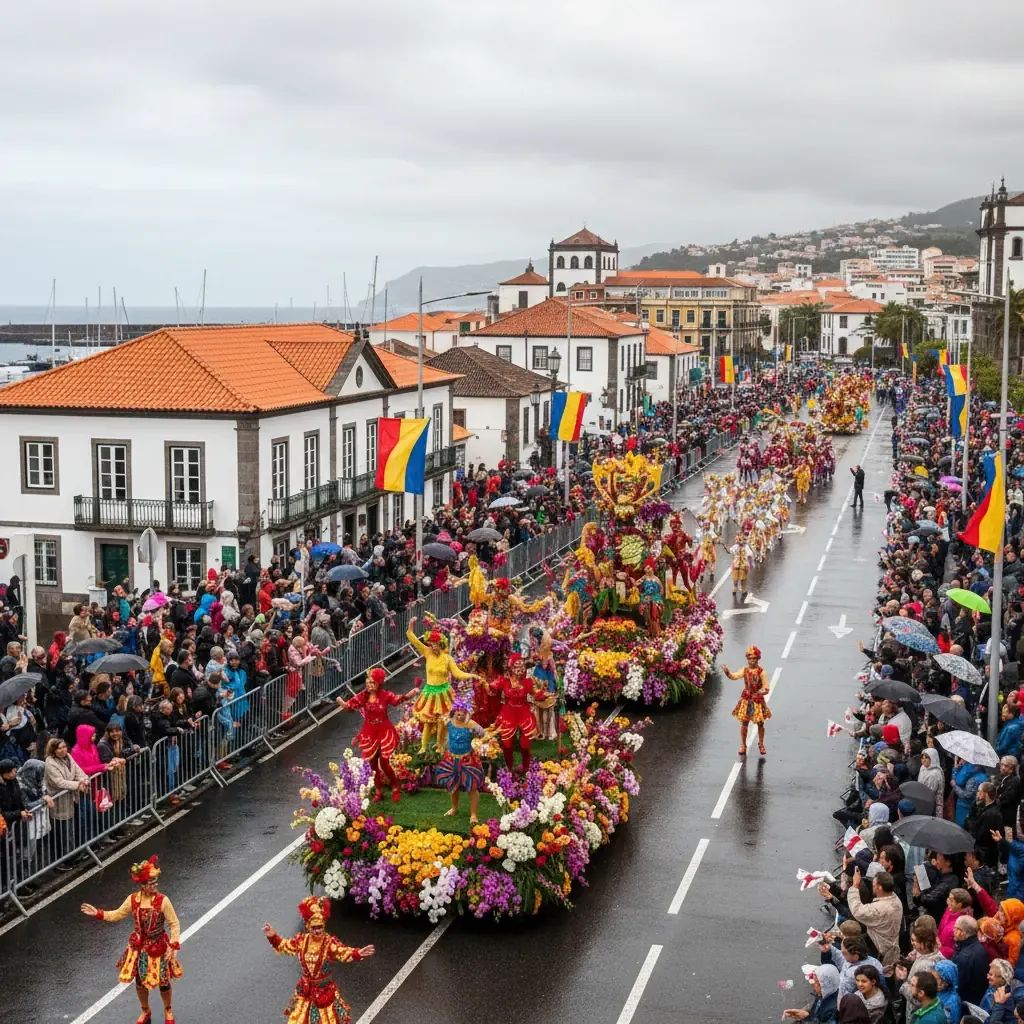
The Portugal Autonomous Region of Madeira has poured a record-breaking €1.1 M into its 2026 Flower Festival, turning the archipelago's traditional spring celebration into a month-long tribute to five decades of political autonomy — and the gamble appears to be paying off with hotel occupancy surging to 95% despite unpredictable weather.
Why This Matters
• Record tourism influx: Hotel beds in Madeira are nearly sold out through May, matching last year's peak and pumping significant revenue into restaurants, shops, and transport.
• Unprecedented investment: The Madeira Regional Government allocated €1.1 M this year, the highest budget in the festival's 47-year modern history, expanding programming and splitting the signature flower parade across two weekends.
• Autonomy milestone: The 2026 edition commemorates the 50th anniversary of Madeira's administrative autonomy, a legal status granted in 1976 that gives the islands substantial legislative and fiscal independence from mainland Portugal.
A Festival Split in Two
For the first time, organizers divided the Allegorical Flower Parade — historically the festival's centerpiece — into two separate Sunday processions. On May 3, seven performance groups wound through the Funchal waterfront avenues; seven more will repeat the spectacle on May 17, both starting at 4 p.m. along Avenida do Mar. Each parade features roughly 1,700 costumed participants atop flower-covered floats, with themes directly referencing the autonomy anniversary: one troupe titled its entry "The Rose of Autonomy: 50 Springs of Freedom," while another billed itself as "50 Years in Bloom."
Street viewing is free, but reserved grandstand seats cost approximately €30. The decision to stage two parades stemmed from logistical pressure — more groups wanted to participate than a single procession could accommodate — and a desire to stretch the economic benefit across additional weekends. Eduardo Jesus, the regional secretary for tourism, environment, and culture, told reporters the dual-date format was designed to maximize visitor spending and give more local artists a showcase.
Rain Failed to Dampen Turnout
Thousands of spectators lined the route for the May 3 inaugural parade despite steady rain. Miguel Albuquerque, president of the Madeira Regional Government, dismissed the weather as a minor inconvenience and emphasized the robust hotel figures. "The occupancy rate tells the story," he said at the event. "We have 95% bookings right now, which mirrors what we saw last year and confirms the festival's drawing power."
British tourists lead the visitor profile this May, followed by Germans, mainlanders from Portugal, French nationals, and Poles, according to regional tourism data. The combination of shoulder-season airfares and the extended festival calendar — running from April 30 through May 31 — appears to be attracting a mix of retirees, families on half-term breaks, and culture-focused travelers.
What This Means for Residents
For anyone living in or investing in Madeira, the festival translates into tangible short-term revenue and longer-term brand reinforcement. Restaurants, taxi drivers, souvenir vendors, and local artisans see concentrated sales throughout May. The €1.1 M public outlay funds contracts for florists, costume designers, sound engineers, and event staff, circulating money through the island economy.
The festival also serves a strategic branding function. Madeira has long marketed itself as the "Floating Garden of the Atlantic," leveraging its year-round mild climate and endemic flora — bird-of-paradise, proteas, orchids, and the island's namesake laurel forests — to distinguish itself from beach-heavy Algarve and Azores competitors. By anchoring the Flower Festival to the autonomy anniversary, officials signal political stability and regional identity, themes that resonate with investors considering real estate or hospitality projects.
Residents should brace for heavier foot traffic in central Funchal, especially on parade weekends and during the May 22–24 Classic Car Revival at Praça do Povo, which will draw hundreds of vintage vehicles and motorcycles. Parking restrictions and temporary road closures will be in force along Avenida do Mar, Avenida das Comunidades Madeirenses, and side streets near the municipal square.
Beyond the Parades: A Packed May Calendar
The festival program extends far beyond floats. Key highlights include:
Flower installations and carpets: Eighteen intricate floral tapestries will blanket the central plaza, Avenida Arriaga, and Largo do Corpo Santo. Large-scale sculptures made from fresh blooms stand at the cruise terminal entrance, outside the Madeira Legislative Assembly, and along Avenida Sá Carneiro.
Mercadinho das Flores: Twenty-five wooden stalls on the central plaza sell cut flowers, potted plants, regional honey, embroidery, and traditional cakes. It functions as both a tourist magnet and a sales channel for small-scale growers.
Wall of Hope: On the morning of May 2, schoolchildren placed flowers on a symbolic peace monument in the municipal square, a ritual dating to 1979 when the modern festival format launched.
Concerts and folklore: Eighty-five musical performances are scheduled across the island, deliberately scattered to pull visitors beyond Funchal. Twenty-five folk-dance troupes and 13 flower-themed performance groups involve roughly 4,000 amateur and professional participants.
Fashion and embroidery: The Madeira Flower Collection takes place May 16–17 in the gardens of Quinta Magnólia, showcasing local designers who interpret traditional Madeiran embroidery through floral-inspired haute couture. This relatively new addition aims to link heritage crafts with contemporary fashion markets.
Classic automobiles: The Madeira Classic Car Revival occupies Praça do Povo from May 22 through 24, displaying antique sedans, motorcycles, and bicycles decorated with fresh flowers. A separate parade of vintage cars rolls along the waterfront on May 10 between 4:30 and 5:30 p.m.
Historical Context: From Commercial Promotion to Government Showcase
The Flower Festival traces its lineage to 1954, when the Ateneu Comercial do Funchal — a merchants' association — organized a spring flower fair to promote local horticulture. By 1979 the Madeira Regional Government had assumed control, formalizing the event as an official tourism driver and branding exercise. The timing capitalizes on Madeira's late-spring bloom, when jacarandas, azaleas, and hydrangeas peak.
Autonomy itself arrived in 1976 after Portugal's Carnation Revolution dismantled the Estado Novo dictatorship. The Autonomy Statute granted Madeira its own legislative assembly, executive council, and revenue-sharing arrangement with Lisbon, making the islands one of Portugal's two autonomous regions alongside the Azores. The 50-year milestone carries political weight for local leaders, who use the festival platform to underscore regional identity and self-governance.
Practical Tips for Navigating the Festival
If you plan to attend remaining events, arrive early for grandstand seats on May 17 or stake out a curbside spot at least an hour before the 4 p.m. start. The waterfront promenade offers unobstructed views but fills quickly. Public transport runs additional bus services between outlying parishes and Funchal on parade days; check Horários do Funchal schedules for updates.
Many shops and restaurants in the historic center extend hours throughout May, but book dinner reservations in advance — the 95% hotel occupancy means restaurants are correspondingly busy. For a quieter experience, explore the flower installations early morning or late afternoon when cruise-ship day-trippers have departed.
The festival closes May 31, giving residents and visitors nearly four full weeks to engage with installations, markets, and performances. Whether you view the event as a cultural celebration, an economic windfall, or a logistical challenge, the Flower Festival's expanded footprint and record budget underscore Madeira's ambition to leverage its natural assets and political heritage into sustained tourism growth.


