
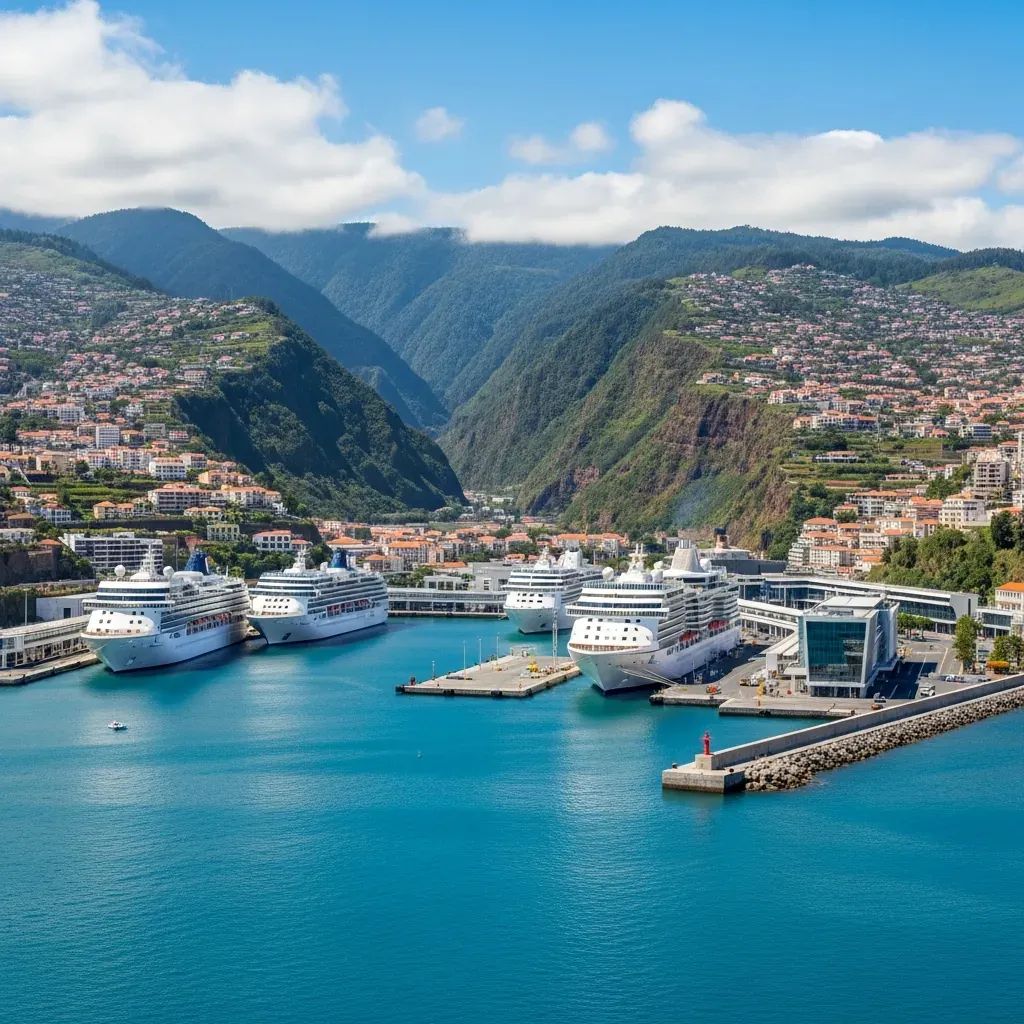
Madeirans may have woken up to familiar news this week, yet it still feels like a fresh triumph: the archipelago has again been hailed as the world’s leading island destination, extending a record-breaking streak, while its ports tighten their grip on the title of Europe’s favourite cruise stop-over. Behind the trophies lie years of coordinated investment in sustainability, training and promotion—an agenda that Lisbon and other regions are now eyeing for inspiration.
What’s in it for mainlanders?
Before celebrating another medal, Portuguese travellers and businesses often ask a pragmatic question: how does this help us on the continent? The answer is three-fold:
• Reputation spill-over – Portugal’s brand equity rises when a region repeatedly tops global rankings.
• Business pipelines – tour operators in Porto, Lisbon and the Algarve increasingly sell ‘twin-city + island’ packages on the back of Madeira’s fame.
• Policy test-bed – Madeira’s certified green plans act as a living laboratory for national climate goals.
Those three dividends explain why Turismo de Portugal quietly co-finances several of the campaigns now winning awards abroad.
Eleven straight crowns—and counting
When the World Travel Awards staged their global gala in Bahrain on 7 December, Madeira left Bali, Hawaii, Mauritius and thirteen other heavyweights trailing for the eleventh consecutive year. The island’s chief promoter, Eduardo Jesus, called it a reward for “consistent partnership” between public agencies and private operators—a phrase locals translate into daily coordination between hotels, hiking guides and even cable-car engineers.
Unlike cinema’s Oscars, voting for the WTAs comes from industry executives and verified travellers, whose ballots carry double weight. That means sustained wins cannot be chalked up to slick marketing alone; visitor satisfaction must keep pace. Over the past decade Madeira has amassed 25 WTA trophies, a haul unprecedented for an Atlantic micro-region.
Greener by design, not by slogan
Critics once joked that island awards favoured postcard views over responsible planning. Madeira has tried to flip that narrative. Recent milestones include:
• EarthCheck Silver certification – a science-based audit of water, waste and energy that only a handful of European regions hold.• A long-term Sustainability Action Plan 2022-2030, endorsed by the UN’s International Network of Sustainable Tourism Observatories.• The grassroots campaign “Explora. Respeita. Preserva.”, which peppers hiking trails with QR codes nudging visitors to leave lighter footprints.
Perhaps most eye-catching for policymakers in Lisbon is the creation of island-wide "Green Teams": cross-department squads that monitor carbon data in ports, marinas and mountain shelters. Similar structures are now being sketched for the Alentejo coast.
Cruise surge: Atlantic gateway beats Mediterranean averages
Beyond lush levadas and botanical gardens, Madeira’s cruise statistics explain why merchants from Câmara de Lobos to Santa Cruz have a spring in their step. During the 2024-25 high season, Funchal and Porto Santo logged 335 ship calls, up 17 %. Passenger counts leapt 23 % to 743,699, outpacing overall European growth that barely topped 6 %.
Economists at the University of Madeira peg the direct spend at €62.8 M, but locals swear the figure feels higher when coffee shops stay open past midnight on double-call days. Key differentiator? Overnight berths. Ships now linger an average of 36 hours, giving tourists time to book canyoning tours or dine in Michelin-listed farmhouses instead of dashing back to deck for sunset.
The anatomy of a winning bid
World Travel Awards never publish a formal scorecard, yet conversations with jurors and past organisers point to five unwritten benchmarks. Madeira scores highly on each:
Infrastructure resilience – an airport capable of handling wide-body aircraft even in notorious crosswinds.
Natural wow-factor – UNESCO-listed Laurisilva forest and Europe’s largest marine reserve.
Year-round events calendar, from winter fireworks to ultra-trail races.
Community buy-in—according to the latest regional poll, 88 % of residents say tourism improves their quality of life.
Forward-looking governance – EU-funded pilot projects for smart metering and hydrogen ferries.
Observers from the Azores Tourism Board, who narrowly lost the European crown in October, admit off-record that Madeira’s blend of “hospitality, competence and flair” is currently hard to match.
Can the streak survive the next storm?
Award fatigue is a real risk; so is climate volatility that threatens delicate cliffside roads. Regional authorities are therefore pivoting from marketing to capacity management: visitor caps on popular levadas, dynamic cruise scheduling and tax breaks for low-impact hotels. If those measures hold, the island could secure a twelfth trophy—and, more importantly for Portugal at large, prove that record tourism growth can co-exist with stricter environmental guardrails.
Mainlanders watching the experiment may find a roadmap for their own over-loved hotspots, from Sintra’s palaces to the Algarve’s sea caves. For now, though, the final word belongs to a local taxi driver heard cheering outside Funchal’s harbour: “Mais um prémio, mas o trabalho continua.”


