

Portugal's tourism accommodation sector pulled in €299.4M in February 2026, marking a 4.3% revenue increase despite severe weather disruptions that battered dozens of municipalities during the first two months of the year. The growth signals resilient demand even as climatic anomalies and shifting holiday calendars complicated the operating environment for hoteliers and guesthouse operators nationwide.
Why This Matters
• Room revenue climbed 4% while occupancy rates improved, translating to better margins for accommodation operators across most regions.
• Brazilian tourists drove the strongest growth at 29.6%, offsetting a steep 16.7% drop in French arrivals — a shift that may reshape marketing priorities.
• 90 municipalities hit by weather events saw slightly lower market share, concentrating just 10.1% of overnight stays, down 0.3 percentage points year-over-year.
According to the Portugal National Statistics Institute (INE), the country welcomed 1.8 million guests in February, up 0.8% from the same month in 2025, who collectively logged 4.2M overnight stays — a 1.3% gain. Room revenue reached €216.7M, climbing 4% as operators captured higher average rates despite pockets of weakness tied to January and February storms.
Weather and Calendar Effects Cloud Year-on-Year Comparisons
INE analysts cautioned that February's figures carry unusual variables. The mobile Carnival holiday period shifted demand patterns compared to 2025, while intense and anomalous meteorological phenomena struck large swathes of the country during the opening weeks of the year. The 90 affected municipalities — spanning coastal and interior zones — accounted for roughly one-tenth of national overnight stays, a marginal decline in their share of the tourism pie.
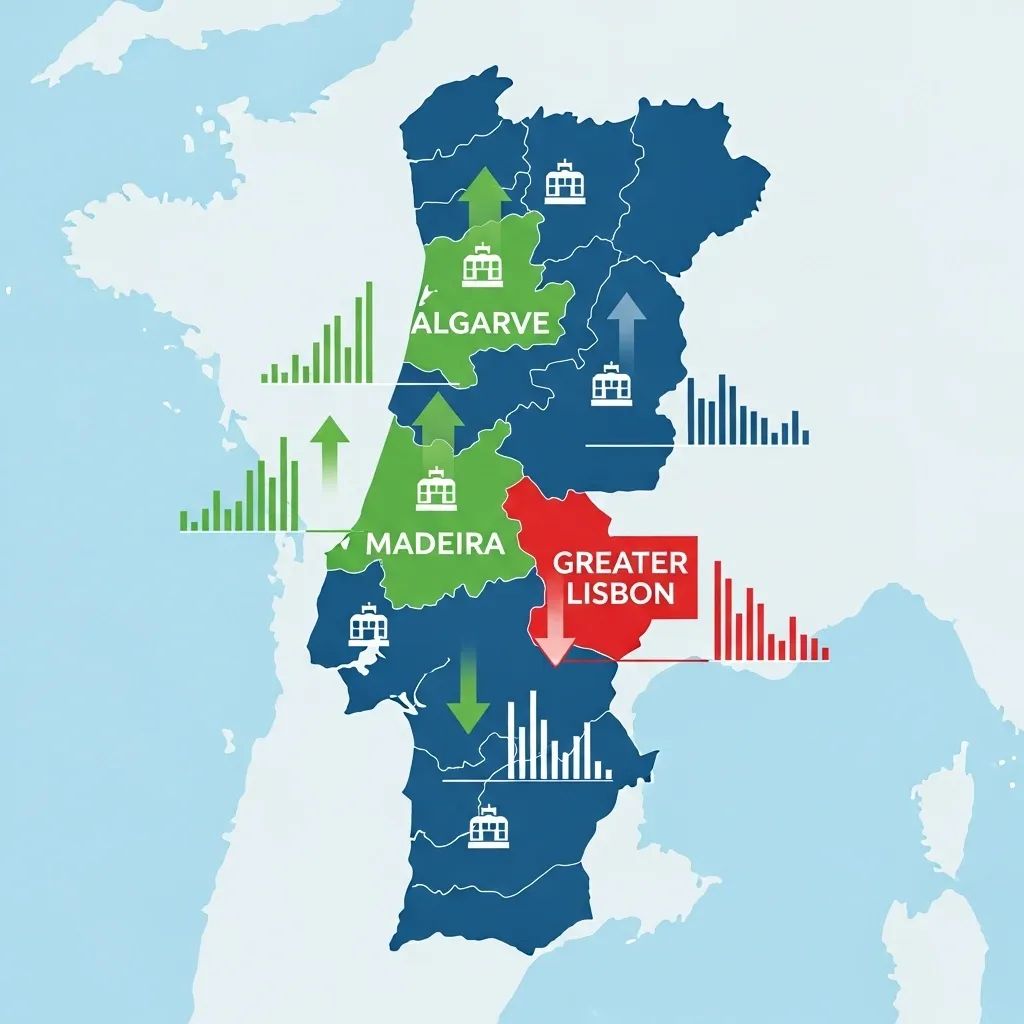
The weather impact was uneven. The Azores autonomous region posted a 3.4% drop in overnight stays, and the Centro region fell 1.9%, likely reflecting storm damage, travel disruptions, and temporary closures. By contrast, the Alentejo registered the strongest regional performance with a 4.2% surge, followed by the North at 3.4%, suggesting that visitors gravitated toward inland and less-affected coastal zones or rescheduled trips to drier areas.
Domestic and International Guests Both Contribute
Resident demand proved slightly more robust than foreign arrivals. Portuguese travelers logged 1.4M overnight stays, up 3.2% — a deceleration from January's 4.2% pace but still a sign of steady domestic appetite for short breaks and weekend getaways. Non-resident visitors generated 2.8M stays, rising just 0.4%, down from a 0.8% gain the prior month.
The deceleration in international demand masks sharp divergences by nationality. The Brazilian market surged 29.6%, cementing its status as one of Portugal's fastest-growing source countries and reflecting stronger air connectivity, favorable currency dynamics, and aggressive digital marketing campaigns. At the opposite end, French arrivals tumbled 16.7%, a drop that hoteliers attribute to economic headwinds in France, reduced low-cost carrier capacity on certain routes, and possibly weather-related cancellations.
Revenue Metrics Show Pricing Power
Average Daily Rate (ADR) — the revenue per occupied room — climbed 2.5% to €89.6, indicating that operators successfully pushed through modest rate increases even as overall occupancy softened slightly. Revenue Per Available Room (RevPAR), which blends occupancy and rate, edged up just 0.2% to €39.7, suggesting that the occupancy component held relatively flat while pricing lifted the top line.
These metrics matter for property investors and lenders evaluating the health of Portugal's hospitality real estate market. A rising ADR amid mixed occupancy signals that hoteliers retain pricing leverage in key urban and coastal zones, rather than resorting to deep discounts to fill rooms — a dynamic that supports asset valuations and debt serviceability.
What This Means for Residents
For Portuguese citizens, the sustained growth in tourism revenue translates to continued job creation in hospitality, retail, and ancillary services, though it also fuels upward pressure on rents and living costs in popular neighborhoods. The 3.2% rise in domestic overnight stays suggests that residents are taking advantage of shoulder-season deals and regional travel incentives, dispersing some tourism benefits beyond the usual hotspots.
For expats and foreign property owners, the divergent nationality trends highlight the importance of diversifying guest profiles. Properties catering heavily to French tourists may need to recalibrate marketing spend toward Brazilian, North American, or other emerging markets to maintain occupancy. The weather-related volatility also underscores the value of flexible cancellation policies and comprehensive insurance coverage during the winter months.
Policymakers and municipal authorities in storm-affected areas will be watching closely to see whether the 0.3 percentage point market-share dip persists or reverses as infrastructure repairs conclude and spring weather improves.
Two-Month Cumulative Performance Stays on Track
Zooming out, the January-February 2026 period delivered €575.9M in total accommodation revenue, up 4.9% compared to the same window in 2025. Overnight stays across the two months reached 8.0M, a 1.6% year-over-year increase. The cumulative figures smooth out some of the calendar and weather noise, painting a picture of moderate but steady expansion in Portugal's tourism sector as the country enters the critical spring and summer booking season.
Industry associations and regional tourism boards are now pivoting their attention to Easter travel patterns, anticipating a surge in both domestic and international bookings as schools break and the weather stabilizes. Early indicators suggest that Lisbon, Porto, and the Algarve are already seeing robust forward reservations, while secondary destinations in the Alentejo and Douro Valley benefit from growing interest in wine tourism and rural retreats.
Outlook and Strategic Implications
The February data reinforces Portugal's status as a resilient year-round destination, even when faced with climatic disruptions and shifting holiday calendars. The 29.6% Brazilian surge and the 16.7% French decline signal a rebalancing of source markets that could reshape route planning for airlines, influence hotel design and service offerings, and alter the linguistic and cultural mix in key tourist zones.
For accommodation operators, the message is clear: pricing power persists, but occupancy gains remain modest, making cost control and targeted marketing essential. The 0.2% RevPAR increase — while positive — leaves little room for complacency, particularly in regions still recovering from storm damage or grappling with overdependence on a single source market.
As Portugal heads into the high season, the interplay between domestic demand, Brazilian momentum, and potential recovery in traditional European markets will determine whether the sector can sustain mid-single-digit revenue growth or faces a more challenging summer. For now, the foundations remain solid, but the weather-related headwinds and shifting nationality mix demand agility from operators and investors alike.


