

Why Lisbon's Airport Matters to Your Europe Trip Right Now
As of mid-April 2026, travelers passing through the Humberto Delgado Airport in Lisbon are navigating a security apparatus in transition—one caught between European demands and Portuguese operational capacity. The airport faced a critical deadline this week: prove to Brussels that border control deficiencies uncovered in a surprise December 2025 inspection have been meaningfully addressed, or face escalating European pressure that could reshape travel policies across Portugal's entire transport network.
Why This Matters
• Airport delays likely through summer 2026—expect 45-60 minutes extra for non-EU passenger processing during peak arrivals, with potential for longer waits, as Portugal rebuilds its border infrastructure.
• Exit border checks have been largely suspended—if you're departing internationally, your movements are currently recorded less comprehensively than in neighboring countries.
• Economic implications real for business travelers and tourism—continued friction at Europe's 29-country border zone could impact Portugal's tourism sector.
• Parliamentary and media scrutiny ongoing—the government faces mounting domestic pressure to resolve this before any formal European sanctions are imposed.
What Brussels Saw in December—And Why It Mattered
A team from the European Commission arrived unannounced at both Lisbon and Porto airports in December 2025, armed with inspection protocols designed to audit the mechanical and human infrastructure of border control. What they documented included specific gaps in personnel training, equipment failure rates, procedural inconsistencies, and systematic gaps in passenger tracking. Fourteen deficiencies were formally identified, each with technical specification.
The most immediate concern was insufficient personnel for document verification. Identifying forged or altered travel documents requires specialized expertise and dedicated officers deployed to border checkpoints. Lisbon's Public Security Police (PSP) had limited personnel with advanced fraud detection training assigned to airport border operations.
A second, equally problematic gap concerned exit controls. While passengers arriving in Portugal from outside the Schengen Area faced scrutiny, those departing faced minimal documentation cross-checking. A person flagged for irregular residence status, visa violation, or security concerns could potentially leave the country with minimal intervention—a vulnerability that violated fundamental Schengen principles of accountability. The European Commission made clear in its notification that this gap "poses a high security risk" not just to Portugal but to all 29 member states sharing the open border zone.
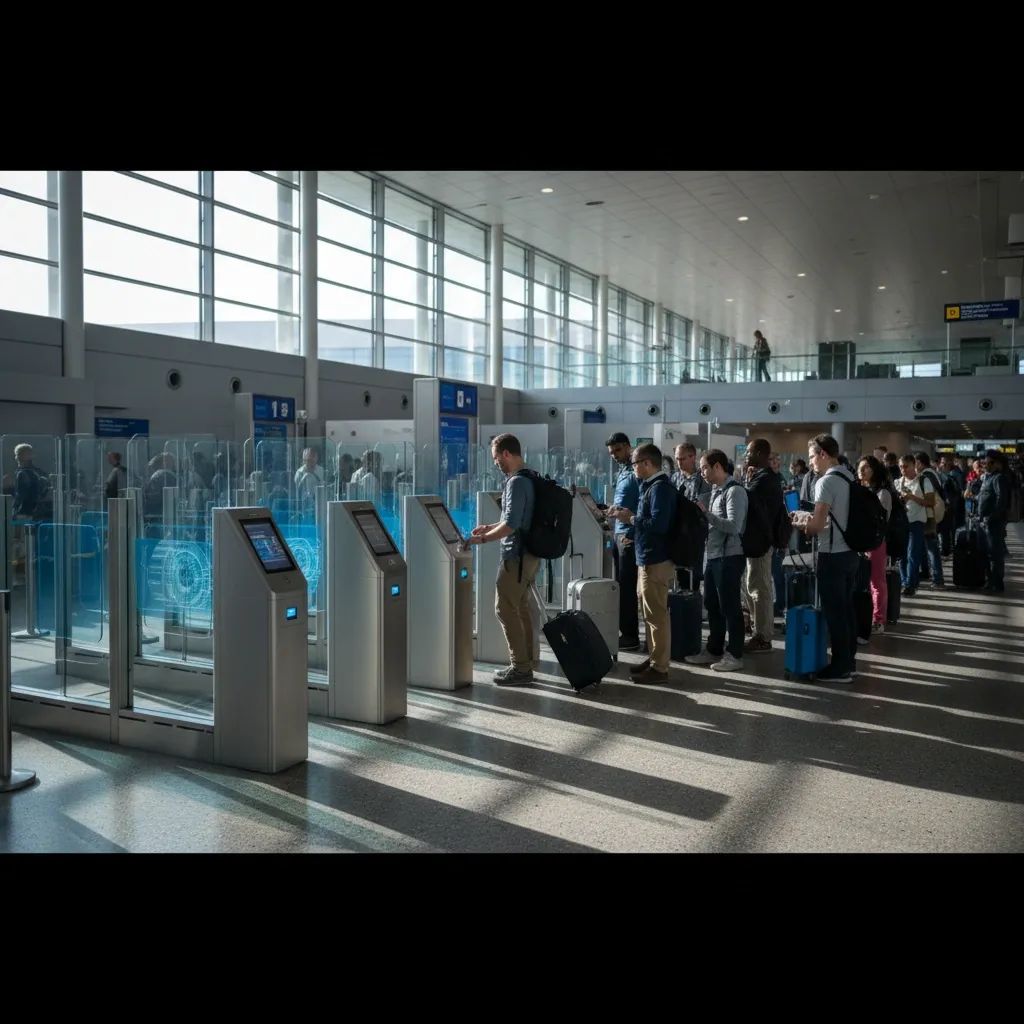
Automated biometric kiosks at the airport were experiencing technical issues, creating processing bottlenecks. When equipment malfunctions, passenger flows shift into manual processing, where officers manually verify travelers without the digital cross-checks against Interpol databases, European security systems, or watch lists. This operational strain directly contributed to queue backlogs during peak travel times.
The Political Response: Urgent But Phased
When reports reached Portuguese governmental ministries in March and April, Minister of Internal Administration Luís Neves acknowledged the findings publicly. His tone was measured: yes, constraints exist; yes, they're being addressed; progress is tangible. But ministers rarely admit catastrophe in real time, and Neves' language—"inconsistencies," "constraints," "obstacles being addressed"—conveyed measured concern rather than full transparency about severity.
The Portuguese government's response package included several components, rolling out with deliberate speed:
Immediate Hiring. The PSP announced recruitment of additional officers directly into border control positions, specifically targeting personnel with document verification and identity confirmation experience. These include experienced officers being reassigned internally. However, expanding personnel deployed to airport duty requires administrative coordination; positions weren't filled overnight.
Academy Acceleration. Police trainees currently in basic training were flagged for expedited deployment to airport duty upon graduation. This addresses personnel volume but represents fast-tracking of personnel not yet fully trained in advanced migration protocols. These officers would receive on-the-job training while managing live border operations.
Paramilitary Support. The government activated the Republican National Guard (GNR), a paramilitary force traditionally focused on rural policing, highway enforcement, and border patrol outside airport contexts. The GNR's deployment signals resource expansion but represents personnel less specialized in contemporary document fraud or international passenger screening.
Equipment Remediation. The government reported improvements in electronic and physical border control capacity since December. Minister Neves claimed that equipment experiencing issues in December was being remedied. These assessments remain subject to independent verification, and specific timelines and performance metrics weren't disclosed.
Procedural Restructuring. Portugal began harmonizing inspection standards and improving coordination between the PSP, GNR, and customs authorities. An action plan with quarterly progress reports was scheduled for submission to Brussels ahead of the April 30 deadline.
The Technology Transition: EES and Real-World Complexity
At the center of operational challenges sits the European Entry/Exit System (EES), which entered operational status across the Schengen zone around early April 2026. The system represents modern border infrastructure: non-EU travelers have biometric information recorded on entry to Europe, feeding into a centralized European database cross-referenced against visa records, security alerts, and interpol listings.
The engineering is sound. The problem is that Lisbon's existing IT infrastructure required significant upgrades to handle this volume of biometric processing. When EES operations ramped up in early April, processing delays became immediately apparent. Wait times at passenger processing stations increased substantially. Peak-period delays extended considerably.
Portugal's response involved operational adjustments to manage processing constraints. Exit controls were substantially scaled back to prioritize arrivals processing—a tactical decision that freed capacity in non-EU processing lanes but resulted in reduced exit recording of departing travelers. This means departing passengers are currently being recorded less comprehensively in centralized European systems than travelers departing from other major European hubs. A traveler flagged for overstaying in the Schengen zone might avoid detection if departing via Lisbon rather than competing airports.
The broader European context matters here. Other major airports experienced EES transition friction—Frankfurt, Amsterdam, Brussels, Madrid—but most managed the transition while maintaining full functionality of border recording systems. Portugal's decision to scale back exit recording represents visible operational strain during a critical transition period.
The Passenger Experience: Real Delays, Real Friction
For practical travelers, this means tangible impacts. Anyone holding a non-EU passport and arriving at Lisbon should anticipate immigration queues substantially longer than pre-December 2025 norms. A journey from aircraft door to baggage claim that previously consumed 20-25 minutes can now extend to 45-60 minutes during peak evening arrivals, with potentially longer waits during peak times. Business travelers with tight connections should budget accordingly.
EU citizens experience spillover effects. Congestion in non-EU lanes creates bottleneck effects that ripple into expedited EU passport lines. A family traveling from Spain or France through Lisbon finds immigration processing slower than six months prior, despite EU citizens nominally facing faster processing.
Those departing Portugal internationally should understand that their movements are being recorded less comprehensively than travelers departing from competing European hubs. While this doesn't create immediate personal vulnerability—Portugal maintains traditional security protocols—it does represent degraded European tracking capability for irregular residents or travelers circumventing overstay restrictions by departing strategically through Lisbon.
The Continental Spillover Problem
The political tension is partly why Brussels is watchful. When border operations face strain at a single airport, the consequence affects the entire 29-nation Schengen zone. A traveler with fraudulent documentation who passes through Lisbon becomes a security concern for Austria, France, Germany, and Belgium. Criminal networks optimizing trafficking routes will target operational gaps; if exit controls are degraded, organized crime logistics adjust accordingly. Visa overstays missed by Portuguese inspectors transform into immigration enforcement burdens for neighboring countries.
This is why the European Commission framed December's findings in explicitly continental language: these deficiencies "have or can have, in the short and medium term, a significant negative impact on other member states." Brussels isn't merely lecturing; it's indicating that if Portugal can't address this adequately, neighboring countries may eventually demand reinforced checks at Spain-Portugal border crossings, or push for formal sanctions mechanisms that could include temporary reinstatement of passport controls within the Schengen zone—a scenario diplomatically challenging and economically disruptive.
What Happens If Portugal Misses the April 30 Target
The European Commission's timeline follows established procedures. If Portugal's April 30 submission doesn't convince auditors that meaningful progress is occurring, formal procedures trigger. The consequences escalate in stages.
Initial escalation involves mandatory oversight and potential financial implications. Portugal would face heightened scrutiny from the European Border and Coast Guard Agency (Frontex).
Secondary escalation involves European operational involvement. Frontex officers could be assigned to Lisbon airport on a temporary basis, essentially assuming co-management of border operations. This represents diplomatic tension—a member state losing operational autonomy over its borders—and operational disruption.
Tertiary escalation, the worst-case scenario, involves reintroduction of internal border checks. Spain, France, or Germany could invoke emergency protocols allowing temporary reinstatement of passport controls at their borders with Portugal. For Spain, this would mean checkpoint infrastructure at the 1,200-kilometer Portugal-Spain frontier. Commerce, commuter traffic, and logistics would face delay and uncertainty. Tourism bookings would become riskier.
The economic stakes are significant. Tourism represents a substantial portion of Portugal's annual economic activity. Seamless Schengen membership is foundational to the sector's viability. Adding friction to border crossing multiplies booking uncertainty and affects advance reservations across hospitality and tourism services.
How Other European Hubs Approach This
By comparison, airports in Germany, the Netherlands, Belgium, and Spain operate with established sophisticated protocols on both document verification and exit screening fronts.
Frankfurt Airport and other major German hubs employ systematic approaches to flagging anomalous travel patterns. Repeated one-way bookings or travelers with histories of visa refusals trigger secondary screening and officer intervention.
Amsterdam Airport operates tiered passenger verification where multiple cross-checks occur before travelers proceed. If biometric systems detect inconsistencies between travelers and document data, cases escalate automatically.
Spanish airports maintain robust exit screening protocols, particularly for non-Schengen departures. Every traveler leaving for destinations outside the EU is logged and cross-checked against watch lists. This requires significant personnel investment but creates accountability on both entry and departure.
Portugal's infrastructure historically reflected budgetary constraints that went unaddressed until the European Commission's inspection forced the issue into focus.
The Uncertain Outcome and Timeline
Portugal submitted its April 30 action plan and quarterly progress report to Brussels as the deadline approached. The government reported progress on equipment and personnel measures. However, comprehensive resolution of identified deficiencies likely extends into summer 2026. Recruited personnel require operational deployment and adjustment; redirected officers need security clearances and practical onboarding; equipment upgrades require vendor coordination and testing cycles.
Operational analysts suggest Portugal will likely achieve sufficient progress by late April to avoid immediate formal escalation procedures. However, fundamental resolution of underlying systemic challenges probably won't be completed until mid-to-late summer 2026—optimistically.
Frontex has offered technical assistance: training on passenger screening, technical support for system transitions, and consultation on operational improvements. Portugal has engaged this support at varying levels of formality.
A follow-up inspection, likely unannounced, is factored into Brussels' audit calendar. If that inspection documents inadequate progress, escalation becomes more likely.
For travelers, operational uncertainty persists. Delays may gradually improve as summer unfolds and personnel measures take effect, but the airport won't return to pre-December operational norms for several months. For Portugal's tourism sector and international commerce, continued border processing challenges affect competitiveness relative to alternative European destinations.
What This Means for Expats and Regular Travelers
If you live in Portugal and travel frequently to non-Schengen destinations, plan additional time for departure processing—at minimum an extra 30 minutes beyond standard recommendations. If you're arriving from outside Europe, budget significantly more time between landing and baggage collection, particularly for evening flights when queues peak.
For EU citizens resident in Portugal, spillover effects mean your intra-European connections through Lisbon may experience delays. This is temporary but worth factoring into travel planning through summer 2026.
For those considering relocating to Portugal or planning extended stays: the border situation reflects temporary operational strain, not systemic collapse. However, if timing-sensitive business travel is part of your plans, consider routing through alternative European hubs (Madrid, Barcelona, or direct connections to northern Europe) until late summer when Portugal's operational readiness fully stabilizes.


