
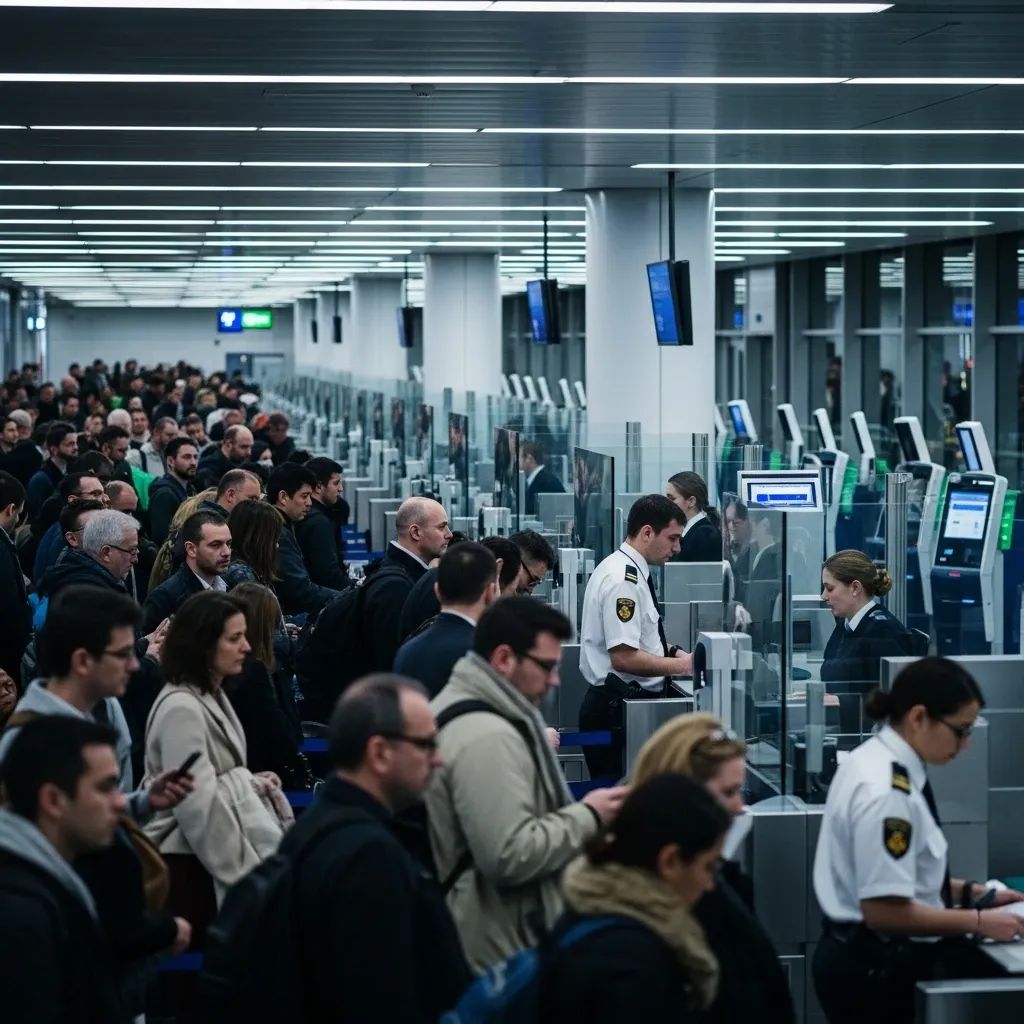
Arriving travellers at Lisbon’s Humberto Delgado Airport have found themselves in endurance tests rather than a swift handshake with Portugal, as the newly launched European border management system encounters teething pains and triggers queues stretching into hours.
Quick Takeaways
• Average delays of three hours, spiking to six hours on peak days
• Staggered rollout: digital checks live since 12 October, biometric scans since 10 December
• Complexity spans PSP, Sistema de Segurança Interna, ANA Aeroportos de Portugal and private contractors
• Government set up a 24/7 crisis room in late October to monitor operations
Probing the Queues at Humberto Delgado
Passengers recount waiting in lines so long that suitcases overstay their ride on the baggage belt. These delays have eroded Portugal’s reputation for a warm welcome: on some days, arriving visitors endure up to six hours in passport control. Even during quiet November mornings, queues regularly top three hours, stretching beyond the capacity of Terminal 1.
Local businesses are feeling the pinch. Tour operators report last-minute cancellations of city tours, while family reunions scheduled for Christmas risk lost connections. Tourism income exceeded €22 B in 2024, and any dent now sends ripples through hotels, restaurants and shuttle services.
Unpacking the Digital Overhaul
Portugal adopted the EU’s Entry/Exit System (EES) on 12 October, aiming to replace ink stamps with electronic logs. A second phase, introduced on 10 December, began collecting facial images and fingerprints of non-EU visitors.
• The first servers arrived in May, linking national databases to the Schengen Information System II.• By October, every query to a remote hub risked timeouts as the infrastructure struggled to keep pace.• Biometric kiosks now vie for bandwidth alongside check-in desks, exacerbating technical bottlenecks.
Although digitalisation promised speed, partial integration unleashed cascading outages — exactly the opposite of its intent.
Distributed Accountability
Interior Minister Maria Lúcia Amaral has urged MPs to look beyond the Public Security Police (PSP) as the sole culprit. In parliament she outlined a network of stakeholders:
• Sistema de Segurança Interna, overseeing the core IT networks;
• ANA Aeroportos de Portugal, responsible for on-site infrastructure;
• The newly formed Unidade Nacional de Estrangeiros e Fronteiras (UNEF);
• Several private technology firms contracted to maintain hardware and software.
Each player points fingers elsewhere, turning passenger lines into a de facto blame queue. As Amaral noted, “The reality is more complex — no single agency can claim full responsibility.”
Easing the Backlog
To tame the chaos, the government launched a dedicated crisis room on 27 October. Staffed around the clock by PSP officers, IT engineers and representatives from ANA, the command centre tracks every minute of delay.
Among the measures in place:
• A mobile PSP task force redeploys border agents in real time;
• Additional fingerprint booths are on order, with €90 M earmarked for Faro and Porto;
• Overtime approved for 129 former SEF inspectors now under PSP;
• Simplified controls under discussion: facial scans only, pausing fingerprint checks during Christmas peaks.
ANA has also stepped up passenger support, distributing water and snacks, and improving signage in Portuguese and English to keep travellers moving.
Looking Toward 2026 and Beyond
Portugal’s EES implementation will be fully extended to all external checkpoints by April 2026. On the horizon sits ETIAS, a digital travel authorisation for visa-exempt nationals, expected in mid-2025.
Training remains crucial: ten border-guard courses will run through 2026 to bolster PSP ranks, closing a shortfall of more than 30 agents at Lisbon. Law 61/2025 created the UNEF, but new recruits will not complete certification until autumn.
For now, anyone flying to or from Portugal should budget extra time at the border. But as hardware arrives and lessons are learned, the goal is to restore that hallmark Portuguese greeting: prompt, friendly and reliably efficient.


