

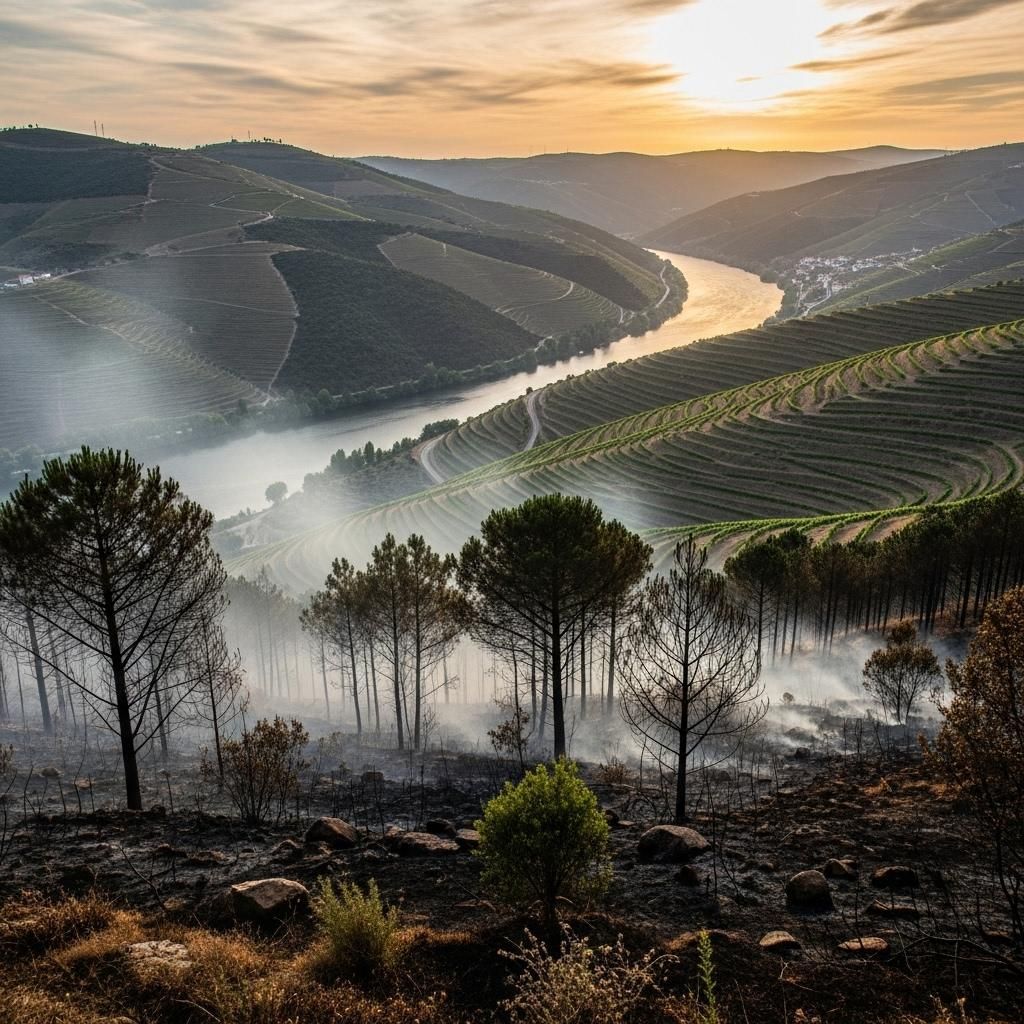
Infraestruturas de Portugal has reopened rail traffic between Marco de Canaveses and Régua on the storied Douro Line, completing the first major phase of a €110M electrification project that aims to modernize one of the country's most scenic—and economically vital—train routes. The suspension, which began last November, was lifted on schedule as engineering crews wrapped up winter works designed to minimize disruption during the region's busy tourism season.
Why This Matters
• Passenger service resumes just in time for spring travel demand, when the Douro Valley attracts significant numbers of tourists for wine tours, river cruises, and heritage sightseeing.
• The 47-kilometer stretch under construction represents roughly half the route from Porto to the upper valley, with full electrification slated to finish in 2029 after two more winter shutdowns.
• Alternative bus shuttles that ran during the closure have been discontinued; regular commuters and freight operators can now return to rail schedules.
CP—Comboios de Portugal, the national passenger operator, confirmed that full timetables will be in effect immediately, citing strong demand from both regular users and tourists as the rationale for prioritizing the spring restart. The announcement, issued jointly with IP, marks the end of a five-month hiatus that saw buses replace trains along a winding mountain road corridor coordinated with local town councils.
Strategic Timing and Economic Calculus
The suspension was deliberately scheduled from November through early April—the valley's low season—to shield the region's tourism-dependent economy from the worst impacts. Douro Valley vineyards and river cruise operators generate the bulk of their annual revenue between May and October, when international visitors flock to UNESCO-listed terraced hillsides and century-old quintas. By halting rail service during winter months, planners aimed to spare hoteliers, restaurants, and wine estates the logistical headaches that would have accompanied a summer shutdown.
Even so, the closure tested patience among commuters in Marco de Canaveses, Peso da Régua, and Pinhão, who rely on the line for daily travel to Porto and intermediate towns. Replacement bus services were deployed during the period, and local mayors praised IP for advance notice and route coordination but warned that any schedule slippage on future phases could erode public confidence in the project.
What the Electrification Entails
The €110M contract covers 47 kilometers of track—roughly the distance from Marco to Régua—and includes overhead catenary installation, substation upgrades, and platform modifications to accommodate electric rolling stock. When complete, the route will allow CP to retire aging diesel locomotives in favor of electric multiple units that are faster, quieter, and cheaper to operate. Electrification currently ends at Marco de Canaveses, meaning diesel traction still powers trains beyond that point toward the Spanish border.
The full build-out spans 36 months and is divided into three phases, each requiring a winter shutdown. The first phase, now concluded, focused on foundation work and catenary mast installation. The next two interruptions—expected in winter 2026–2027 and 2027–2028—will tackle the upper sections toward Pocinho and finalize signaling integration. IP has pledged to publish detailed calendars six months in advance to give businesses and residents time to plan.
Tourism Industry Relief
Douro Valley stakeholders greeted the reopening with palpable relief. The railway is not merely a transit link—it is itself a tourist attraction, threading through terraced vineyards, granite gorges, and whitewashed villages immortalized in travel literature. Cruise operators often bundle rail tickets with river packages, and any prolonged service gap can divert bookings to competing destinations like the Alentejo or Andalusia.
Tourism representatives have noted that inquiries about train availability had increased in recent weeks as spring bookings accelerated, making the service restoration significant for the region's credibility with travel agents and tour operators.
Freight and Commuter Considerations
While tourism is important, the Douro Line also carries freight traffic—chiefly wine, olive oil, and agricultural products—and serves as a lifeline for Peso da Régua, a town of roughly 10,000 residents that functions as the valley's commercial hub. During the closure, truckers absorbed the overflow. The resumption of rail freight slots will ease pressure on regional logistics and highways.
Commuters face a mixed outlook. Electric trains promise operational improvements once the entire line is energized, but the project's staggered shutdowns mean two more winters of bus substitutions. CP has pledged to increase bus frequencies and add express services during future phases, though it remains to be seen whether replacement capacity will keep pace with ridership growth.
Long-Term Vision
The Douro Line electrification is part of a broader National Railway Plan that seeks to reduce carbon emissions, improve punctuality, and integrate Portugal's network with high-speed corridors in Spain and France. Unlike the flagship Lisbon–Porto axis, the Douro route was never a priority for modernization, leaving it dependent on diesel traction and vulnerable to maintenance backlogs. The €110M investment represents a belated recognition that heritage lines can deliver both environmental and economic returns if managed strategically.
Once completed, electric service will enable CP to deploy modern rolling stock with air conditioning, Wi-Fi, and accessible boarding—features largely absent from the current diesel fleet. Whether those improvements translate into sustained ridership gains will depend on pricing, frequency, and coordination with bus and river-cruise schedules.
What This Means for Residents
If you live in Marco de Canaveses, Peso da Régua, or Pinhão, regular train service is back. Check the CP website or app for updated timetables; most services mirror pre-closure schedules. If you operate a tourism business in the valley, confirm that your booking platforms reflect train availability—many international agents may still show outdated service status from the winter months. And if you're planning a visit to the Douro this spring, book early: demand typically surges in April and May, and seat availability on scenic departures can be tight.


