

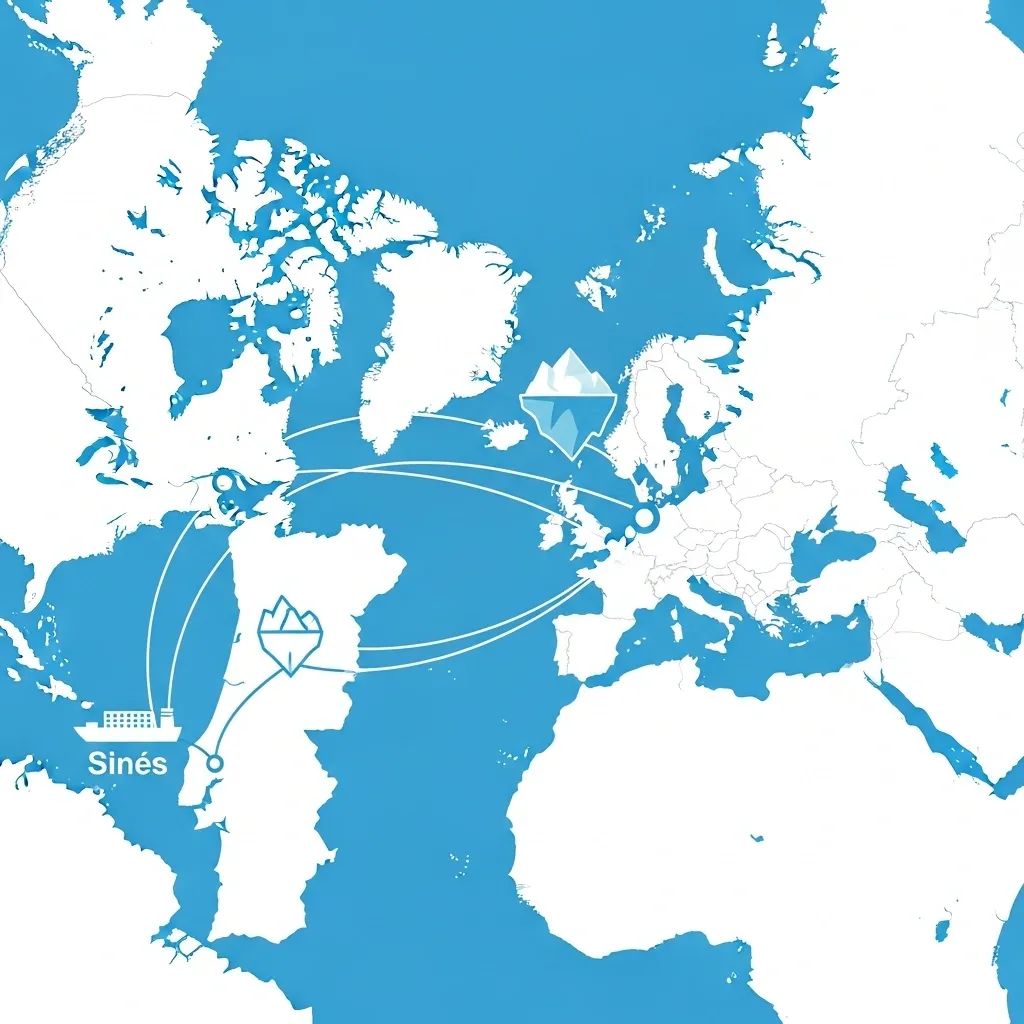
Portugal's shipping and logistics sector faces a strategic recalibration as new analysis confirms that Arctic sea routes, despite potentially slashing voyage distances by up to 40%, will remain a marginal alternative for container shipping through at least 2031. The finding carries immediate implications for Portuguese exporters, freight forwarders, and port operators who have monitored the melting polar corridors as a potential hedge against volatility in traditional maritime chokepoints like the Strait of Hormuz and the Suez Canal.
Why This Matters
• Container shipping remains uncompetitive: Arctic routes will capture only 3.5% of Asia-Europe-North America trade within five years, limiting options for Portugal-based logistics firms.
• Bulk cargo opportunity: Crude oil, diesel, methanol, and LNG shipments could see cost savings of 45-50%, opening niche revenue streams for specialized carriers.
• Geopolitical hedge: Disruptions in the Middle East underscore the vulnerability of routes critical to Portugal's import-export flows, which rely heavily on maritime transit.
The Economic Reality Behind the Hype
The Portugal-based business credit insurer Coface released a comprehensive assessment this week that punctures the commercial optimism surrounding Arctic navigation. While climate-driven ice melt has widened seasonal access to the Northern Sea Route (NSR) along Russia's northern coast and the Northwest Passage through the Canadian archipelago, operational constraints continue to undermine the business case for containerized freight.
Vessel size limitations top the list of barriers. The shallow drafts and narrow channels characteristic of Arctic waters restrict ships to a fraction of the cargo capacity seen on ultra-large container vessels that ply the Suez route. Economies of scale—the lifeblood of modern container shipping—collapse when freight is transferred to smaller, ice-rated hulls. Portuguese importers who rely on just-in-time delivery of Asian manufactured goods will find little cost advantage in rerouting through the polar region, even with distance reductions approaching 40%.
Operating expenses compound the challenge. Ice-class vessels demand specialized construction, higher insurance premiums, and more frequent maintenance cycles. The requirement for icebreaker escorts—particularly in shoulder seasons when ice cover remains patchy—erases much of the fuel savings promised by shorter distances. Russia charges mandatory escort fees and licensing costs for commercial traffic on the NSR, adding bureaucratic friction and unpredictable delays that conflict with the tight scheduling windows demanded by modern supply chains.
Infrastructure gaps further erode competitiveness. The Arctic lacks the dense network of bunkering stations, repair facilities, emergency response assets, and cargo handling infrastructure that define established trade corridors. For Portugal-based shipping lines evaluating route diversification, the absence of reliable support infrastructure translates directly into elevated risk and cost.
Where Arctic Routes Deliver Value
The Coface study identifies a clear winner in the Arctic equation: bulk commodities. Shipments of crude oil, liquefied natural gas, diesel, methanol, grain, minerals, and construction materials can achieve cost reductions between 45% and 50% when transported via polar routes, particularly when vessels operate without icebreaker assistance during peak summer navigation windows.
This creates a tangible opportunity for Portuguese energy importers and commodity traders who source supplies from northern Europe and North America. The United States and Nordic producers, in particular, stand to benefit from Arctic export corridors that shave thousands of nautical miles off the journey to Asian markets, potentially lowering procurement costs for Portugal-based buyers who can negotiate favorable terms on bulk energy contracts.
Solid bulk cargoes—including grain, iron ore, and aggregates—represent another viable segment, though commercial viability hinges on ice-free conditions. The window for unescorted transit currently spans roughly three to four months during the Arctic summer, a constraint that limits annual throughput and complicates long-term contractual commitments for Portuguese agricultural and construction sectors dependent on stable import schedules.
Russia has signaled aggressive plans to expand NSR traffic, targeting over 40 million tons of cargo by 2026 and year-round navigation by 2035. The construction of four floating nuclear power plants—being built in Chinese shipyards with installation scheduled for 2026-2027—aims to supply energy to the Baimskaya copper and gold mine and its associated port infrastructure. Two additional nuclear-powered icebreakers are slated to begin construction by 2026, reinforcing Moscow's determination to control and monetize Arctic transit.
Geopolitical Leverage and Strategic Risk
Maritime commerce accounts for 80% of global trade, and the concentration of traffic through a handful of strategic chokepoints creates systemic vulnerability. The ongoing conflict in the Middle East and recurring threats to the Strait of Hormuz highlight the fragility of routes that Portugal's economy depends on for energy imports and manufactured goods.
Arctic routes theoretically offer diversification, but the geopolitical landscape complicates access. Russia's control of the NSR grants Moscow significant leverage over licensing, escort services, and transit fees. The invasion of Ukraine in 2022 intensified tensions, and seven of the eight Arctic Council members—Canada, Denmark, Finland, Iceland, Norway, Sweden, and the United States—are now NATO allies, with Russia the lone outlier. This configuration raises the prospect of sanctions, access restrictions, or even militarized disputes that could render Arctic corridors as unreliable as the traditional routes they aim to supplement.
China, which declared itself a "near-Arctic state" in 2018, has embedded Arctic shipping into its Belt and Road Initiative through the "Polar Silk Road" strategy. Beijing's growing presence—backed by research expeditions, resource investments, and diplomatic engagement—adds another layer of complexity. For Portuguese policymakers and business leaders, the calculus involves not just distance and cost, but also the geopolitical risk of relying on routes controlled by actors with competing strategic interests.
The United States has responded by reopening its consulate in Greenland, investing billions in new icebreakers, and strengthening NATO's Arctic posture. The dispute over the Northwest Passage—which Canada claims as internal waters while the U.S. and Europe assert international strait status—remains unresolved, creating legal uncertainty for commercial operators.
Environmental and Regulatory Constraints
The Arctic's fragile ecosystem faces mounting pressure from increased maritime traffic. Pollution risks—including oil spills, microplastics, black carbon emissions, and underwater noise—threaten wildlife and indigenous communities whose livelihoods depend on marine resources. The paradox is stark: routes opened by climate-driven ice melt are being used to transport fossil fuels more efficiently, accelerating the very warming that created the opportunity.
The International Maritime Organization's Polar Code, which entered force in 2017 under the SOLAS and MARPOL conventions, establishes mandatory safety and environmental standards for vessels operating in polar waters. Ships must obtain a Polar Ship Certificate with classifications (A, B, or C) based on ice-capable design and equipment. The code addresses vessel construction, crew training, search and rescue protocols, and pollution prevention, but enforcement remains uneven across national jurisdictions.
The Clean Arctic Alliance has lobbied for stricter black carbon emission controls and broader geographic coverage of polar fuel regulations, while also advocating for an emissions control area in the Northeast Atlantic. The IMO is working toward a net-zero emissions target for the maritime sector by mid-century, adding another variable to the long-term commercial viability of Arctic shipping.
Impact on Portuguese Stakeholders
For Portugal-based enterprises engaged in international trade, the Coface findings clarify strategic priorities. Container shipping—the backbone of Portugal's trade in consumer goods, automotive parts, and industrial components—will continue to flow through established corridors. Investment in Arctic route capabilities offers minimal return for Portuguese freight forwarders and logistics providers focused on containerized cargo.
Conversely, energy sector players and commodity traders should monitor Arctic bulk shipping developments closely. As northern European and North American producers expand Arctic export capacity, procurement strategies that incorporate polar routing for oil, gas, and mineral imports could deliver measurable cost advantages, particularly during the summer navigation window.
Portuguese maritime insurers and legal firms specializing in shipping law may find niche opportunities in polar-specific risk assessment and contract structuring, as the regulatory environment continues to evolve and geopolitical dynamics shift.
Port operators in Portugal, particularly those handling transshipment and bunkering services, face limited direct impact from Arctic routes in the near term. The 3.5% market share projection suggests that established Mediterranean and Atlantic hubs will retain their dominance, though monitoring longer-term shifts remains prudent as climate change continues to reshape global navigation patterns.
The Five-Year Outlook
The Arctic will not revolutionize global shipping in the next five years. Operational limitations, cost structures, geopolitical friction, and environmental regulation combine to constrain commercial adoption. For Portugal's trade and logistics community, the takeaway is pragmatic: Arctic routes represent a specialized tool for bulk commodity flows rather than a transformative alternative to container shipping networks.
The real value lies in understanding where selective Arctic exposure can reduce costs or mitigate risk—particularly in energy procurement—while maintaining focus on the established corridors that will continue to carry the vast majority of Portugal's maritime trade. As geopolitical instability and climate change reshape the global shipping map, diversification strategies must balance opportunity against operational reality.


