
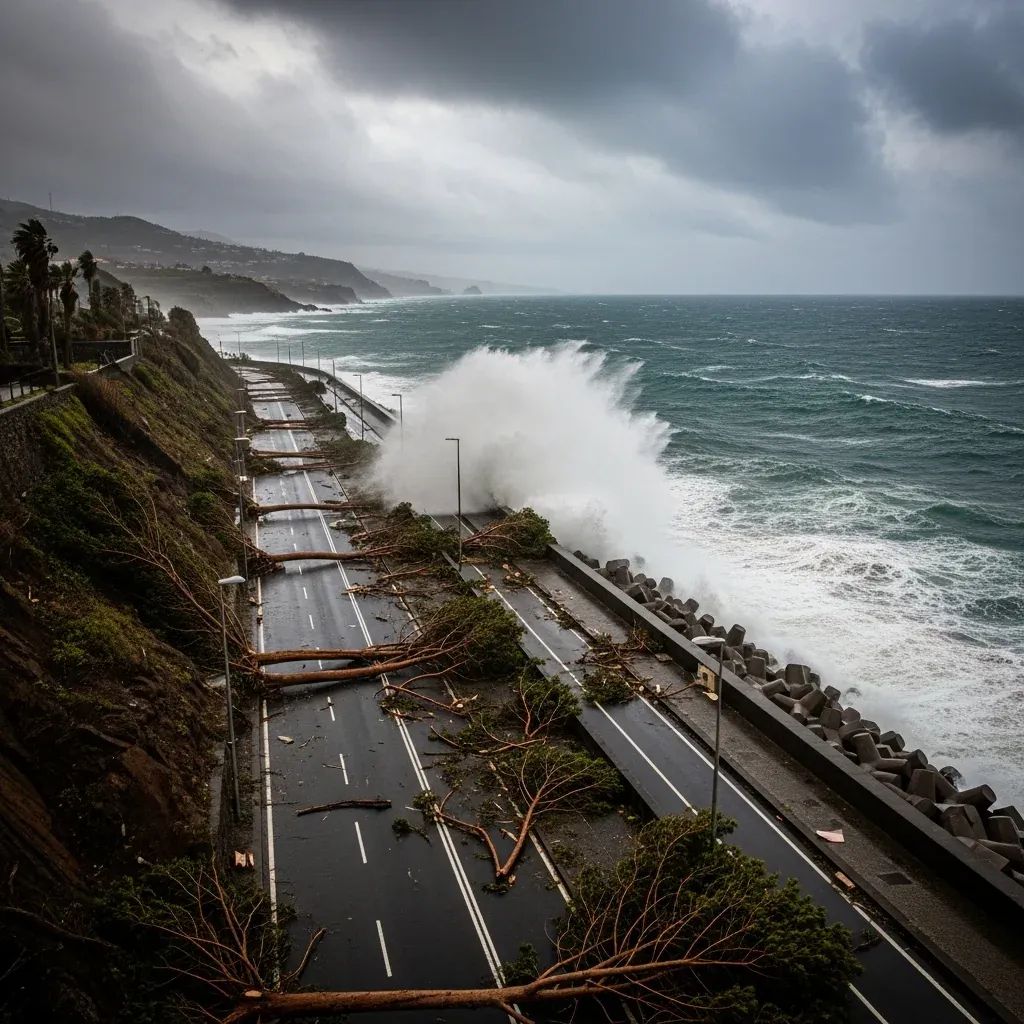
Madeirans woke up to toppled trees, closed roads and roaring seas as Depression "Emília" barrelled across the archipelago last week. What started as a windy Tuesday escalated into 353 separate emergency calls within 48 hours, testing the island’s well-oiled civil-protection machine but leaving, felizmente, no serious injuries.
At a glance
• Wind gusts peaked at 147 km/h on the heights of Chão do Areeiro.
• 195 fallen trees accounted for more than half the incidents.
• Funchal and Santa Cruz were hardest hit, together logging nearly two-thirds of all call-outs.
• 767 responders and 367 vehicles were mobilised between 12 and 14 December.
• Only one resident required rehousing after structural damage in Santa Cruz.
Weather wallops in three waves
Meteorologists had warned that an Atlantic low would brush Madeira, yet few expected three consecutive pulses of heavy rain, mountain snow and gale-force wind. On 12 December the first squall triggered 63 interventions. By midday on the 13th, records already showed 185 incidents, mainly branches crashing onto cars and rural roads. A final overnight burst pushed the tally to 353 by early afternoon of the 14th, prompting the regional government to keep the orange alert for wind and rain in place while maintaining a red alert for rough seas along the north coast and Porto Santo.
Anatomy of an emergency log
Civil-protection officials broke down the calls into nine categories. The biggest share came from fallen trees (195)—a familiar menace on Madeira’s steep, forested slopes. Other noteworthy figures included 37 downed power lines, 29 pieces of masonry or roofing torn loose, and 21 preventive actions, such as shoring up riverbanks before night-time squalls. Rarer events—landslides, temporary-stand collapse, single-house flooding—still forced teams to act fast given the island’s narrow valleys and limited detour options.
Where the island felt it most
Funchal unsurprisingly led the statistics with 110 incidents, many near Avenida do Mar as surf pounded the breakwater. But Santa Cruz (89) and Machico (46) followed closely, reflecting their exposure to easterly winds. Inland mountain communities such as São Vicente and Porto Moniz dealt mainly with blocked rural tracks, while Porto Santo saw ferry connections cancelled rather than physical damage. One notable positive: airports resumed normal operations within 24 hours, even though a handful of Lisbon-bound flights were diverted on the storm’s peak day.
How the response was organised
The Serviço Regional de Proteção Civil (SRPC) activated its operations room in the early hours of the 13th. By dawn, 422 firefighters, forest rangers and municipal crews were in the field; that number nearly doubled as calls mounted. Local councils handled the bulk of tree removal, freeing regional forces to monitor high-risk cliffs and coordinate with EDP to restore electricity. Because several hiking trails had already closed after November’s storms, authorities pre-emptively shut the remaining levada footpaths, a decision environmental groups praised for keeping tourists out of harm’s way.
Looking beyond the clean-up
While December squalls are hardly new, officials note that 2025’s weather map is tilting toward more frequent extremes—Madeira has endured two named storms and a major wildfire drill in just five months. Lessons logged after last year’s fires—namely, stronger early-warning apps, shared drone imagery and neighbourhood training sessions—are now being applied to winter hazards. Engineers are also assessing vulnerable seafront promenades after record-high wave measurements.
Climate scientists at the University of Madeira warn that warmer Atlantic waters can supercharge depressions like Emília. That means citizens may see the orange alert banner appear more often. "Resilience,” says SRPC president António Mendes, "now starts at home—securing loose tiles, pruning old trees and keeping the 800 112 number on speed dial."
What residents should remember
Heed civil-protection alerts: push notifications arrive faster than radio bulletins.
Park away from eucalyptus stands during forecast high winds.
Photograph property damage immediately; insurers require timestamped evidence.
Check ferry and flight updates—cancellations ripple onto mainland travel plans.
Volunteer for local drills; councils are recruiting community spotters ahead of the next wet season.
For mainland Portugal, Madeira’s brisk response offers a case study in scaling resources without losing granular, parish-level coordination. On an island where cliffs meet cloudbursts, that readiness can mean the difference between a busy week and a tragedy.


