

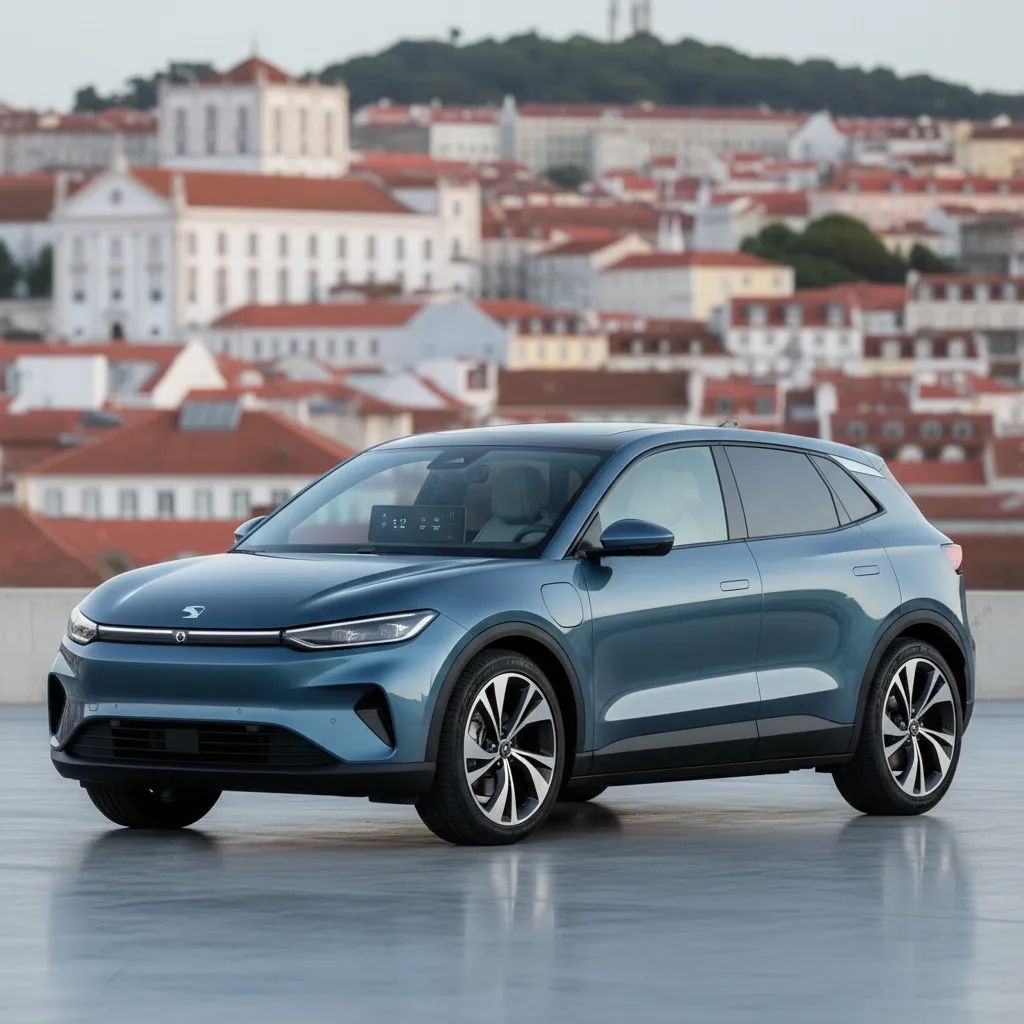
Skoda is preparing to double its battery-electric lineup with two new models arriving in 2026, delivering options from entry-level urban transport to a flagship seven-seater — a strategic push that could reshape the electric vehicle market, including for residents seeking affordable zero-emission mobility in Portugal.
Why This Matters
• Accessible EV entry: The Epiq urban crossover aims for a starting price around €25,000, roughly equivalent to a month's salary for many professionals and competitive with gasoline equivalents like the Kamiq.
• Launch timeline: Sales begin mid-2026, with some European markets potentially seeing availability as early as May 2026.
• Seven-seat option: The Peaq family SUV enters as Skoda's most expensive model, targeting buyers who need space but want to go electric.
• Geopolitical hedge: Skoda explicitly flags risks from Ukraine, Iran conflicts, and protectionist trade policies as potential constraints on growth.
The Epiq: Skoda's Electric Entry Point
The Skoda Epiq represents the Czech automaker's most aggressive bid yet to democratize electric mobility across Europe, including Portugal. Built on Volkswagen Group's MEB Entry platform — the same architecture underpinning the upcoming VW ID. Polo — the compact SUV stretches approximately 4.1 meters in length, according to reported specifications, making it Skoda's smallest electric offering and roughly 14 cm shorter than the combustion-powered Kamiq.
What distinguishes the Epiq is its blend of affordability and practicality. According to industry sources, two battery configurations are expected: a 38.5 kWh LFP pack delivering around 315 km of WLTP range, and a larger 55 kWh NMC battery targeting 430 km on a single charge. For context, the larger option would suffice for a round trip from Lisbon to Porto with charge to spare.
Charging infrastructure compatibility is critical for adoption in Portugal, where public fast-charging networks remain uneven outside major cities. The Epiq is reported to support DC fast charging up to 125 kW, enabling a 10% to 80% recharge in approximately 23 minutes with the larger battery. The smaller pack is expected to cap out at 90 kW but still achieve the same cycle in 28 minutes. Standard 11 kW AC charging and bidirectional capability — allowing the car to power a home during outages — are expected features.
The reported 475-liter cargo capacity expands to 1,344 liters with rear seats folded, matching or exceeding many compact SUVs in the segment. Interior design follows Skoda's new "Modern Solid" language: a minimalist cabin with a 13-inch central touchscreen, a smaller 5.3-inch digital instrument cluster, and crucially, physical controls — a deliberate pushback against the all-touchscreen trend that has frustrated many drivers.
Production will take place at Volkswagen's Navarra plant in Spain, a strategic choice that keeps manufacturing within Iberia and potentially simplifies logistics for the Portuguese market.
The Peaq: Seven Seats and Flagship Ambitions
While the Epiq chases volume, the Skoda Peaq aims for prestige. This seven-seat SUV — derived from the Vision 7S concept — will become the brand's most expensive model when it debuts in summer 2026. Skoda CEO Klaus Zellmer described it as the "new standard-bearer" during the company's annual presentation, signaling a pivot toward premium positioning.
Specifications remain sparse, but according to industry sources, the Peaq is expected to feature an 89 kWh battery, placing it in the same ballpark as the Enyaq iV's long-range variants. Unlike the Epiq, which targets first-time EV buyers or urban commuters, the Peaq addresses a different pain point: families who need three-row seating but refuse to compromise on electrification.
This model directly competes with offerings like the Peugeot e-5008 and upcoming electric variants of the Volkswagen Tiguan Allspace. For Portuguese buyers, the appeal lies in practicality — hauling extended family to the Algarve or navigating Lisbon's hills with low running costs.
What This Means for Residents
The immediate impact for anyone living in Portugal hinges on two factors: pricing and incentive stacking.
At an estimated €25,000 starting price, the Epiq falls within reach of middle-income households, especially if combined with Portugal's existing Incentivo pela Introdução no Consumo de Veículos de Baixas Emissões program, which offers rebates of up to €4,000 for battery-electric vehicles (subject to income caps and vehicle price limits). However, as of mid-2026, these incentives remain under legislative review, and prospective buyers should verify eligibility before committing.
The Epiq's 430 km range with the larger battery addresses a persistent concern: Portugal's charging infrastructure is concentrated in coastal urban centers, leaving rural areas underserved. A vehicle that can complete Lisbon-to-Faro trips (roughly 280 km) without mid-journey charging alleviates "range anxiety" for intercity travelers.
For the Peaq, the calculus shifts. As a premium model, it likely exceeds the price ceiling for state incentives, meaning buyers absorb the full cost. The seven-seat configuration appeals to larger families or those replacing aging diesel SUVs, but expect pricing north of €50,000 — a figure that positions it as a luxury purchase rather than a necessity.
Combustion Engines Aren't Dead Yet
Despite the electric push, Skoda and its parent company are hedging. Zellmer's presentation emphasized "continuous improvement" of internal combustion engines to meet "the most stringent emissions standards." Translation: the brand will keep selling gasoline and diesel models well into the decade, targeting buyers in regions where EV infrastructure lags or where hybrid powertrains make more economic sense.
This dual-track strategy reflects Skoda's reading of macroeconomic headwinds. The company explicitly cited the wars in Ukraine and Iran, escalating trade protectionism, and volatility in energy and raw material markets as risks to its 2026 growth projections. For Portugal, this means the transition to electric won't be abrupt — combustion models will remain available for those unwilling or unable to switch.
Market Context and Competition
The Epiq enters a crowded field. Key rivals include the Citroën ë-C3 (starting around €23,000), the Hyundai Inster, the Renault 4 E-Tech, and the Peugeot e-2008. Chinese automaker BYD is also circling with the Atto 2, and Volkswagen's own ID. Polo and ID. Cross will share the Epiq's platform, creating internal competition.
What Skoda brings to this fight is brand reputation. In Portugal, the Czech marque has built loyalty through decades of selling practical, value-oriented vehicles like the Octavia and Fabia. The Epiq leverages that goodwill, offering familiar design cues and "Simply Clever" storage solutions — details like umbrella compartments and door-edge protectors that resonate with pragmatic buyers.
The Peaq, conversely, faces a different challenge: convincing affluent customers that Skoda — historically a mid-market brand — can deliver a credible luxury experience. Success depends on build quality, tech integration, and dealer service networks keeping pace with rivals like Mercedes EQB and BMW iX1.
Regional Sales Outlook and Geopolitical Noise
Skoda anticipates stable passenger car sales across Europe in 2026, with growth trajectories varying by region. The company flagged "growing fragmentation of the global economy" and "increasing protectionist trends" as wild cards, likely alluding to potential tariffs on Chinese-made components or retaliatory trade measures.
For Portugal, the European Union's 2035 ban on new combustion-engine sales looms as the ultimate forcing function. Automakers like Skoda are front-loading electric launches to establish market share before the regulatory guillotine falls. The Epiq and Peaq aren't just product launches — they're positioning moves in a game where early movers capture customer loyalty and charging infrastructure partnerships.
The Bottom Line for Buyers
If you're considering an electric vehicle in Portugal, the Epiq merits attention for its price-to-range ratio and practical design. Wait for official Portuguese pricing and confirm incentive eligibility before signing. The Peaq, meanwhile, is a wait-and-see proposition until Skoda reveals specifications and pricing — seven seats and an 89 kWh battery sound compelling, but only if the final number doesn't exceed €60,000.
Both models signal that affordable electrification is no longer a niche experiment. By year-end, Skoda's battery-electric roster will double, giving Portuguese buyers more options in a market that, until recently, forced compromises between budget and range. Whether that's enough to sway diesel loyalists or lure buyers from combustion crossovers depends on execution — and whether Portugal's charging network can keep pace with demand.


