
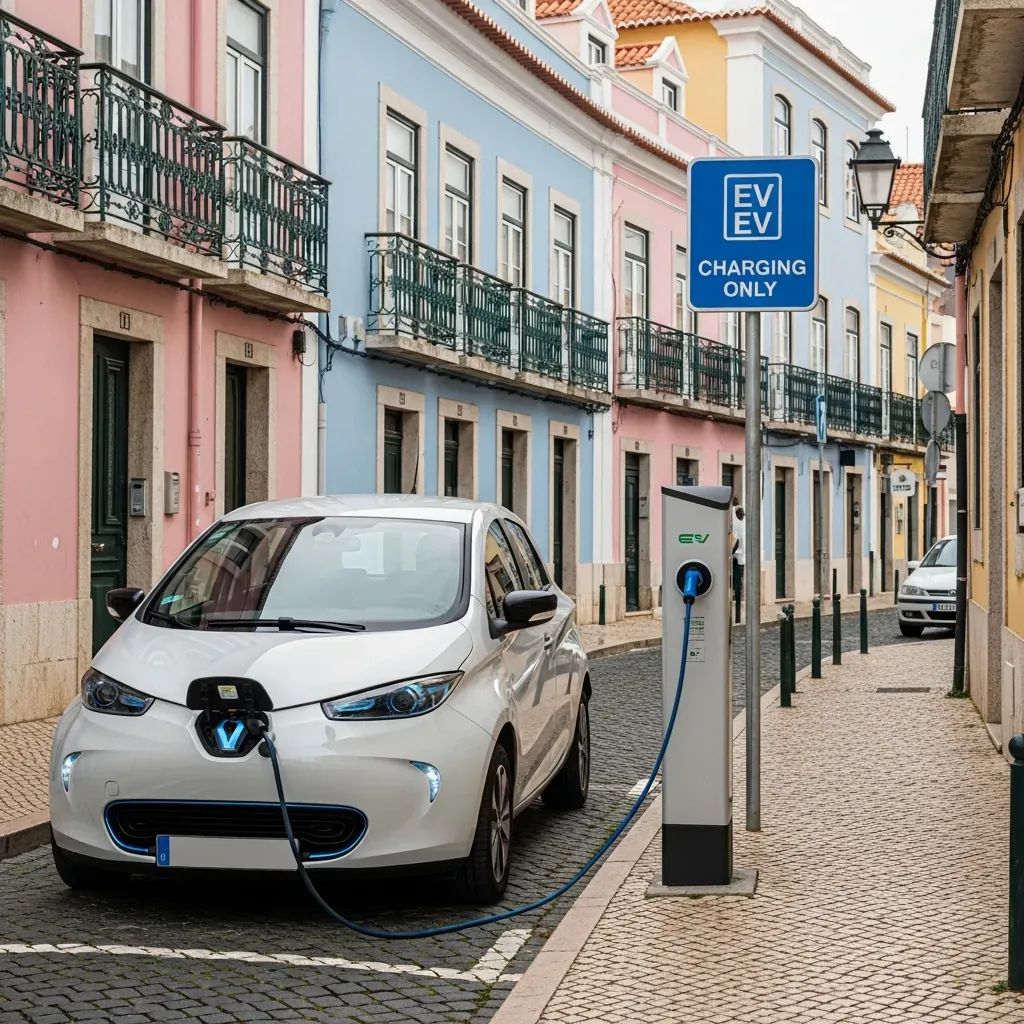
Europe may soon give an extra nudge to the sub-1.5-tonne electric runabout—and Lisbon’s commuters could be among the first to notice.
At a Glance
• Reserved parking bays and priority chargers could be set aside for small battery cars built inside the EU.
• Brussels is weighing a lighter regulatory regime and more generous subsidies for these models for up to 10 years.
• Automakers from Renault to Volkswagen want current nameplates—such as the new Citroën ë-C3—to qualify.
• Portugal already offers up to €4,000 for private EV purchases; the new EU label would sit on top of national incentives.
Why Portugal Should Care
For city centres from Porto’s Aliados Avenue to Lisbon’s Baixa, curbside space is scarce and charging points scarcer. A Brussels-blessed class of compact, locally-made EVs promises to free up both. Portuguese policymakers, who have spent years subsidising electric mobility yet still face sluggish uptake outside the corporate fleet market, would gain another lever to steer drivers away from imported petrol hatchbacks.
The Brussels Blueprint
According to officials familiar with draft texts circulating in the Commission’s Directorate-General for Industry, the proposal would create an “E-Car” label for vehicles that:
Weigh no more than 1.5 tonnes.
Are assembled in the European Union with a minimum share of EU-sourced components.
Come with battery packs that limit power output—part of an effort to discourage oversized SUVs.
In exchange, manufacturers would face a lighter compliance burden on secondary safety tech and certain Euro 7 provisions, trimming production costs by an estimated €1,200 per car. Cities and regions would be encouraged—though not required—to reserve parking and public chargers exclusively for E-Cars during peak hours.
Lobbying Blitz from Carmakers
The mood in corporate boardrooms is urgent. Industry executives argue they need relief from what they describe as a “regulatory overhang” just as cheap Chinese models flood the lower end of the market. Renault wants the still-secretive electric Twingo to be declared compliant on day one. Stellantis, fresh off rolling out the €23,800 Citroën ë-C3, says its model meets the spirit of the rules even if the drivetrain uses cells sourced in part from outside Europe. Meanwhile, Volkswagen is lobbying for its forthcoming compact successor to the Golf to slip in under the weight ceiling.
ACEA president Luca de Meo warns that, without concessions, manufacturers could miss the EU’s 2025 CO₂ targets and face multimillion-euro fines. Consumer groups, for their part, caution against letting safety standards slide, pointing to Portugal’s own spike in urban road accidents involving light vehicles in the past two years.
Potential Upsides—and Red Flags
Supporters see three immediate gains:• A price drop that could finally bring the cost of an entry-level EV below €20,000 before incentives.• A stimulus for European gigafactories, from Douro to the Danube, by guaranteeing domestic battery demand.• Relief for city planners struggling with charger congestion.
Critics counter that a decade-long waiver on advanced driver-assistance systems could turn back the clock on road safety. Environmental NGOs note that exempting small EVs from future recyclability rules risks shifting the burden to end-of-life processing, an area where Portugal still lacks specialised facilities.
How the Scheme Interacts with Portuguese Incentives
Portugal’s 2025 budget prolongs grants of up to €4,000 for private buyers and €6,000 for firms, capped at vehicles costing €38,500 (or €55,000 for 7-seaters). There is no explicit weight ceiling, but to claim the grant owners must scrap a combustion car more than 10 years old. Should Brussels finalise the E-Car label, the Ministry of Environment is expected to allow “stacking,” meaning a Lisbon resident could pair national support with whatever EU-level rebate emerges.
Municipalities would retain discretion to set aside blue-zone spaces for eligible vehicles. Porto’s Câmara already signals willingness, noting that its new riverside charging hub is frequently blocked by bulky SUVs that occupy two bays. Smaller footprints, officials say, could boost station throughput by up to 30 %.
The Road to Adoption
Commissioners are aiming for a political agreement by summer, followed by a two-year transition. The legislation would then need sign-off from the European Parliament and the Council. Diplomats say heavyweight member states such as Germany and France back the concept, though Berlin wants assurances that rural buyers—who rely on bigger cars—will not be penalised.
If the timeline holds, the first Portuguese motorists could take delivery of an E-Car as early as 2027 and enjoy priority parking through 2037. Whether the measure sparks a renaissance of Europe’s famed small-car culture or merely creates another patchwork of incentives will depend on the fine print Brussels still has to write.
Key Takeaways for Portuguese Drivers
• Expect extra perks in congested city centres for EU-built mini EVs.
• National subsidies are likely to combine with any new EU rebate, lowering sticker prices further.
• Weight matters: vehicles over 1.5 tonnes, including many crossovers, will be left out.
• Safety trade-offs remain controversial; consumer groups urge vigilance.
For now, anyone eyeing a new runabout—be it a Twingo, ë-C3 or the next-gen Golf—may find it pays to wait until Brussels finalises the rules. In the fast-moving EV race, a couple of years could translate into a few thousand euros saved and a guaranteed slot at the charging post outside your favourite café in Bairro Alto.


