Mountain Access Gridlock: Late Spring Snow Strands Serra da Estrela Travelers
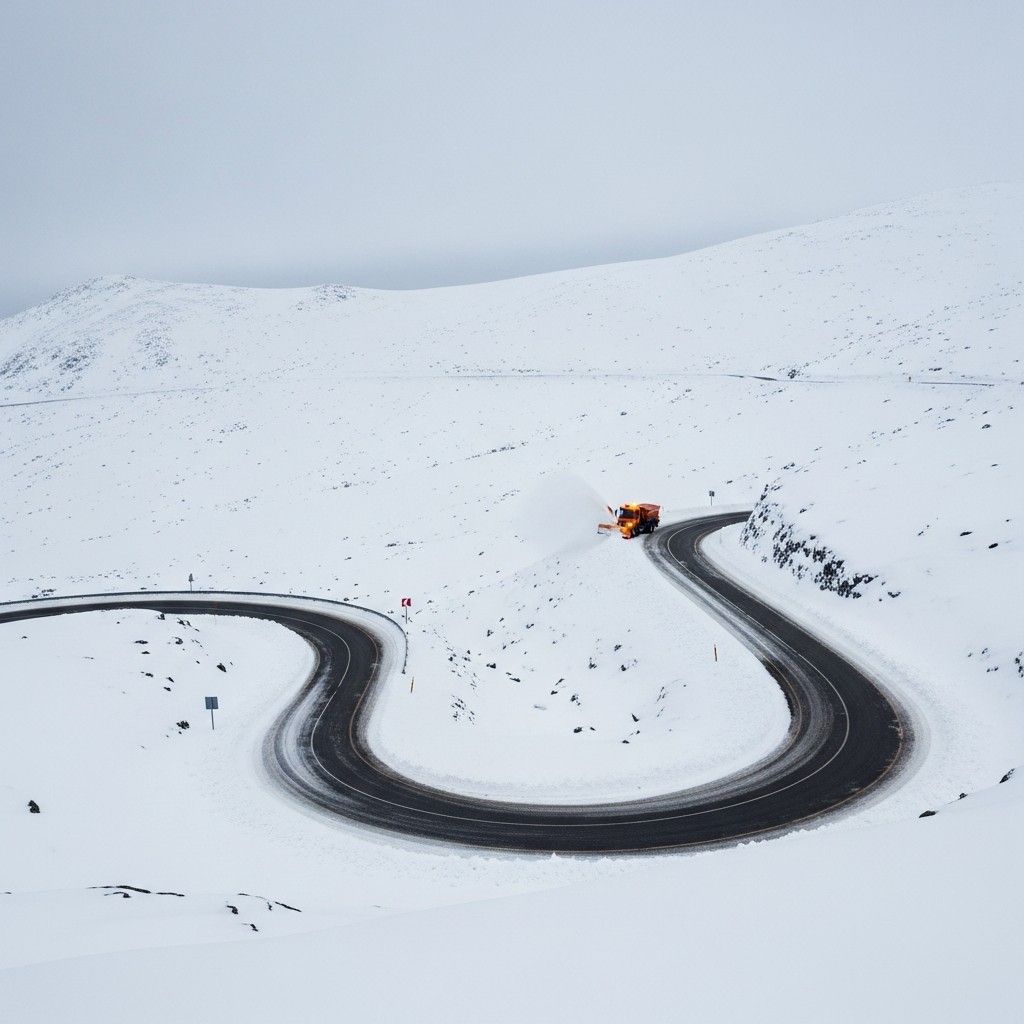
The Portugal Emergency and Civil Protection Command for the Beiras Region activated full closure protocols on three critical segments of the EN339 corridor late Tuesday evening as unexpected heavy snowfall overwhelmed the nation's highest mountain pass. The decision to seal the Piornos-Torre, Torre-Torre, and Torre-Lagoa Comprida sections left residents and travelers facing an indefinite hold on mountain access, reviving longstanding concerns about infrastructure vulnerability in Portugal's primary alpine zone.
Why This Matters
• Three mountain highway segments sealed unexpectedly, disrupting supply chains and stranding motorists without confirmed reopening timeline.
• Snow accumulation concentrated above 1,400 meters, with conditions forecast to persist until mid-morning as temperature fluctuations gradually lift the snow line.
• Villages in Covilhã, Seia, and neighboring municipalities face isolation, complicating medical access and essential deliveries for isolated residents.
How Weather Caught Everyone Off-Guard
Tuesday afternoon began unremarkably enough. Meteorologists at the Portuguese Institute for Sea and Atmosphere (IPMA) had issued standard springtime weather alerts predicting possible snow in elevated zones, the kind of caution that mountain residents receive regularly as winter lingers into April. What arrived instead was winter reasserting itself with genuine force.
By late afternoon, visibility collapsed. Road temperatures plummeted faster than forecasters anticipated, transforming the EN339's serpentine passages into skating rinks. The Sub-Regional Emergency and Civil Protection Command received escalating reports of hazardous driving conditions shortly after 21:30. Within 45 minutes, the decision came down: seal the road entirely. The clock marked 22:15 when barriers went up, and traffic halted.
Personnel from the Covilhã Piornos Clearing Center—the municipal facility tasked with maintaining access through winter and spring turbulence—mobilized heavy equipment immediately. Salt spreaders rumbled upslope, plow operators began grinding through accumulated snow, yet even their efforts could not outpace conditions deteriorating in real time. The snow came too heavily, too suddenly, and too steadily.
This timing amplified the disruption. Late April closure events occur occasionally in Serra da Estrela, yet travelers and businesses increasingly operate under the assumption that Easter holiday season transitions into reliable spring weather. The psychological shock of sudden constraint proved as significant as the practical gridlock itself.
The Supply Chain Rupture
Behind the closed barricades lies an economic ecosystem more fragile than many outside observers realize. The EN339 functions as the singular practical thoroughfare for communities perched across the mountain's higher reaches. When that artery constricts, everything downstream suffers immediate consequences.
Grocery distribution networks serving mountain villages face inventory depletion within days. Small retailers who operate on narrow margins cannot absorb prolonged supply interruptions. Pharmaceutical deliveries for residents managing chronic conditions halt. Construction projects pause indefinitely. Rural healthcare facilities experience complications scheduling staff rotations when access becomes unreliable.
Tourism operators face particularly acute pressure. The Serra da Estrela generates meaningful seasonal revenue—ski facilities, mountain lodges, hiking guide services, and hospitality businesses collectively employ hundreds and generate millions annually. A closure during transitional seasons, particularly one arriving without adequate warning, erases revenue days that cannot be recovered. Booking cancellations cascade through the system as travelers reroute to alternative destinations or postpone entirely.
Property managers maintaining second homes across the mountain corridor confront compounded complications. Planned maintenance work, contractor access, and material deliveries all freeze when road conditions deteriorate. The window for pre-summer property preparation narrows. Seasonal owners depending on reliable access to prepare properties for tourist rental income face genuine financial strain from repeated closures.
Why Portuguese Mountain Infrastructure Lags Behind European Standards
This closure event exposes persistent infrastructure deficits that regional advocates have articulated for years without decisive national response. Comparable alpine regions across the European continent operate sophisticated systems that minimize disruption through advanced weather monitoring, real-time road surface data collection, and proactive thermal management infrastructure.
Switzerland's mountain passes employ extensive sensor networks embedded within roadway surfaces, transmitting continuous temperature, moisture, and traction data to operations centers. Austria and France have invested in similar technologies, enabling operators to predict road degradation hours in advance rather than reacting to deteriorating conditions. These systems allow targeted de-icing strategies and proactive closure decisions that ultimately reduce total disruption duration.
Portugal's EN339 lacks comparable technological infrastructure. The Infraestruturas de Portugal, which manages the national road network, coordinates response protocols through the Civil Protection District Commands, yet the underlying data infrastructure remains modest. Operators rely substantially on visual assessment and forecast modeling rather than granular, real-time roadway diagnostics.
The Piornos Clearing Center operates within budget constraints that municipal officials acknowledge as inadequate. Seasonal staffing limitations, aging equipment requiring maintenance cycles, and investment constraints all conspire to maintain operations at functional minimum rather than optimized capacity. National investment prioritization historically favored lower-elevation routes connecting population centers, treating mountain infrastructure as secondary priority.
Local administrators in affected municipalities have escalated infrastructure modernization proposals repeatedly. The economic case appears clear: the Serra da Estrela functions as Portugal's only ski facility, concentrating both recreational opportunity and economic dependency on reliable access. This concentration amplifies disruption impact asymmetrically. Yet national budget cycles move slowly, and competing infrastructure demands across the country fragment available resources.
Understanding What Comes Next
The Infraestruturas de Portugal has established no timeline for road reopening. Official communications emphasize that decisions will respond to evolving conditions rather than fixed schedules. Weather monitoring continues through morning hours as the IPMA tracks temperature trends and the gradual elevation of the snow line as conditions stabilize.
Historical patterns suggest operations will resume gradually: initially, perhaps, through limited passage with traffic controls and supervised convoy systems, eventually escalating to full capacity as surface conditions improve. Multiple hours of continuous monitoring precede full reopening authorization. The caution reflects legitimate risk: mountain roads can appear stable and then deteriorate again within minutes if temperature fluctuations persist or unexpected precipitation recurs.
Residents should maintain active contact with official sources rather than relying on social media speculation or informal reports. The Infraestruturas de Portugal operates a real-time road conditions portal. The District Operational Commands for Civil Protection (CDOS) in Castelo Branco and Guarda disseminate authoritative updates through established emergency communication channels. Local media outlets generally provide rapid reporting of significant condition changes.
Practical Guidance for Mountain-Adjacent Residents and Frequent Travelers
If you navigate mountain routes regularly—whether for work commutes, business logistics, or recreational travel—establish personal protocols that supersede weather forecast confidence. The EN339 closure demonstrates that springtime conditions in the Serra da Estrela remain unpredictable despite appearances suggesting seasonal stability.
Maintain emergency provisions in your vehicle whenever mountain travel occurs: blankets, water, non-perishable sustenance, a fully charged mobile device, and printed maps documenting alternative low-elevation routes. Atmospheric conditions can shift dangerously within 30 minutes. Communication devices represent your primary survival resource if conditions deteriorate while you occupy mountain passages.
For business operators managing logistics or tourism operations dependent on reliable mountain access, operational flexibility becomes economically essential. Contractual arrangements with suppliers and clients should anticipate disruption scenarios rather than treating them as exceptional catastrophes. Transparent communication about potential weather-related service limitations preserves customer relationships more effectively than reactive explanations following disruptions.
Travel during dawn hours when temperatures remain lower and atmospheric conditions more stable. Evening and night passages present compounded risk, particularly during transitional seasons when temperature volatility peaks.
The Broader Pattern and Long-Term Questions
This closure arrives within an evolving context of weather unpredictability across the Iberian Peninsula. Comprehensive meteorological analysis of the 2025-2026 winter season remains incomplete, yet preliminary observations suggest a pattern characterized by erratic precipitation sequences—intense precipitation events interspersed with warm spells and sudden reversals rather than the stable, predictable progressions that forecasting models traditionally expect.
The Serra da Estrela will eventually reopen. Until conditions stabilize sufficiently, patience and alternative routing remain the only viable strategies for those requiring mountain access. The broader challenge for Portuguese infrastructure planning involves determining how to adequately resource mountain maintenance and modernization amidst competing national priorities and budget constraints. The frequency of disruptions suggests current approaches may be approaching practical limits.
For now, monitor official channels, adjust plans accordingly, and recognize that mountain weather respects neither calendars nor expectations.