
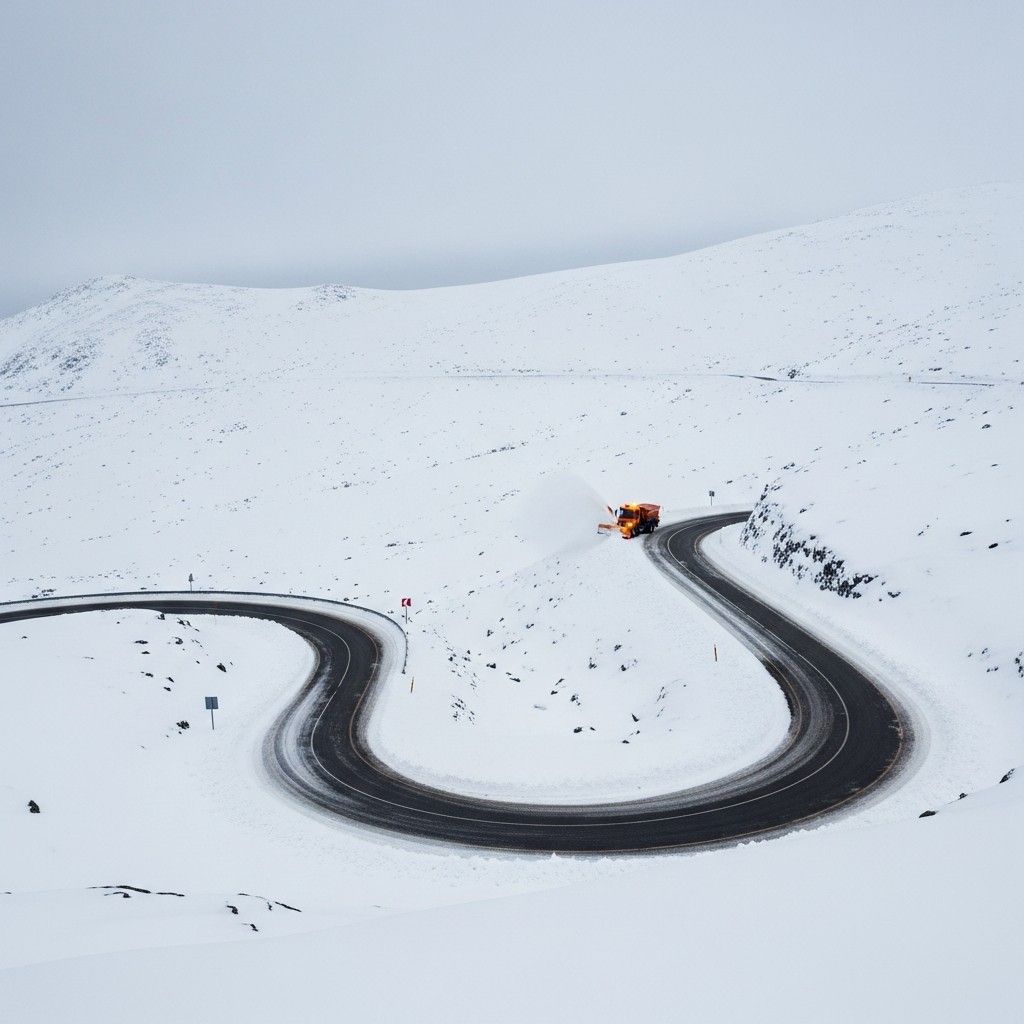
Snow returned with force to Portugal’s loftiest peak this week, briefly barricading the only road that climbs to the iconic Torre. Crews reopened the lanes yesterday, yet drivers should keep their chains handy: the weather map promises more mood swings before the long weekend.
Quick glance
• EN339 and connecting spurs were shut from 17:00 on 2 December to mid-morning on the 3rd.
• Work gangs cleared almost 30 cm of compacted snow in certain bends.
• The IPMA forecast points to alternating drizzle and frost through next Wednesday.
• Tourism operators report a spike in cancellations, but bookings may rebound if roads stay passable.
• Snow-clearance fleet: 9 ploughs, 3 rotary blowers, 1 digger and plenty of sal-gema (rock salt) on standby.
A 17:00 barricade and a 10:30 comeback
When squalls rolled across the central massif late Tuesday, the Guarda Nacional Republicana (GNR) dropped the barriers between Piornos and Lagoa Comprida, sealing off the summit loop. Wind-borne drifts blinded the hairpins, and temperatures slid below -4 °C. By dawn Wednesday, Infraestruturas de Portugal crews had carved out twin corridors on the EN339 and the twin legs of the EN338, allowing the GNR to lift restrictions at 08:45 and again at 10:30. Veteran plough driver Rui Azevedo called it “classic neve atlântica: sticky, heavy and quick to refreeze,” the sort that can undo a night’s work in minutes if visibility collapses.
Forecast: a stop-and-go winter roller-coaster
Meteorologists expect a restless sky over the Serra da Estrela until at least 14 December. Daytime drizzle and slightly milder readings — up to 5 °C on lower slopes — will nibble at the snowpack, while clear nights will hard-freeze the runoff, breeding patches of black ice. North-westerly gusts, occasional fog banks and a return of light snow showers from Monday onward could trigger fresh closures. Authorities warn of the classic freeze-thaw cycle, a recipe for thin, glassy surfaces that even studded tyres struggle to grip.
Behind the ploughs: how the mountain is kept open
The high-altitude Snow-Clearing Centre at Piornos works round the clock once the first flakes fall. Its arsenal includes 9 orange ploughs, 3 rotary throwers, a backhoe, a supply truck stocked with salt-gem, and an 18-person shift rota. Continuous roadside sensors feed data on air temperature, humidity and wind gusts to the control room, guiding preventive salt runs before dawn. The GNR holds the final word on closing or reopening lanes; officers test sections on 4x4 patrols, scanning for cornices, ice sheets and tumbling debris.
Economic stakes for villages that live off the snow
Every shutdown pinches the cash flow of Seia, Covilhã, Manteigas and dozens of hamlets that count on cold-season travellers. Hoteliers say early-December occupancy plunged from 80 % to below 30 % during the 18-hour roadblock, while ski-school operators shelved lessons worth an estimated €45 000. Cheese shops in Sabugueiro and craft stalls atop the Torre echoed the drop. Local councils fear that prolonged volatility could derail the crucial Christmas–New Year rush, normally responsible for one-third of annual tourist revenue in the park.
Practical advice for drivers and hikers
Check IPMA alerts and the GNR mountain post (@GNRSerradaEstrela) before setting out.
Bring snow chains, warm layers, a power bank and extra water; help may take time to reach remote lay-bys.
Park only in designated bays; ploughs can bury roadside vehicles under dense ridges in seconds.
Respect barriers: bypassing them risks fines and voids vehicle insurance in case of mishap.
If caught behind a closure, detour via the A23 to Belmonte or the N232 over Gouveia, but expect speed limits and sporadic ice.
The mountain’s stage is set for an on-again, off-again week. With vigilant planning and a dash of patience, travellers can still taste Portugal’s highest snowfall without starring in the next rescue bulletin.


