

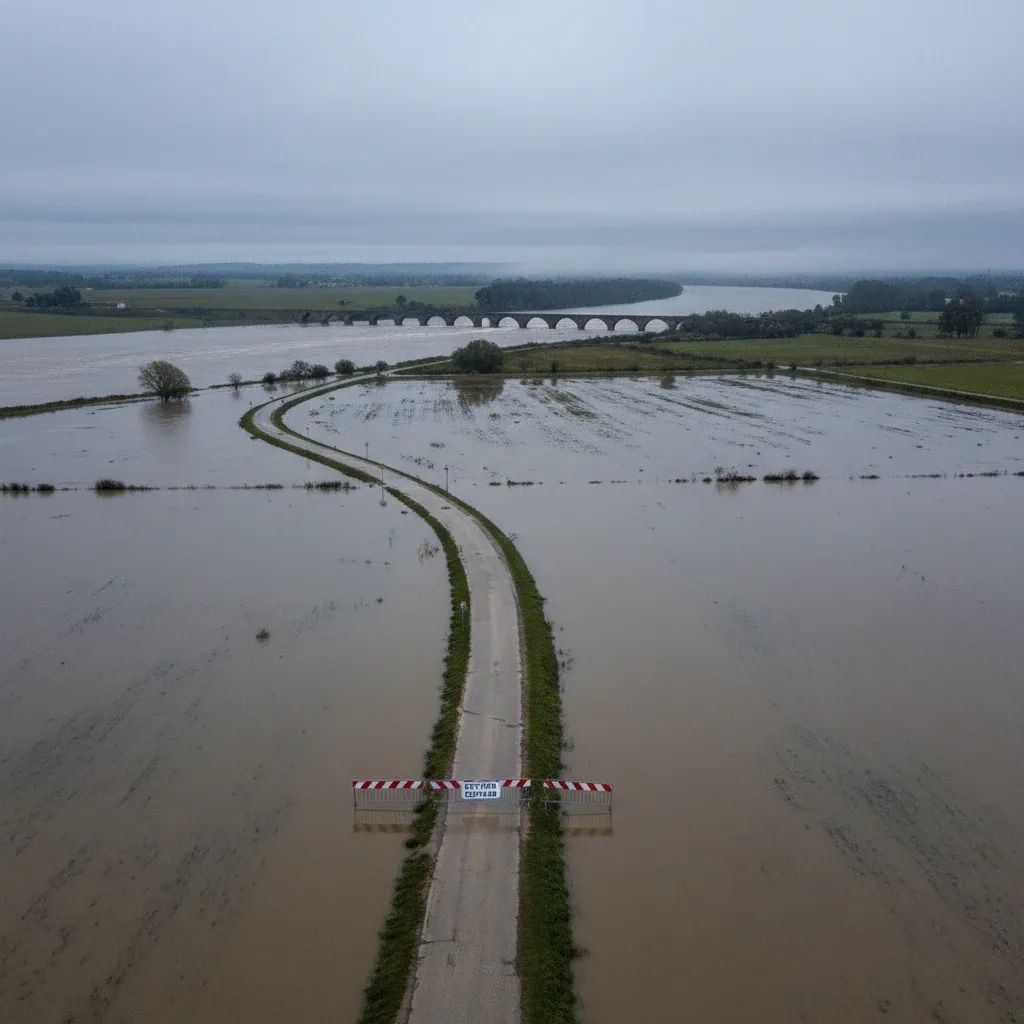
The Portugal Civil Protection Authority has kept the red-alert status in the Santarém district even as the River Tagus has steadied, a decision that continues to disrupt travel, farming schedules and insurance coverage across the Ribatejo.
Why This Matters
• More than 160 roads remain closed or limited, complicating daily commutes between Santarém, Abrantes and Lisbon.
• High river discharges—about 7,000 m³/s at Almourol— are forecast to inch up again this weekend, increasing the risk of fresh floods.
• Property insurers are signalling premium reviews for homes and warehouses on the Lezíria plain.
• Agricultural irrigation plans could be rewritten as reservoir managers keep spilling water to free space for further rainfall.
Current Flow Snapshot
Recent measurements at the Almourol hydrometric station show the Tagus holding near 7,000 m³/s, comfortably below the week’s peak of 8,600 m³/s but still triple the seasonal average. Up-river dams—Fratel, Pracana and Castelo de Bode—are jointly releasing around 6,000 m³/s, a rate authorities insist must persist to avoid exceeding spillway safety thresholds if the expected Atlantic fronts deliver more rain.
Why Levels Remain High
A cocktail of factors is at work:
Saturated soils: December and January brought 40 % more rainfall than the 10-year mean, leaving the ground unable to absorb further downpours.
Upstream coordination with Spain: The Albufeira Convention obliges our neighbour to guarantee weekly flow volumes but not daily regularity, leading to pulsed releases that reach Santarém in waves.
Hydropower scheduling: Iberian grid operators took advantage of the stormy spell to maximise hydroelectric output, further elevating discharge rates.
Climate variability: Meteorologists point to a warmer-than-usual winter that has shifted the snow–melt calendar in the Central System mountains, sending early runoff into the Tagus.
Strained Roads and Bridges
The chronic closure of the Chamusca bridge and intermittent blocks on the A13 and N118 have forced heavy lorries onto detours adding up to 40 km per journey. Municipal engineers warn that repeated submersion of minor roads is accelerating pavement decay. Local chambers already estimate €7 M in emergency repairs—money that would otherwise fund school renovations or social housing.
What This Means for Residents
• Commuters: Check the real-time map on the Portugal Road Authority website before leaving home; fines for ignoring closure signs now start at €120.• Homeowners: Photograph current property conditions—insurers are asking for timestamped evidence to validate future flood claims.• Farmers: Expect water allocations to be confirmed only 24 hours in advance; plan sowing windows accordingly and renegotiate supply contracts if needed.• Small businesses: Verify whether your interruption-of-service coverage treats flood-related road closures as a compensable event; policies differ.
Official Measures & How to Stay Updated
The Portugal Environment Agency (APA) is publishing four-hourly reservoir release bulletins, while civil-protection push alerts can be activated via the Prociv mobile app. Municipalities are stockpiling sandbags and pre-positioning pumps in Vila Nova da Barquinha and Constância, the two most frequently flooded town centres. Schools may switch to online classes if bus routes remain cut.
Long-Term Outlook: Climate and Policy
Hydrologists at the University of Lisbon say the Tagus is entering a "new volatility phase": wider swings between drought and flood will likely be the norm. A mid-term review of the Tagus River Basin Management Plan—due later this year—could tighten daily release quotas from Spanish dams, something Ribatejo mayors have lobbied for since the 2022 drought, when some channels ran dry. Until those negotiations conclude, residents will have to live with the present balancing act: enough water to keep fields green, yet not so much that the next commuter finds the road underwater.


