

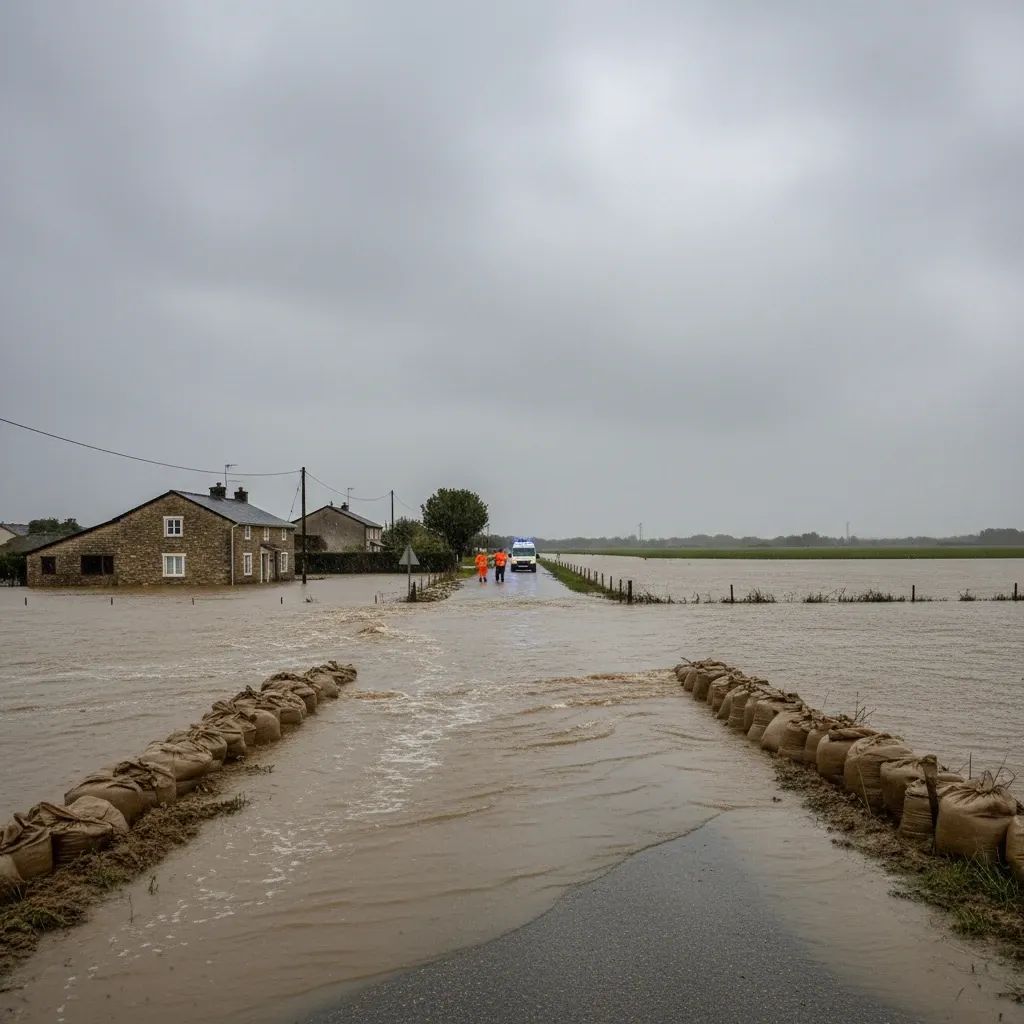
The Portugal National Emergency Authority has pushed the Tejo flood alert to vermelho, triggering forced road closures, preventive evacuations and a fresh round of questions about the region’s flood-defence budget.
Why This Matters
• Red-level alert now active: travel across the Lezíria do Tejo may require 30-40 km detours.
• Evacuation centres open: the Municipal Pavilion in Azambuja provides hot showers and device charging.
• Insurance deadline: homeowners have 8 days to notify insurers or risk losing compensation.
• Cash on the table: Lisbon promises an €2.5 B support package—but only for documented losses.
The Scene in Azambuja Today
Residents woke up to submerged stretches of the EN3-2, mud-slicked secondary lanes and the unnerving thud of sandbags being stacked against doorframes. In Carvalhos and Manique do Intendente, floodwater isolated entire hamlets, while the access road to Maçussa disappeared beneath what locals call a mar de chocolate. Civil-protection teams, the GNR and a small detachment of the Portuguese Army have been ferrying the elderly to safety and reinforcing makeshift dikes after talus collapses along the Ota and Alenquer tributaries. Meteorologists expect persistent drizzle this afternoon, shifting to heavy showers after sunset, with temperatures hovering between 15 °C and 17 °C—just warm enough to keep evaporation low and water levels high.
Why Flooding Keeps Coming Back
Lezíria do Tejo is Portugal’s bread-basket: a flat, alluvial plain carved by centuries of Tejo sediment. That fertility comes at a cost. The ground sits barely 2 m above mean sea level, so any combination of Spanish dam releases, Atlantic storm systems and a full-moon spring tide turns drainage ditches into raging canals. Historical records—locals still cite the "cheia de 1979"—show a €1 M average loss every time water overtops the levees. Climate-adaptation models from the Agência Portuguesa do Ambiente (APA) suggest a 17 % rise in peak flow events by 2030.
Official Response and Money on the Table
City Hall activated its Plano Municipal de Emergência on 24 January and moved to the highest tier on 4 February. Roughly 19.4 % of Azambuja’s 2026 budget—about €6.3 M—is earmarked for drainage upgrades, including ten new waste-water lift stations run by Águas da Azambuja, S.A.. Nationally, the government’s contingency decree frees up to €2.5 B for immediate repairs, temporary housing and low-interest loans. However, funding is conditional on photo-documented damage, municipal inspection and proof that property taxes are paid up. Meanwhile, the APA and SNIRH have doubled sensor readings on the Tejo in an attempt to give at least 6-hour lead time before each fresh crest.
What This Means for Residents
Commuting: Plan for 40 min extra if you rely on the EN3-2 or the Azambuja–Valada route. CP Rail still runs, but schedule changes may occur with 2 h notice.
Property Protection: Keep pumps, extension hoses, circuit breakers and sacos de areia ready. Municipal crews will distribute additional bags after 16:00 at the Casa da Juventude.
Insurance Clock: Under Portuguese law, you must file a participação de sinistro within 8 days of damage. Late filings can reduce payouts by up to 30 %.
Health & Utilities: Boil water in low-lying villages until the ARS Lisboa e Vale do Tejo clears the mains. Power cuts may last 3–6 h; charge essentials early.
Financial Aid: Register losses on the Balcão 2026 portal to access the government’s €2.5 B relief pool. Tenants can apply for 3-month rent subsidies capped at €450 per household.
Agriculture: Farmers should contact DRAPLVT for emergency seed replacement and a possible 90-day deferral on social-security contributions.
Next 72 Hours and Longer-Term Outlook
Forecast models show another Atlantic front arriving late Thursday, likely maintaining the Tejo at flood stage into the weekend. Hydrologists warn that even a 20 mm downpour could reopen newly patched levee breaches. In the medium term, Azambuja’s flood-mitigation master plan calls for riparian setbacks, smarter irrigation gates and a €12 M dike reinforcement—projects that won’t break ground before 2027. Until then, locals remain sandbag-in-hand, negotiating the thin line between a life on fertile soil and the river that both feeds and threatens it.


