

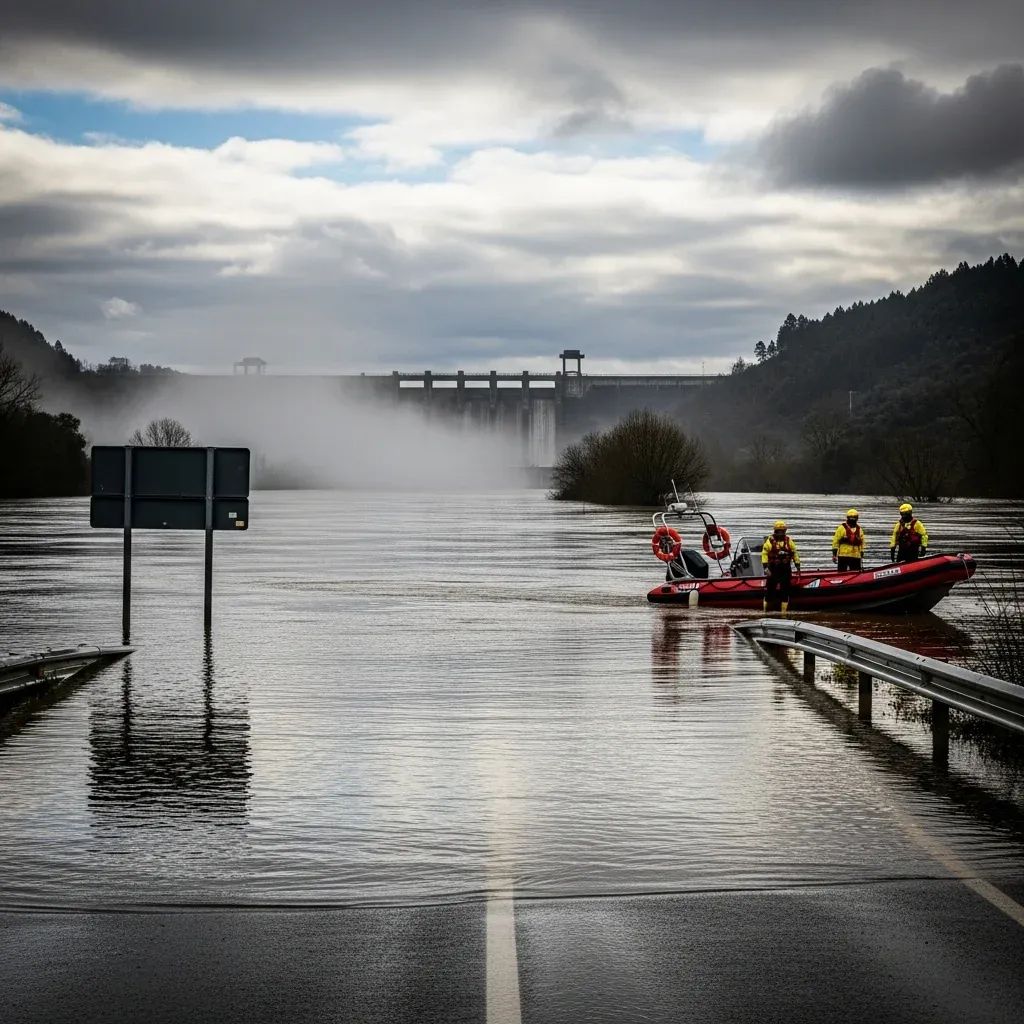
The Portugal Civil Protection Authority (ANEPC) has escalated the flood alert in the Mondego Valley, a decision that could disrupt travel, farming schedules and even household safety plans for thousands living between Coimbra and Figueira da Foz.
Why This Matters
• Peak risk today: Water releases from Aguieira Dam and new rain bands this afternoon may push river flow beyond 1,500 m³/s.
• Road closures multiplying: Stretches of the EN 111, EN 341 and several municipal roads are already under water; detours can add 25-50 minutes to a Coimbra-Figueira commute.
• Possible evacuations: Soure, Montemor-o-Velho and low-lying Coimbra neighborhoods such as Parque Verde sit on the shortlist for preventive relocation.
• Military on site: 24 Portuguese marines and six rescue craft are now stationed along the Baixo Mondego to speed up any overnight extractions.
Why the Alert Is So High
After weeks of above-average rainfall, the Aguieira reservoir is brushing its storage ceiling. Dam operators opened additional sluice gates at dawn, sending a surge downstream that coincides with a fresh Atlantic front. Unlike ordinary winter spates, today’s rise is being accelerated by two engineered choke points—the Ponte-Açude in Coimbra and the Louredo Bridge—both already fully open to relieve pressure. Hydrologists at the Portuguese Environment Agency warn that soil saturation means even moderate showers can now translate into rapid surface runoff.
Response on the Ground
Municipal emergency teams in Coimbra and Montemor-o-Velho activated their contingency plans overnight. Firefighters patrolled riverbanks to broadcast loud-speaker warnings while drones monitored Vila Nova da Barca, Verride and Tentúgal. Six additional civil-defence sirens were installed near flood-prone hamlets where mobile coverage is patchy. Meanwhile, the Portugal Navy has pre-positioned swift-water craft at strategic ramps, and electricity distributors are preparing selective grid shutdowns to prevent short circuits in inundated substations.
Historical Pattern and Climate Outlook
Floods are not new to the Mondego. Records show the 1948 crest hit 4,200 m³/s, submerging city blocks in Coimbra. Even the 2001 event, tempered by modern dams, forced dike failures at 14 points. Climate projections from the IPMA suggest a paradox: short bursts of very wet weeks followed by drier months. This volatility reduces the margin for dam operators to "store‐and-release" gradually, making sudden discharges more likely.
What This Means for Residents
• Homeowners: Insurance adjusters classify a "flood claim" only when water enters living areas. Photograph possessions now and lift appliances above floor level to expedite payouts.
• Commuters: Expect rail slow-downs on the Linha do Oeste and detours on the A14 feeders. Factor in extra fuel costs—roughly €5-€8 per round trip between Coimbra and Montemor-o-Velho.
• Farmers: Seed deliveries and livestock transport may need rescheduling; keep receipts for emergency fodder, which qualifies for agricultural calamity subsidies once the government ratifies flood status.
• Expats & holiday-home owners: Municipal SMS alerts work only on Portuguese numbers—register an EU device on the 112.pt portal to avoid missing evacuation orders.
Next 48 Hours: Safety Checklist
Move vehicles, tractors and gas bottles to higher ground—tow truck demand spikes fast.
Pack a grab-bag with IDs, prescriptions and at least 48 hours of chargers and cash; ATMs often go offline first.
Keep pets on leashes or carriers; unsolicited animal rescues slow human evacuations.
Avoid "flood tourism"—being curious on riverbanks diverts rescue crews.
Looking Ahead
City engineers say the Mondego’s dike-siphon system can redirect overflow onto agricultural plains for another 36-48 hours before capacity peaks. If rain totals exceed 90 mm this week, partial breaching of sacrificial levees near Soure may be ordered to shield urban cores. Longer-term, planners are revisiting an unfinished bypass channel first proposed after the 2016 floods—an investment likely to exceed €120 M but considered essential as climate volatility intensifies.
For real-time updates, residents should bookmark the ANEPC map at prociv.pt and listen to local radio on 96.8 FM; mobile networks may throttle during peaks. The window for last-minute precautions closes quickly—act now rather than after sirens start echoing across the valley.


