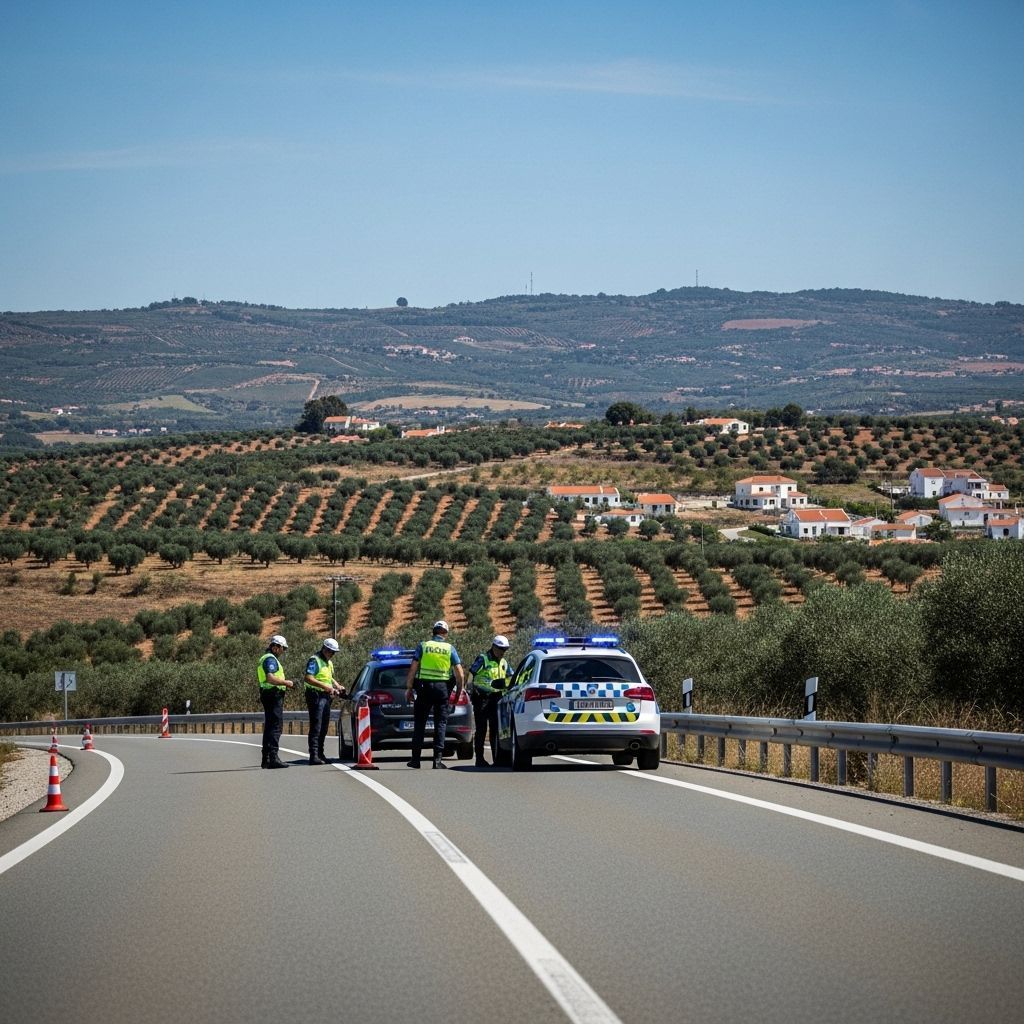
Portugal's prison guard leadership has formally announced their participation in a nationwide security personnel protest scheduled for April 16, a mobilization that reflects mounting frustration over pension reforms that have slashed retirement income by up to 30% for thousands of uniformed personnel across multiple law enforcement agencies.
The Prison Guard Command Union (ASCCGP) confirmed its members will join the demonstration at 6:00 PM outside the Prime Minister's residence in Lisbon (Largo da Ajuda neighborhood), a rally organized by the Permanent Coordinating Commission (CCP) of Security Forces and Services Unions and Associations. The CCP represents a coalition spanning the Public Security Police (PSP), Republican National Guard (GNR), prison guards, Economic and Food Safety Authority (ASAE), and the Maritime Police.
In a statement released this week, the ASCCGP condemned what it called a "humiliating offense" against prison officers: the Portuguese state's decision to raise retirement age thresholds while simultaneously applying a calculation formula that "unacceptably and considerably diminishes pension values." The union framed the policy as a "glaring injustice" that disrespects career professionals who operate in high-risk environments.
Why This Matters
• Financial hit: Affected personnel could see retirement benefits drop from 90% of final salary to 60-70%, with losses exceeding €700 per month in some cases.
• Who's impacted: Anyone enrolled in the General Retirement Fund (CGA) after August 31, 1993, faces the new calculation model.
• Practical implications for residents: The April 16 protest may affect traffic around the Prime Minister's residence; some security services may operate with reduced staffing levels during the demonstration, though essential services will continue at legal minimum requirements.
• Timing: The protest comes four years after legislative reforms began converging security force pensions with the general civil service regime.
The Pension Reform That Sparked Outrage
Portugal's security forces once enjoyed a privileged retirement system that guaranteed pensions equivalent to 90% of their last monthly salary—a recognition of the physical and psychological demands of policing, corrections, and military roles. That framework has been systematically dismantled since 2005 through a series of legislative tweaks aimed at fiscal sustainability.
The most consequential change took effect in February 2026: personnel now have their pensions calculated based on an average of career contributions rather than final earnings, a shift that inherently produces lower payouts. The reform also introduced a 60-year age limit and minimum service requirements, pushing effective retirement dates later for many officers.
For someone who began their career in the mid-1990s, the difference is stark. A GNR sergeant who previously anticipated a monthly pension of around €1,800 now receives closer to €1,200—a reduction that compounds over decades of retirement.
Those enrolled in the CGA before September 1993 remain grandfathered under the old 90% rule, creating a two-tier system that has deepened resentment among younger cohorts who argue they face identical dangers for diminished rewards.
What This Means for Security Personnel
The immediate consequence is financial precarity for mid-career officers planning their exit strategies. Many security professionals retire earlier than the general workforce due to the physical toll of their roles—decades of shift work, exposure to violence, and operational stress accelerate health deterioration.
The new pension model, however, penalizes early retirement by incorporating a sustainability factor that further reduces payouts for those who leave before the statutory age. This creates a dilemma: continue working in physically demanding roles past one's prime, or accept a significantly reduced retirement income.
For prison guards specifically, the situation is compounded by workplace conditions that unions describe as chronically under-resourced. The Vale de Judeus prison has been operating under a total strike since March 10, with guards reducing service to legal minimums—meaning only core security functions are maintained, with reduced inmate programming, visitation restrictions, and basic operational capacity. That action—triggered by security failures following a high-profile 2024 escape—illustrates the disconnect between policy expectations and operational reality.
The ASCCGP argues that asking officers to work longer in unsafe conditions while cutting their retirement security represents a broken social contract. "These are professionals who dedicate their lives to public service, often at extreme personal risk and family sacrifice," one union statement emphasized.
Parliamentary Defeat Fuels Mobilization
Tensions escalated sharply on February 27, when Portugal's Assembly of the Republic rejected bills from the Communist Party (PCP) and Chega that would have restored the 90% pension formula. The legislative defeat eliminated hopes for a near-term policy reversal and galvanized unions to pursue street-level pressure.
The CCP framed its April 16 protest as a direct response to that parliamentary outcome, calling the demonstration a "cry of alarm from the entire security family in Portugal." The coalition explicitly stated its singular focus: alerting the government to what it considers the "grave error of pension cuts" embedded in post-2005 legislation.
Six military and GNR associations have simultaneously requested formal meetings with both the President of the Republic and the Prime Minister to "initiate the work necessary to reverse the current social protection regime." Whether those audiences will be granted—and whether executive intervention could override parliamentary will—remains uncertain.
Broader Context: Portugal's Fiscal Balancing Act
The pension reforms affecting security forces are part of a wider effort to stabilize Portugal's long-term fiscal health. Like most European nations, Portugal faces demographic pressures from an aging population and longer life expectancies that strain pay-as-you-go retirement systems.
By converging specialized regimes with the general civil service model, the government aims to reduce pension liabilities that consume a growing share of the national budget. The sustainability factor—a mechanism that adjusts payouts based on demographic trends—is designed to prevent future funding crises.
However, critics argue that uniformed services warrant distinct treatment. The physical demands of law enforcement and corrections careers differ fundamentally from desk-based civil service roles, they contend, and officers often cannot extend their working years without compromising operational effectiveness or personal safety. Countries like Spain and France maintain differentiated pension schemes for high-risk professions, recognizing the unique demands these roles impose.
The April 16 Demonstration and Beyond
The upcoming rally at 6:00 PM outside the Prime Minister's residence in Lisbon (Largo da Ajuda) represents the most visible manifestation of discontent that has been building for months. The CCP has called for "massive turnout," framing the event as a unified statement from personnel who feel betrayed by the state they serve.
Residents in the area should expect potential traffic disruptions around the demonstration venue. While the unions have not announced disruptions to essential security services, some police and GNR units may operate with reduced personnel during the protest period, though emergency services will maintain full operational capacity.
Beyond the symbolic protest, the unions' strategy includes sustained pressure through workplace actions—like the ongoing Vale de Judeus strike—and formal political engagement. The requested meetings with national leadership signal an attempt to elevate the issue above partisan parliamentary dynamics.
Whether the mobilization yields policy concessions depends largely on the government's fiscal flexibility and political calculus. With pension reform entrenched in multi-year budgetary planning, reversing course would require either finding alternative savings or accepting higher deficit projections—neither of which appears palatable under current economic conditions.
For the thousands of security personnel watching the April 16 protest unfold, the event will serve as a barometer of their collective leverage. A large turnout could force renewed negotiations; a modest showing might signal acceptance of the new reality. Either way, the pension debate has become a defining labor issue for Portugal's uniformed services, one likely to persist well beyond this single demonstration.