
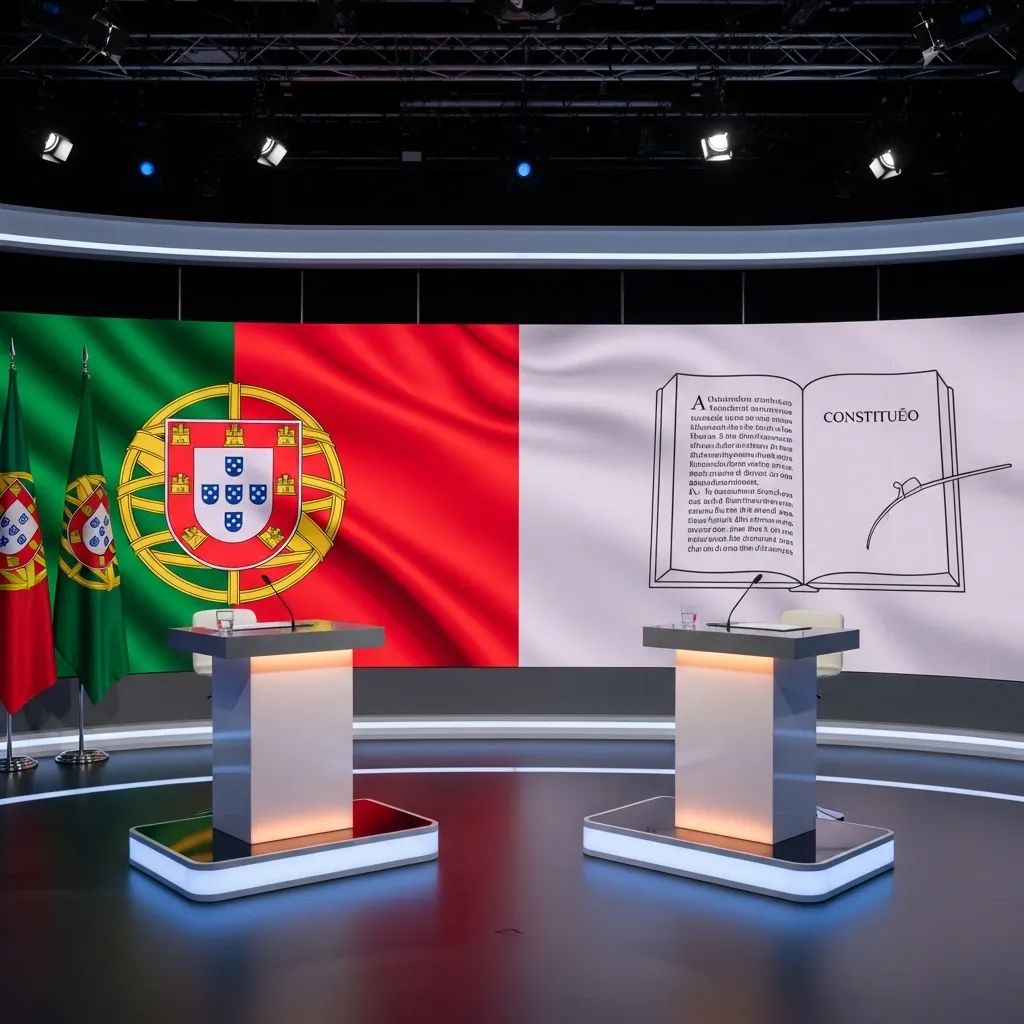
A single hour and a quarter in prime time was all the country received to measure the distance between António José Seguro and André Ventura ahead of the segunda volta of 8 February. Broadcast simultaneously on the three biggest networks, the debate brought sharper contrasts than new surprises, but it offered undecided voters one last, uncluttered look at two very different readings of Portugal’s future.
What mattered at a glance
• 75-minute duel aired at 20:30 on RTP, SIC and TVI, moderated by Carlos Daniel
• Seguro stayed presidential, emphasising stability and constitutional continuity
• Ventura went on the offensive, foregrounding immigration and crime
• Exchanges remained civil but pointed on health, labour law and Europe
• Latest polls still place Seguro 15-30 points ahead, yet analysts warn turnout could tighten margins
Spotlight on the stage
The national studios of RTP in Lisbon rarely see three competing broadcasters pool their signals, but Wednesday night’s arrangement underscored how unusual this second-round face-off is—it is only the second in Portugal’s democratic history. Cameras framed the contenders at lecterns an arm’s length apart, no party banners in sight, just the flag and the Constitution behind them. With live fact-check graphics sliding under the picture, the production carried a distinctly public-service tone.
Tone and performance
Seguro’s cadence was measured, at times almost professorial. He reminded viewers of his cabinet experience and vowed to be a "president that unites". Ventura, by contrast, leaned into short, declarative sentences, peppered with references to "ordinary families" and "fear on the streets". Analysts noted that while Ventura’s trademark combative style surfaced, he dialled back the volume compared with earlier campaign stops, perhaps mindful of swing voters who dislike confrontation.
Issues up close
Immigration triggered the most visible friction. Seguro framed demographic renewal as a "national opportunity"; Ventura countered with warnings about border control and "cultural dilution". On health care, the socialist-backed candidate pledged to protect universal access, citing pandemic lessons, while Ventura blasted "bureaucracy" and floated tax incentives for private insurance. Further fault lines emerged over labour law—Seguro defended collective bargaining; Ventura pushed flexible contracts—and over justice reform, where both agreed on the need for swifter courts but clashed on surveillance powers. Brief segments covered Defence budgets and Portugal’s voice inside the EU, with Seguro urging "pragmatic Atlanticism" and Ventura promising "Portuguese first" vetoes.
The numbers heading in
Polls published in the 48 hours before airtime painted a steep hill for Ventura:
• Universidade Católica/RTP (26 Jan) – Seguro 70 %, Ventura 30 %
• CNN Portugal tracking poll (27 Jan) – Seguro 60.9 %, Ventura 26.5 %, whites/nulls 5.3 %, undecided 7.3 %
• Intercampus for Jornal de Negócios & CMTV (22 Jan) – Seguro 60.8 %, Ventura 24.5 %
While the gap varies, every survey places the former PS leader comfortably ahead. Still, pollsters caution that a lower-than-expected turnout, especially outside metropolitan areas, could chip away at the lead.
How analysts read the impact
Early focus-group reactions gathered by the University of Minho minutes after the sign-off suggest the debate moved few votes. Seguro retained the trust of centre-left and moderate conservatives who prefer stability, whereas Ventura reinforced loyalty among his existing base without obviously broadening it. Political scientist Sofia Serra predicts "a marginal swing of, at most, 2 points either way," unless an external shock intervenes.
What happens between now and 8 February
Official campaigning ends at midnight on 6 February.
Television blackout rules kick in for the 24 hours before polls open.
Portuguese citizens abroad must post their ballots by 4 February to be counted.
Final televised poll of record—another CNN Portugal tracking poll—is due on 5 February.
Voter checklist
• Confirm your polling station; boundaries changed in 2025 for some freguesias.
• Bring photo ID; the old cartão de eleitor is no longer accepted.
• Covid-era time slots are gone, but citizens over 65 will still find priority queues.
• Ballots will be light blue; any mark outside the circle renders them null.
Why it matters for Portugal
With parliament fragmented and municipal budgets under strain, the incoming president’s capacity to broker consensus will be tested from day one. The debate distilled competing visions: one anchored in incremental change and constitutional guardianship, the other in disruptive rhetoric and promises of a "new republic". Whether the 8 February result confirms the polls or brings an upset, the evening of 27 January offered the clearest preview yet of the role the Belém Palace occupant will play in steering Portugal through the remainder of the decade.


